
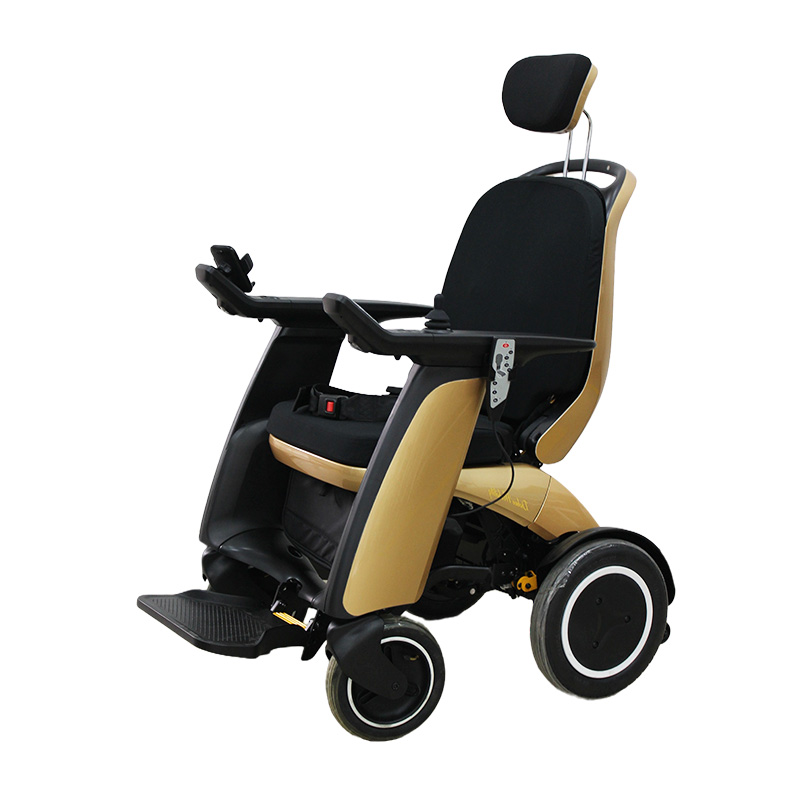
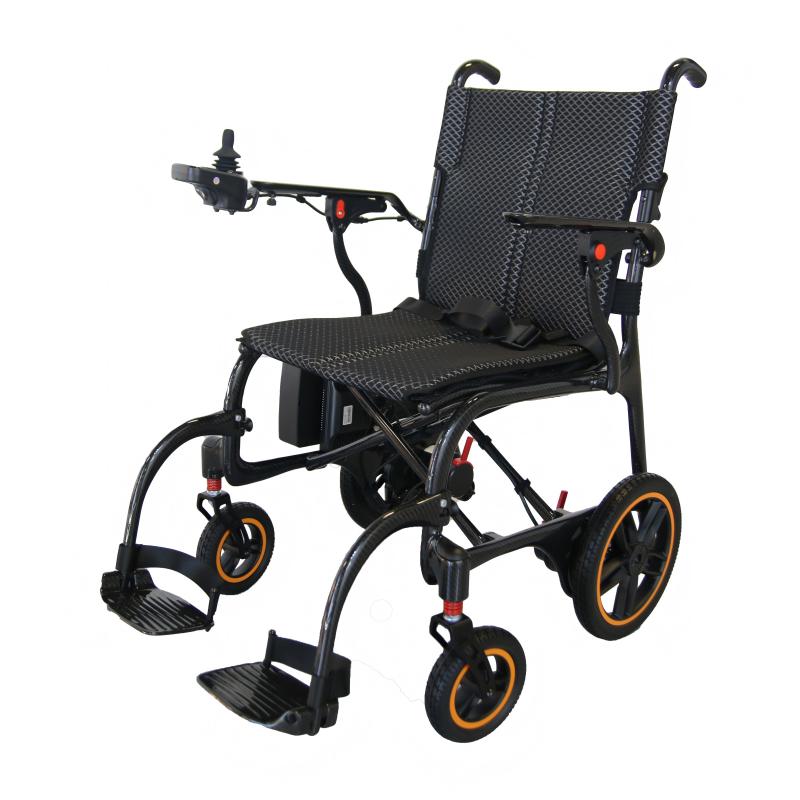
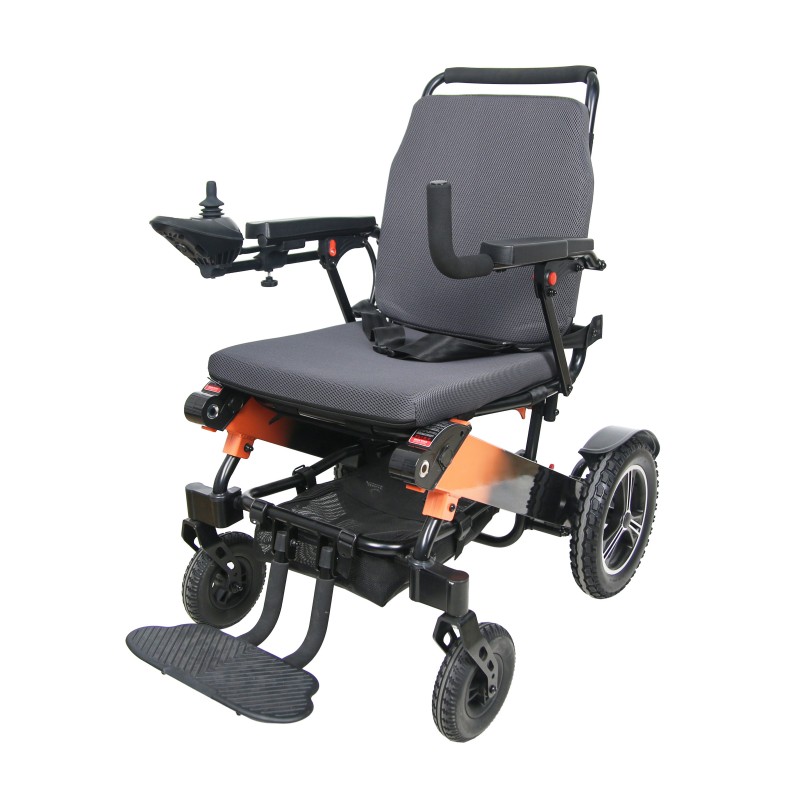
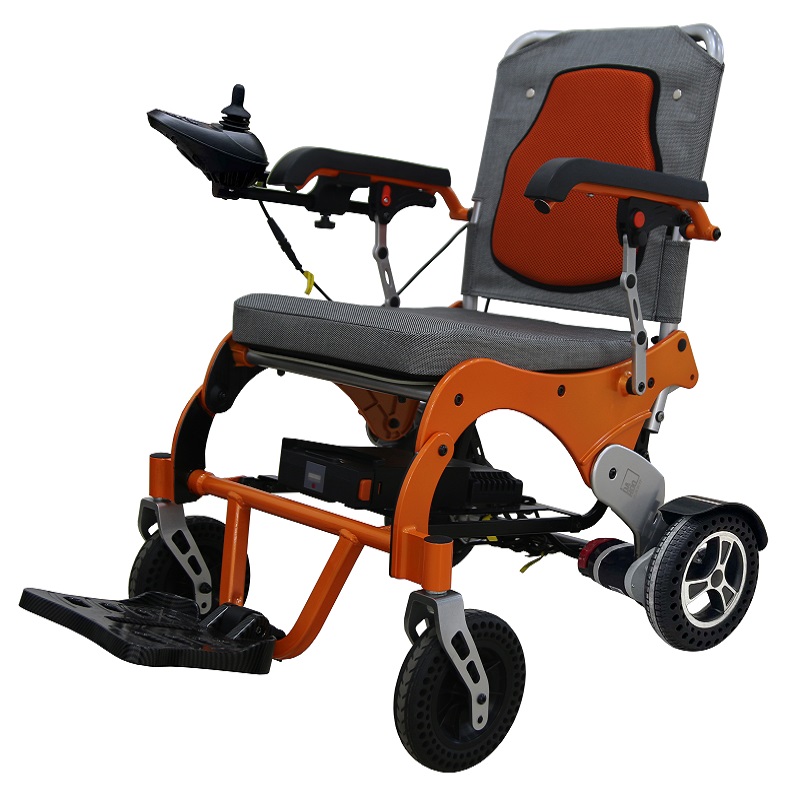
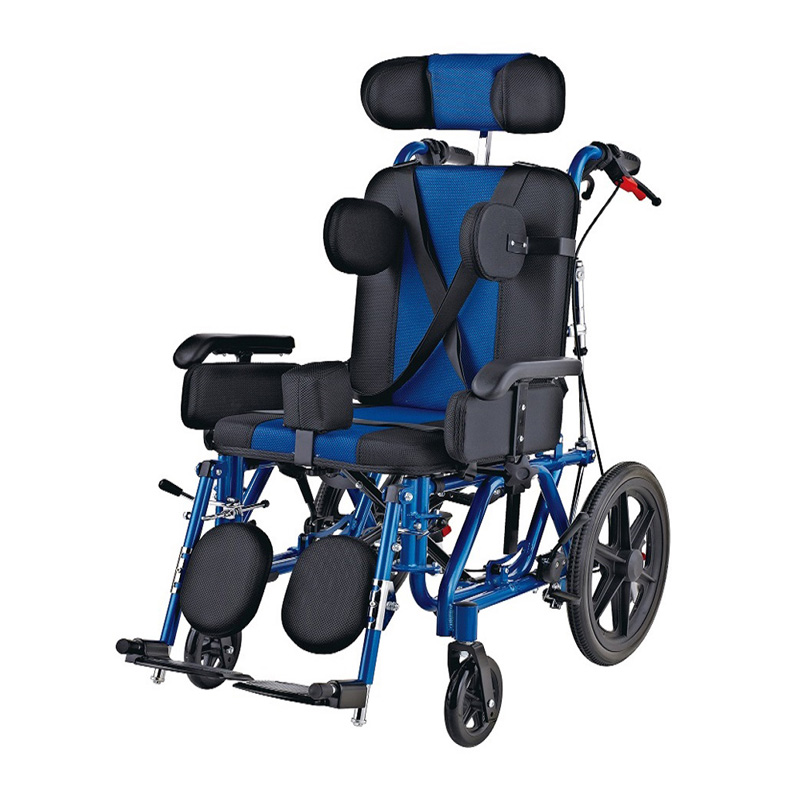
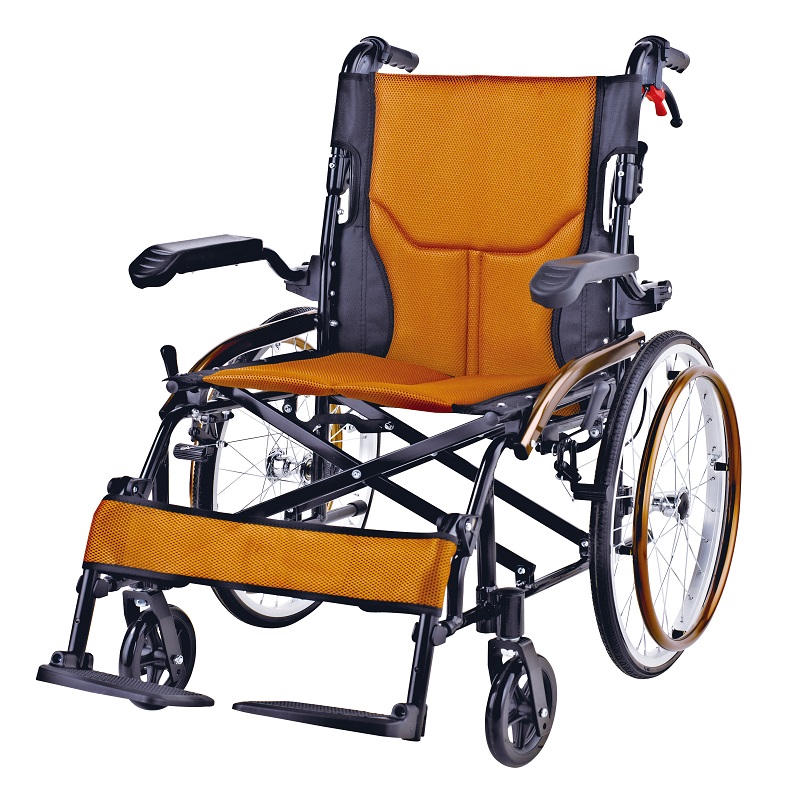
Many users have this question when replacing or repairing their electric wheelchairs: "Can electric wheelchairs use car batteries?"
After all, car batteries seem like a good alternative because they have large capacity, are inexpensive, and readily available.
But the truth is: No! Electric wheelchair batteries and car batteries are completely different.
They differ fundamentally in structure, output characteristics, discharge modes, safety design, and application logic.
Installing a car battery in an electric wheelchair will not only degrade performance but may also cause serious safety hazards.
This article will systematically analyze why power wheelchairs cannot use car batteries from the perspectives of electrical principles, structural characteristics, safety, and maintenance requirements.
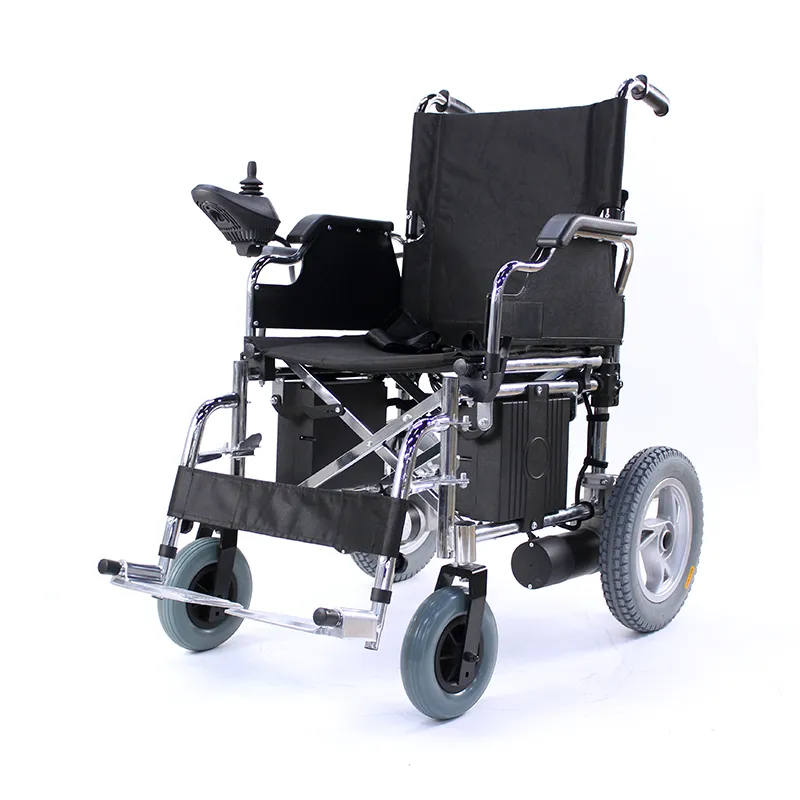
What type of battery does an electric wheelchair use?
Before understanding "can a car battery be used?", we must first clarify: what type of battery does an electric wheelchair use?
1. Common Battery Types for Electric Wheelchairs
Currently, electric wheelchairs on the market mainly use the following two battery types:
Battery Types | Voltage specifications | Key Features |
| Sealed lead-acid maintenance-free battery (SLA) | 12V × 2 = 24V | Stable, durable, leak-proof, suitable for deep discharge |
| Lithium-ion battery (Li-ion / LiFePO₄) | 24V | Lightweight, high energy density, fast charging, longer battery life |
Whether lead-acid or lithium batteries, the battery system of power wheelchairs is almost always 24 volts (24V), using two 12V batteries connected in series.
2. Operating Characteristics of Power Wheelchair Batteries
Powerwheelchair batteries need to:
• Provide a stable and continuous current output (for driving the motor for long-term operation);
• Have deep discharge capability (supporting long-term use and not easily damaged);
• Have shock-resistant and anti-tipping design (suitable for outdoor use);
• Have safety protection circuits (to prevent over-discharge, over-charge, or short circuit).
Automotive batteries are designed with completely different goals.
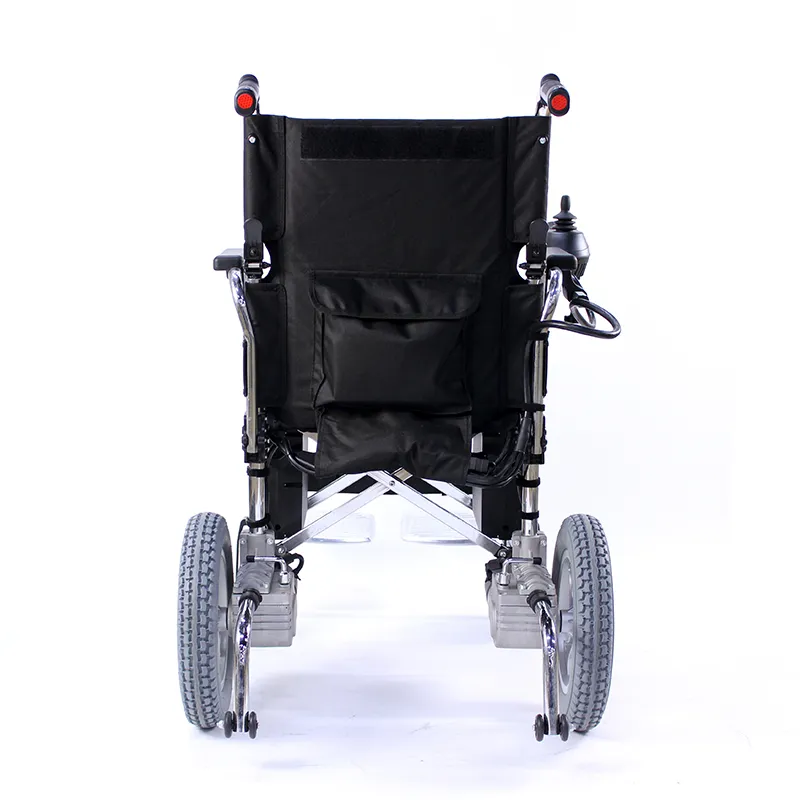
What are the differences between automotive batteries and electric wheelchair batteries?
To answer the question "Can electric wheel chairs use automotive batteries?", we must first understand the fundamental differences between the two.
1. Different Functional Purposes
Project | Car batteries | Electric wheelchair battery |
| Design Purpose | Provide high current instantly when starting the engine | Continuously supplies power to the motor and control system |
| Output Mode | Short-term high-current discharge | Provides constant discharge over extended periods |
| Operating Environment | High temperature, vibration, engine compartment | Suitable for stable, enclosed, or outdoor use |
| Maintenance Method | Requires regular fluid level checks | Maintenance-free closed-loop design |
| Voltage System | Temperature: typically 12V | Typically 24V (two 12V batteries in series) |
Simply put:
Automotive batteries excel at "instantaneous bursts of power," while power wheelchair batteries excel at "stable and sustained power."
Automotive batteries are like "sprinters," while power wheelchair batteries are like "marathon runners."
While they may appear to be lead-acid batteries, their chemical structures and discharge characteristics are completely different.
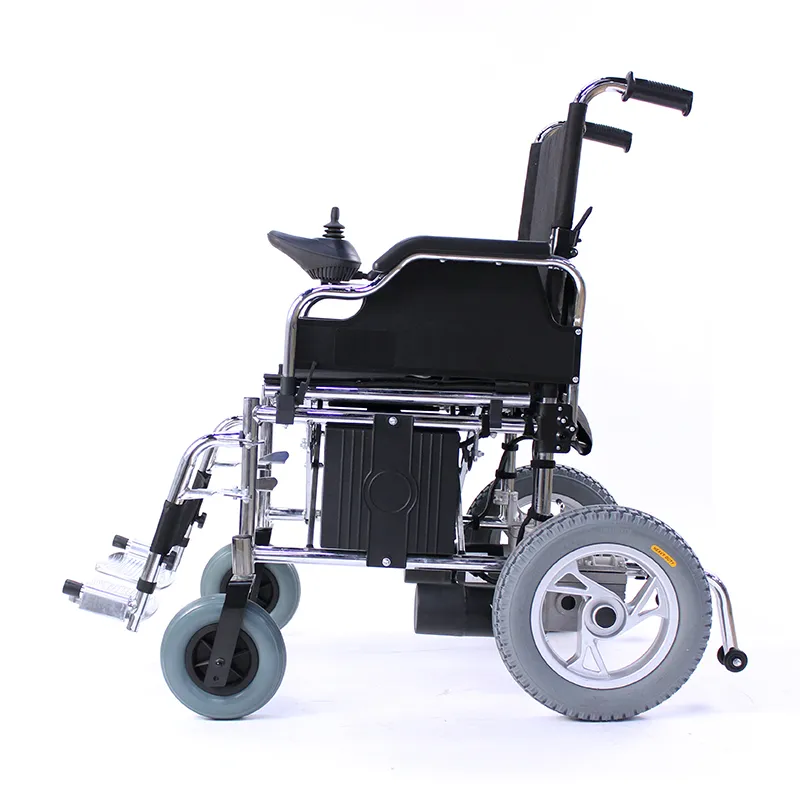
Why are car batteries unsuitable for electric wheelchairs?
1. Car batteries lack deep discharge capability
The primary function of a car battery is to start the vehicle—providing a very large current (hundreds of amperes) within seconds, after which the alternator takes over power.
This means that car batteries almost never undergo deep discharge.
Electric wheel chairs, however, require batteries to discharge continuously for hours with a stable current output.
If car batteries are used in this scenario of "long-term, deep discharge," they will age rapidly, with a lifespan potentially only a few weeks or even days.
2. Voltage mismatch with the system
The system voltage of an electric wheelchair is typically 24V, while a car battery is 12V.
Using only one car battery will not provide sufficient voltage to power the wheelchair;
While two car batteries are connected in series, the total voltage reaches 24V, but the output stability is extremely poor, and the controller is prone to overheating or burning out.
3. Car batteries are too large and heavy
Car batteries are typically used to start the engine, therefore they have a large capacity and are heavy, weighing approximately 20-25 kilograms each.
The combined weight of two car batteries could exceed 40 kg, far exceeding the original design weight range for electric wheel chairs.
This not only affects operation but could also disrupt the vehicle's frame balance and center of gravity.
4. Significantly Increased Safety Risks
Car batteries are mostly open-type lead-acid batteries, which produce hydrogen gas and acid mist during use.
If used in enclosed environments (such as indoors or hospital wards), this could lead to:
• Acid leakage corroding the vehicle body;
• Gas accumulation leading to explosion risk;
• Short circuits upon contact with metal parts.
Electric wheelchair batteries, on the other hand, generally employ a sealed, maintenance-free design, preventing leakage and gas production, making them far safer than car batteries.
5. Completely Different Battery Management Systems
The electronic control systems (controller, motor, charging interface) of electric wheel chairs meet medical-grade standards, requiring precise voltage and current matching.
Car batteries lack a corresponding Battery Management System (BMS), lacking protection against over-discharge, reverse connection, and short circuits.
Voltage fluctuations or short circuits could damage the control system and even cause the wheelchair to lose control.
Why must power wheelchairs use dedicated batteries?
1. Designed for extended power supply
Electric wheelchairs require a stable power supply over several hours, not instantaneous discharge.
Dedicated batteries have thicker plates and a longer cycle life, capable of withstanding multiple deep discharges.
For example:
• A high-quality power wheelchair battery can be cycled approximately 400-800 times;
• In contrast, a car battery used in a wheelchair can only withstand a few dozen deep discharges.
2. Designed for safety and comfort
Electric wheelchair users are often frail or elderly, requiring absolute safety.
Dedicated batteries feature a sealed structure, anti-tipping design, and no gas emissions, allowing use at any angle.
Even when the wheelchair is tilted or during transport, there will be no electrolyte leakage.
3. Highly compatible with the electronic control system
Electric wheelchair controllers are typically designed based on the voltage curve of a 24V dedicated battery, accurately identifying the state of charge.
Using a car battery, with its different voltage range, can cause the controller to misjudge the charge level, prematurely disconnect power, or result in incomplete charging.
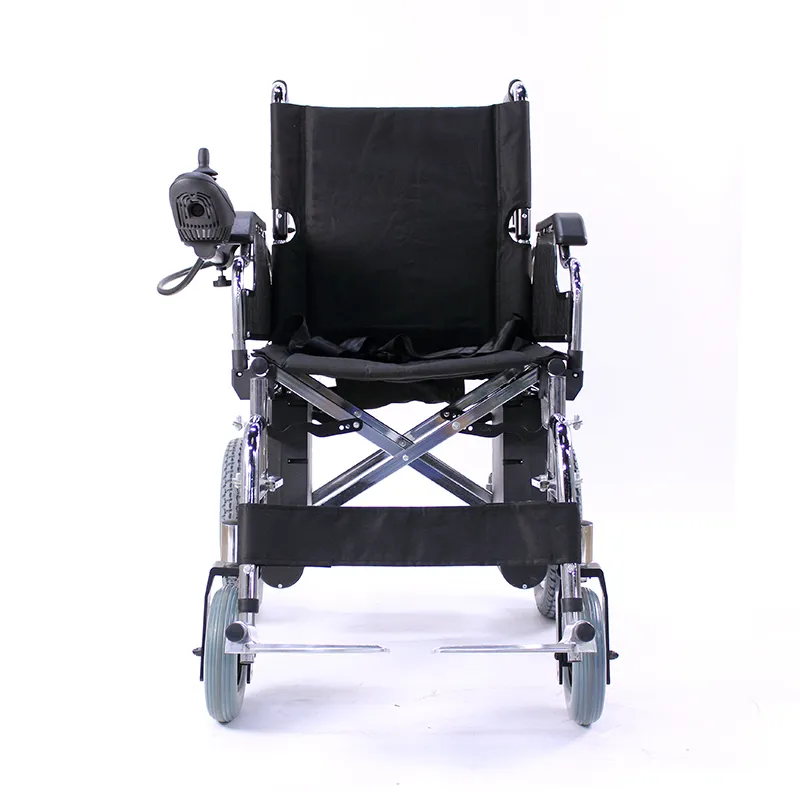
Can an electric wheelchair temporarily use a car battery in an emergency?
Some people might ask:
"If my electric wheelchair battery temporarily fails, can I use a car battery as a temporary solution?"
The answer remains: It's not recommended, and it's unsafe.
1. Different Current Output Characteristics
The operating current of a power wheelchair motor is relatively stable. A car battery cannot maintain a constant voltage output under these conditions, leading to:
• Rapid voltage drop;
• Insufficient motor power;
• False alarms from the controller.
2. Incompatible Charging Systems
The charging parameters of a car battery are incompatible with those of a wheelchair charger.
Using an electric wheelchair charger to charge a car battery may result in:
• Battery overcharging and bulging;
• Electrolyte leakage;
• Charger burnout.
Conversely, using a car charger to charge a power wheelchair also carries the risk of excessive voltage or current.
3. High Risk of Damaging the Wheelchair System
Even if the electric wheelchair can be started temporarily, unstable voltage fluctuations can easily burn out the control board or motor coils.
Repair costs usually far exceed the price of the battery, making it not worthwhile.
How to Properly Select and Maintain Electric Wheelchair Batteries?
1. Confirm Voltage and Capacity Matching
• Voltage: Standard is 24V (two 12V batteries in series)
• Capacity: Choose according to driving needs, such as 12Ah, 20Ah, 24Ah, etc.
It must match the original specifications; do not arbitrarily increase or decrease.
2. Prioritize Sealed Maintenance-Free Batteries
Sealed lead-acid (SLA) or lithium batteries are safe and reliable choices.
Avoid using ordinary car batteries or open-type batteries.
3. Use a Dedicated Charger
Electric wheelchair chargers have a built-in intelligent control chip that automatically adjusts the charging curve according to the battery type.
Never use a car charger as a substitute, as this can easily damage the battery.
4. Regular Maintenance and Inspection
• Charge once a month, even if not used for a long period;
• Avoid over-discharging the battery (below 21V);
• Keep the terminals clean to prevent oxidation.
What are the consequences of using a car battery without authorization?
• Controller burnout: Current fluctuations damage internal chips;
• Motor coil overheating: Unstable voltage causes abnormal heating;
• Frame corrosion: Acid leakage damages the metal structure;
• Drastically shortened battery life: Capacity severely degrades after a few uses;
• Increased safety hazards: Potential dangers include smoke, fire, and short circuits.
Any form of modification or replacement may void the warranty for the electric wheelchair.
Electric Wheel Chairs Must Never Use Car Batteries
It is very clear:
❌ Electric wheel chairs must not use car batteries!
✅ Dedicated electric wheelchair batteries (sealed lead-acid or lithium batteries) must be used.
The reasons are as follows:
• Car batteries are only suitable for instantaneous high-current discharge, not for long-term power supply;
• Voltage and output characteristics are completely incompatible with the power wheelchair system;
• Weight, safety, and charging methods are unsuitable;
• It will damage the electronic control system, shorten lifespan, and introduce safety risks.
If you want to extend the range of your power wheelchair, choose a higher-capacity (Ah) dedicated battery instead of trying to use a car battery.
What mobility products does Dayang sell and supply?
Dayang’s product line covers a broad range of mobility and patient care solutions: electric wheel chairs, manual wheelchairs, sports and recreational wheelchairs, commode chairs, walkers and rollators, hospital beds, shower chairs, and walking sticks. We act as both manufacturer and wholesale supplier, servicing hospitals, care homes, rehabilitation centers, distributors and online brands.
Dayang offers product customization, factory-level control of component sourcing. For purchasing or price inquiries, please contact our sales team.
