
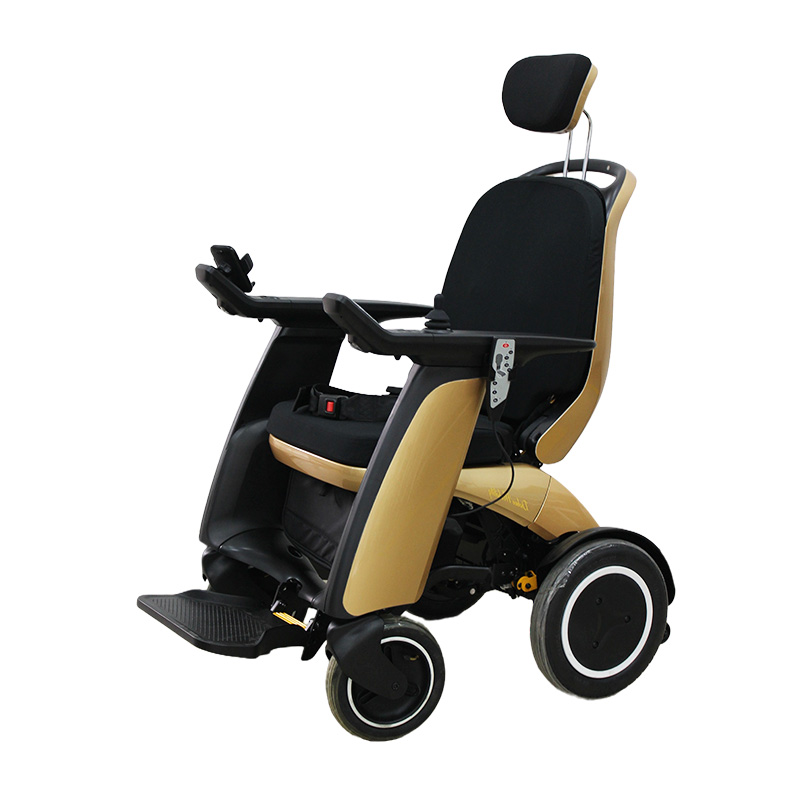
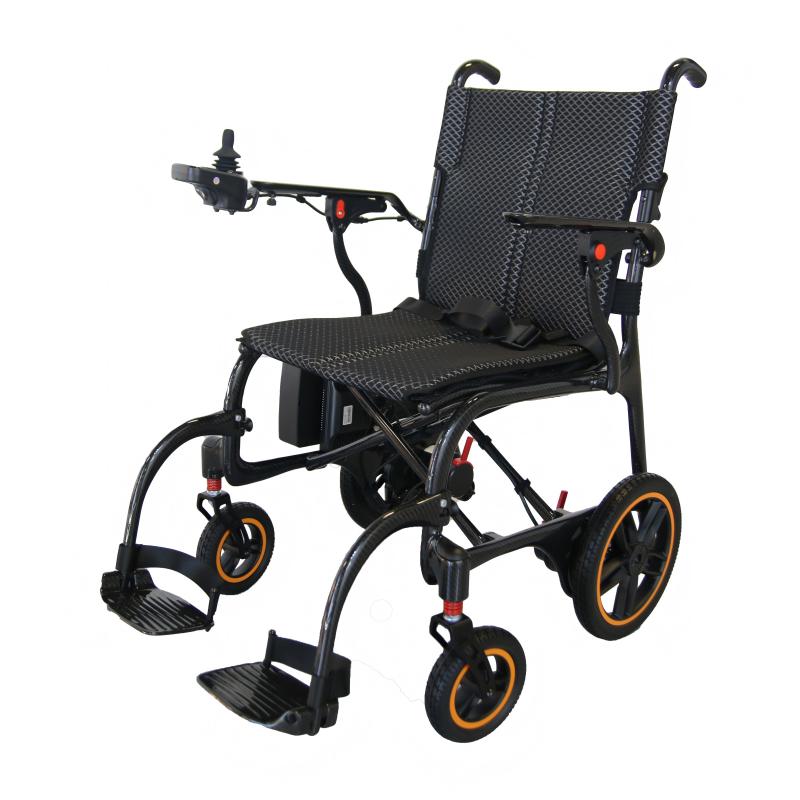
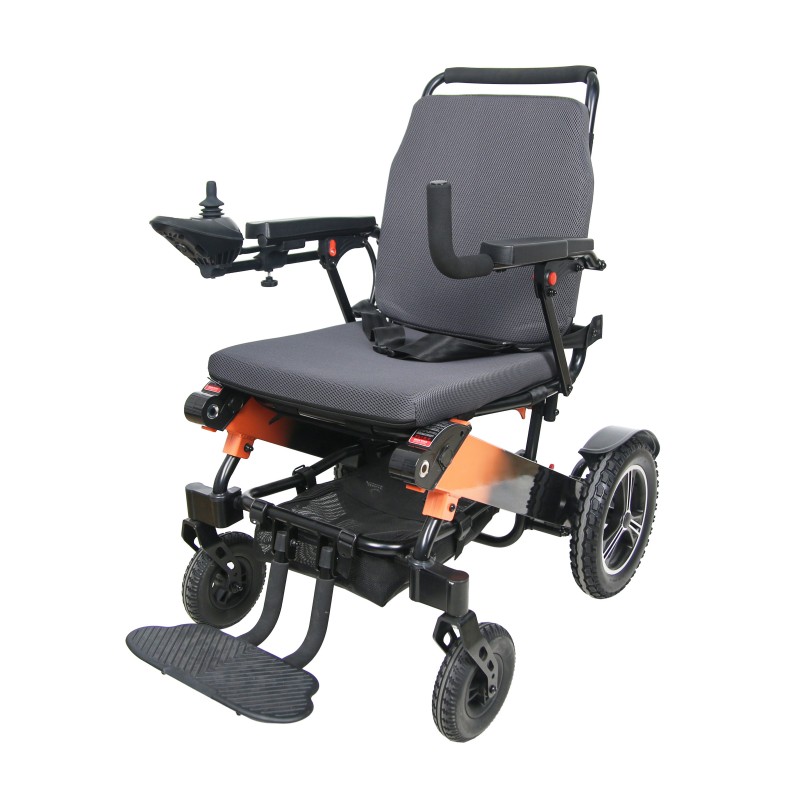
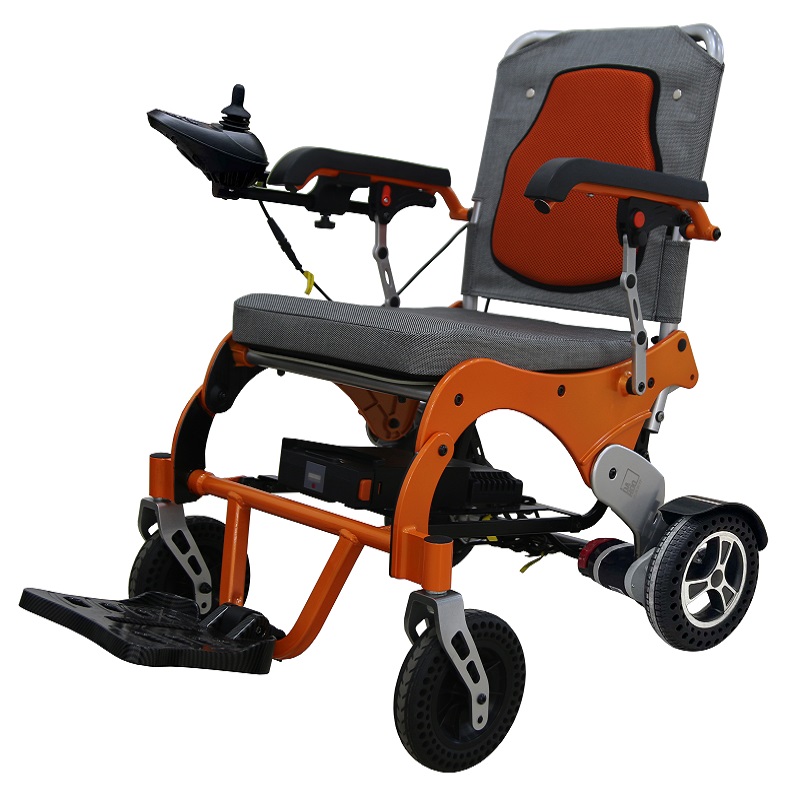


In homes, communities, and nursing homes, electric wheelchairs have become essential tools for many people with mobility impairments, facilitating daily travel and self-care. One of the biggest daily questions surrounding them is: How long does it take to charge? Will proper charging affect safety and battery life?
This article provides a systematic and professional answer to the question, "How long does it take to fully charge an electric wheelchair?", and offers actionable suggestions.
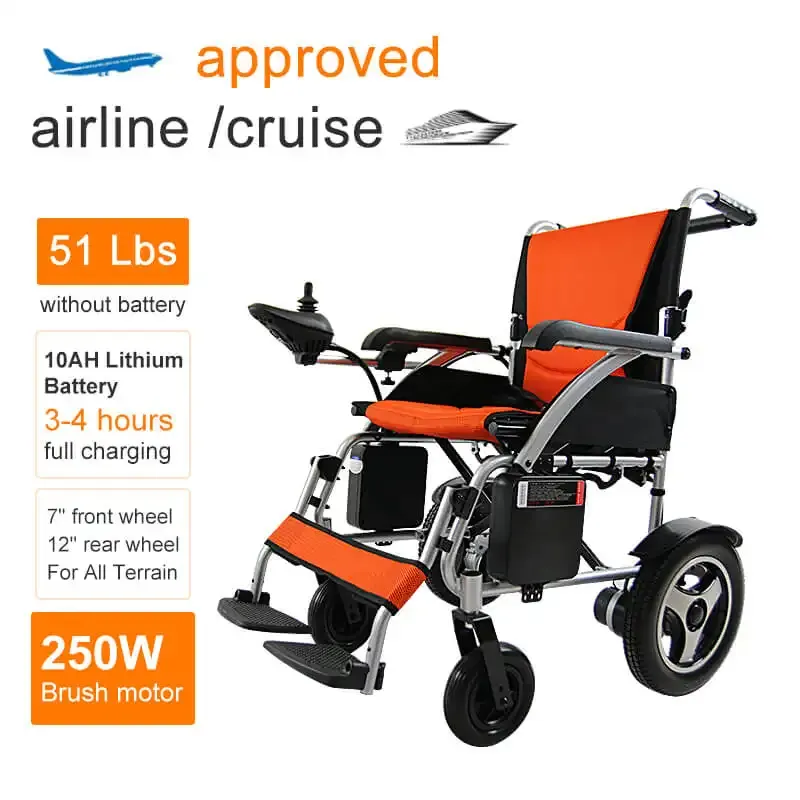
When a single battery in a power wheelchair has a capacity of 10 Ah, a full charge typically takes an average of 8–12 hours. This is an empirical value based on most home charging solutions and battery management logic.
As the saying goes, "Charging is a marathon, not a sprint. The charging process is steady, but it takes time." Best practice is to charge at night or when you have ample time.
Below, we will discuss "why this time, how to calculate it, what factors affect it, and how to ensure safety and extend battery life," maintaining both the seriousness and readability of a news report.
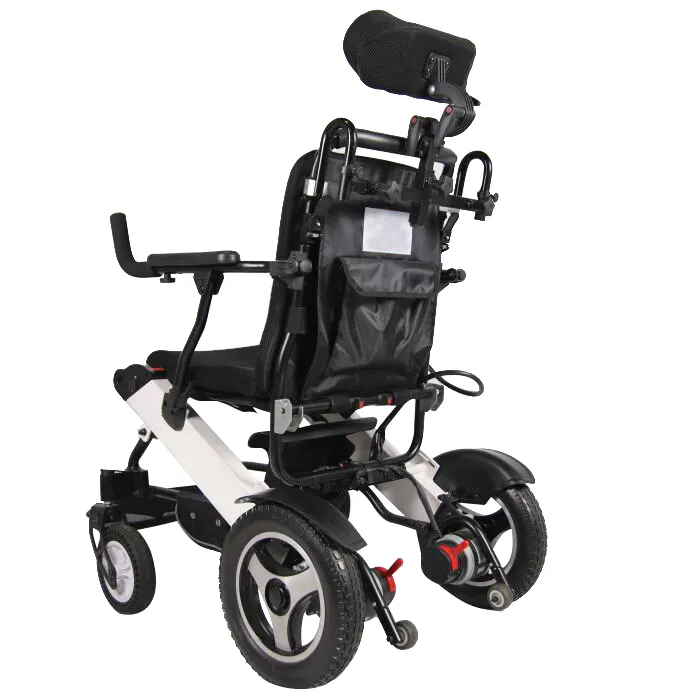
How Long Does It Take to Charge an Electric Wheelchair?
—First, let's look at two key parameters!
To determine charging time, the two most basic and important parameters are:
1. Battery capacity (Ah) – In your example, it's 10 Ah (ampere-hours).
2. Charger output current (A) – The charger's rated current directly determines the charging speed.
A rough formula for charging time (ignoring efficiency loss):
• Charging time (hours) = {Battery capacity (Ah) / Charger current (A)}
However, in reality, charging efficiency and the final trickle/constant voltage stage need to be considered. This is usually multiplied by a correction factor (e.g., 1.1 to 1.2), because the last 10%–20% of capacity requires a slower constant voltage/tricooker flow to "finish."
Taking a 10 Ah Battery As an Example, the Calculations Are As Follows
The following are step-by-step calculations for different charger currents (based on a typical 10 Ah battery) – the calculation steps are shown digit by digit for easy verification:
Scenario A: Charger nominal 1.0 A (common household slow charger)
1. Calculate under ideal conditions: 10 ÷ 1 = 10 (hours).
2. Considering charging efficiency and trickle charging, take a correction factor of 1.1 (i.e., increase the time by 10%): 10 × 1.1 = 11 (hours).
Conclusion: Approximately 11 hours (i.e., the commonly mentioned range of 8–12 hours).
Scenario B: Charger nominal 1.25 A (slightly faster household charger)
1. 10 ÷ 1.25 = 8 (hours).
2. Multiply by the efficiency factor 1.1: 8 × 1.1 = 8.8 (hours) ≈ 8.8 hours (approximately 8 hours and 48 minutes).
Conclusion: Approximately 8.8 hours (close to 9 hours).
Scenario C: Charger nominal 2.0 A (faster charger)
1. 10 ÷ 2 = 5 (hours).
2. Multiply by 1.1: 5 × 1.1 = 5.5 (hours) ≈ 5 hours and 30 minutes.
Conclusion: Approximately 5.5 hours.
Scenario D: Charger nominal 0.8 A (low-current slow charging)
1. 10 ÷ 0.8 = 12.5 (hours).
2. Multiply by 1.1: 12.5 × 1.1 = 13.75 (hours) ≈ 13 hours and 45 minutes.
Conclusion: Approximately 13.8 hours.
These step-by-step calculations show that to achieve a charging time range of 8–12 hours, the charger output current is typically around 1 A to 1.25 A (after considering efficiency and constant voltage/trickle current corrections). This is why many home electric wheelchairs come with chargers in this current range.
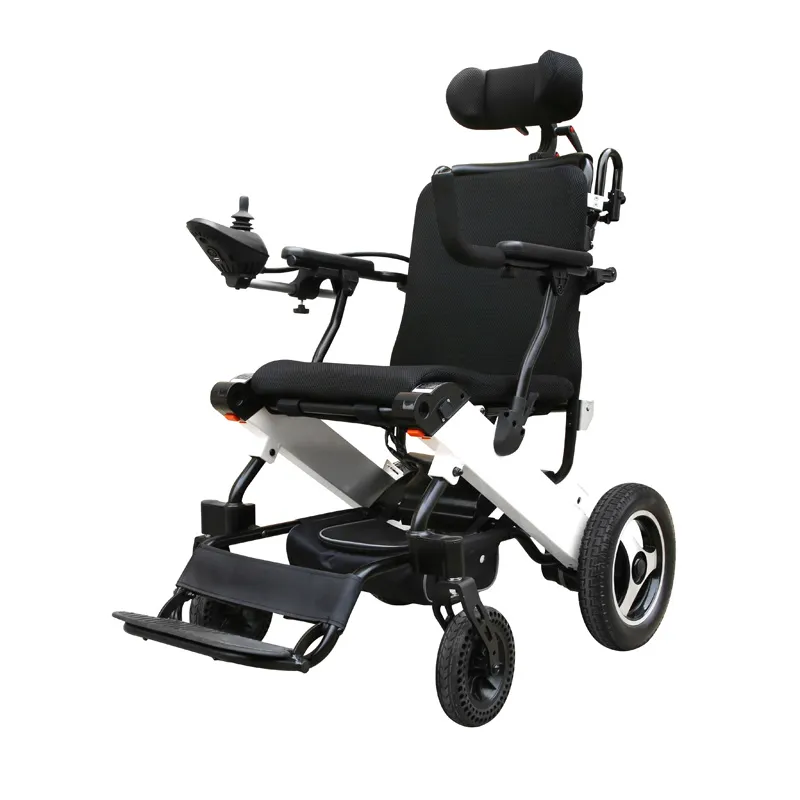
Other Important Factors Affecting Electric Wheelchair Charging Time
Charging time is not simply a matter of battery capacity and charger current. The following factors can increase or decrease the time:
1. Battery Chemistry and Type
• Sealed Lead-Acid (SLA): Common in traditional power wheelchairs, low energy density, heavy; charging typically uses a lower current and requires a longer time (8–12 hours of slow charging is generally recommended).
• Lithium-ion (Li-ion): Increasingly used in modern wheelchairs, higher energy density, allows for higher charging currents, and faster charging speeds; however, it is limited by the Battery Management System (BMS), and also requires time to reach the constant voltage stage.
• Lithium iron phosphate (LiFePO4): Safer and more durable than conventional lithium batteries, but its charging strategy is similar to that of lithium batteries.
2. Types of Chargers and Charging Strategies
• Constant Current-Constant Voltage (CC-CV): The mainstream charging method. It starts with constant current fast charging, switches to constant voltage and reduces current as it approaches full charge, and finally maintains a trickle charge. The charging speed slows down significantly towards the end, so a full charge usually takes longer than a simple division estimate.
• Smart/Pulse/Balance Chargers: Offer better protection for lithium batteries; some may be slightly faster, but prioritize lifespan.
3. Current Remaining Battery Capacity (State of Charge, SOC)
If the battery capacity is very low, charging is faster at the beginning; if it is above 80%, the charging current automatically decreases to protect the battery, so the last 10%–20% takes longer.
4. Battery Temperature and Ambient Temperature
Cold temperatures reduce the battery's accepting current, slowing down charging; high temperatures cause the BMS to reduce the charging speed to avoid thermal runaway. The ideal charging temperature is generally 15–25°C.
5. Battery Aging and Internal Resistance
Aging batteries experience increased internal resistance, decreased charge acceptance, significantly longer charging times, and reduced actual capacity (manifested as a shorter driving range after the same charging time).
6. Battery Pack Series/Parallel Connections and Voltage Ratings
Electric wheelchairs commonly use 24V, 36V, or 48V systems; 10 Ah refers to ampere-hours (Ah). If you have two 12V × 10Ah batteries connected in series to form a 24V × 10Ah battery, the total Ah remains the same, but the total energy output is different; charger voltage matching is also crucial.
Why is charging an electric wheelchair "a marathon, not a sprint"?
—“Charging process: This is a marathon, not a sprint. The charging process is stable, but it takes time.”
This is well-founded from a professional perspective:
• During the charging process, especially after entering the constant voltage (CV) phase, the current gradually decreases to protect the battery's chemical properties; this results in a significantly slower charging speed in the last 10%–20%, making the entire process more like an endurance race than a sprint.
• While high-current fast charging can replenish a large amount of power in a short time, it shortens battery life, increases heat generation, and poses risks; manufacturers typically choose a safe and acceptable slow/medium-speed charging solution for home power wheelchairs.
• For home use, safety and lifespan are prioritized, so chargers around 1A are commonly used with a CC-CV strategy to ensure stable charging and gentler treatment of the battery.
How to charge an electric wheelchair more effectively?
1. Use the original or manufacturer-recommended charger whenever possible. Matching the voltage, current, and battery management system (BMS) is crucial.
2. It's best to charge at night or during off-peak hours (your suggestion is correct): While you don't need to worry about overcharging if it's plugged in for extended periods, if the battery or charger is damaged, try to charge it during safe times when someone is home.
3. Charging after each use is better than completely discharging (especially for lithium batteries): For lithium batteries, shallow cycles are more beneficial for lifespan; for lead-acid batteries, avoid frequent deep discharges.
4. After first use or after a long period of inactivity, perform a full charge-discharge cycle as instructed (some manufacturers recommend this) to allow the BMS to calibrate the SOC.
5. Avoid charging at extreme temperatures; temperatures below 0°C or above 45°C are detrimental.
6. After fully charging, if not using immediately, disconnect the power and store (especially beneficial for lead-acid batteries), but most lithium batteries will enter maintenance mode when connected to a smart charger and will not be overcharged indefinitely.
7. Regularly check the battery's appearance (bulging, leakage, and abnormal heating are warning signs); contact after-sales service immediately if any abnormalities are found.
8. If you need to go out frequently, consider choosing a larger Ah battery or a spare battery, or upgrading to a system that supports a higher charging current (as advised by a professional).
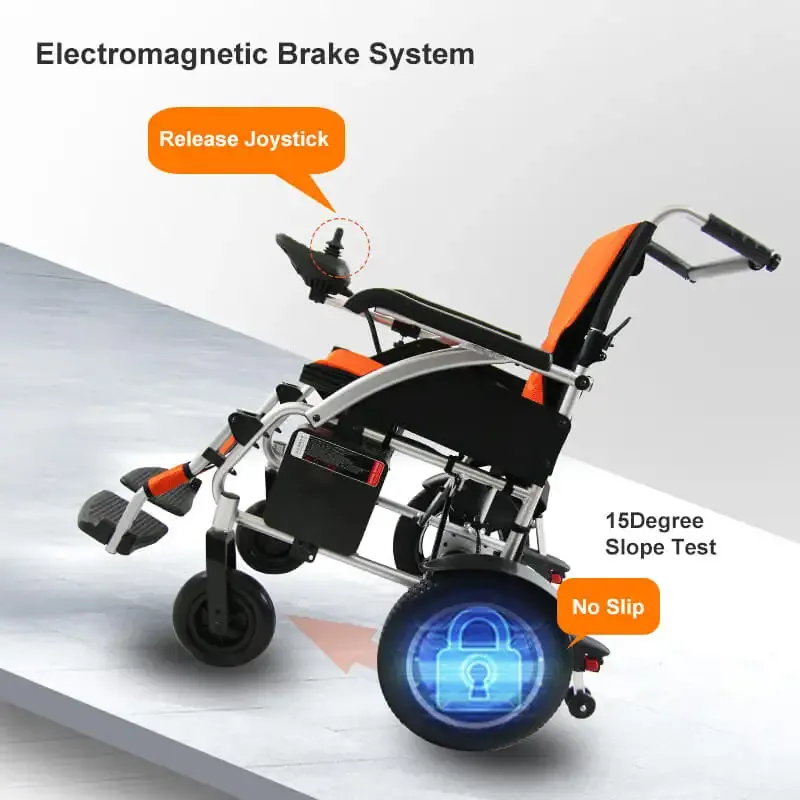
Electric Wheelchair Charging: Common Problems and Troubleshooting
What if the charging time is much longer than expected (e.g., a 10Ah battery takes 20 hours to fully charge)?
• Check if the charger is outputting its rated current (measure the output current/voltage with a multimeter).
• Check if the battery is aging (significantly decreased capacity or increased internal resistance).
• Check if the interface contact is good (oxidation or looseness of cables or connectors can cause a decrease in charging speed).
• Check the temperature: Excessive cold or heat can cause the BMS to limit the charging current.
The charging indicator shows "fully charged," but the wheelchair can't travel very far?
This could be due to battery capacity degradation (a capacity test is needed), or abnormal power consumption in the motor or controller. A professional battery capacity and internal resistance test is recommended.
Can I add a short charge at any time (e.g., charge for 15 minutes after going out)?
For lithium batteries, short charging sessions are acceptable and will not significantly damage the battery. For lead-acid batteries, avoid frequent short-duration charging without completing a full charge, as prolonged partial charging can lead to sulfation.
Why does charging time determine battery life in power wheelchairs?
• Faster charging speed is not always better. High-rate charging increases temperature and accelerates material aging; manufacturers typically choose more conservative charging currents to extend battery life.
• Lithium batteries typically have a cycle life of 800–1500 cycles (depending on the specific chemistry), while lead-acid batteries often only have a few hundred. Proper charging habits can significantly slow down battery degradation.
• When the range of an electric wheelchair significantly decreases (e.g., the range after a full charge is less than 60% of the original), the battery pack should be replaced.
Purchase Advice for Buyers and Caregivers (Key Points for Choosing a Charging System)
• Inquire about the charger's rated current: If you expect a full charge of 10 Ah in 8–12 hours, confirm the charger output is approximately 1–1.25 A.
• Check if it has a smart BMS: Systems with a BMS are safer and can extend battery life.
• Pay attention to charging indicators and protection designs: indicator lights, audible alerts, over-temperature protection, short-circuit protection, etc.
• Consider backup options: If you travel frequently, consider a higher Ah battery or a spare battery, and a faster charger (but ensure compatibility with the BMS and motor).
• After-sales service and maintenance: Batteries are consumable parts; pay attention to replacement costs and after-sales support when purchasing.
Regarding "How long does it take to fully charge a power wheelchair?"
—The core answer is: It depends on the battery capacity and charger current, but for example, a 10 Ah battery in a typical home setup takes an average of 8–12 hours to fully charge. This conclusion stems from the basic physical relationship of charging (Ah/A) and reflects real-world efficiency losses and CC-CV charging strategies.
In other words, charging is not a short sprint, but a "marathon" requiring patience and proper procedures—the charging process is stable but takes time; it's best to charge at night or when you have ample time.
Hopefully, this article can help power wheelchair users, their families, and purchasing decision-makers free themselves from the anxiety surrounding "charging" and extend the life of their devices and ensure safer travel through more scientific and safer operations.
