
For people with limited mobility, going out is not only an extension of life, but also an important expression of independence, confidence, and social interaction.
However, different assistive mobility tools can significantly impact the experience of going out. Rollators and manual wheelchairs, as two of the most common mobility aids, each have unique structural designs and usage methods.
Which one is better depends on a variety of factors, including individual physical condition, purpose of use, ground conditions, and operational abilities.
Therefore, understanding the core differences between rollators and manual wheelchairs is crucial for safer, more comfortable, and more efficient travel.
What is a rollator? What are its basic characteristics?
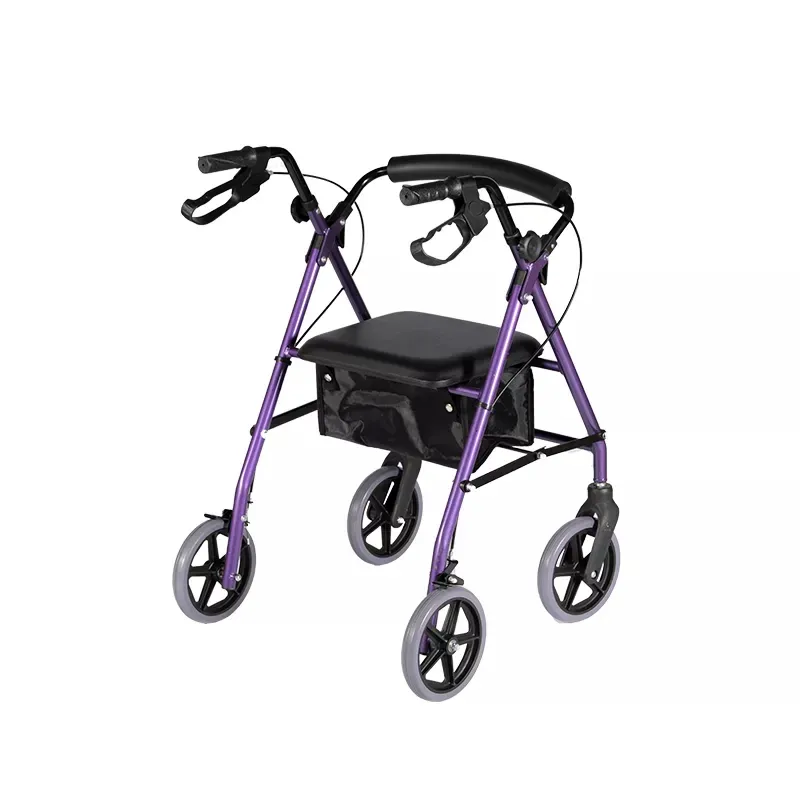
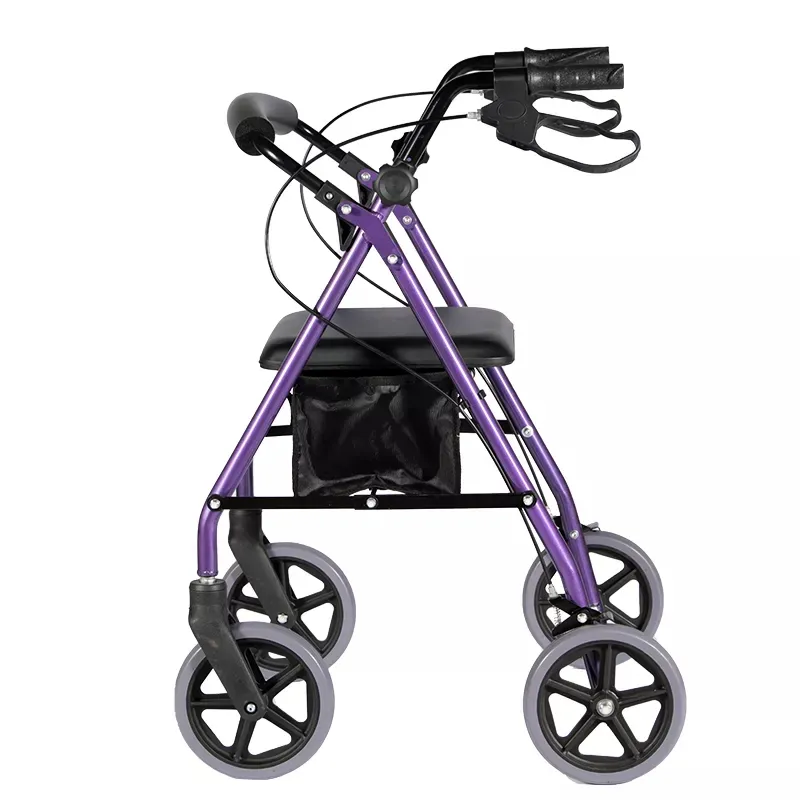
A rollator is a mobility aid with wheels, a handbrake, and a seat, primarily designed for people who can still walk but have reduced balance.
It reduces the burden on the lower limbs by supporting and assisting walking, helping users maintain stability when out and about.
Typical features of a rollator include:
• Three- or four-wheeled construction for smooth gliding;
• Height-adjustable armrests to accommodate different heights;
• Braking system for easy speed and stopping;
• Includes a foldable seat for convenient rest;
• Lightweight design for easy portability and storage.
In short, a rollator walker is suitable for those who can walk independently but need balance support, making outings safer and less strenuous.
What is a manual wheelchair?
What is the biggest difference between it and a rollator?
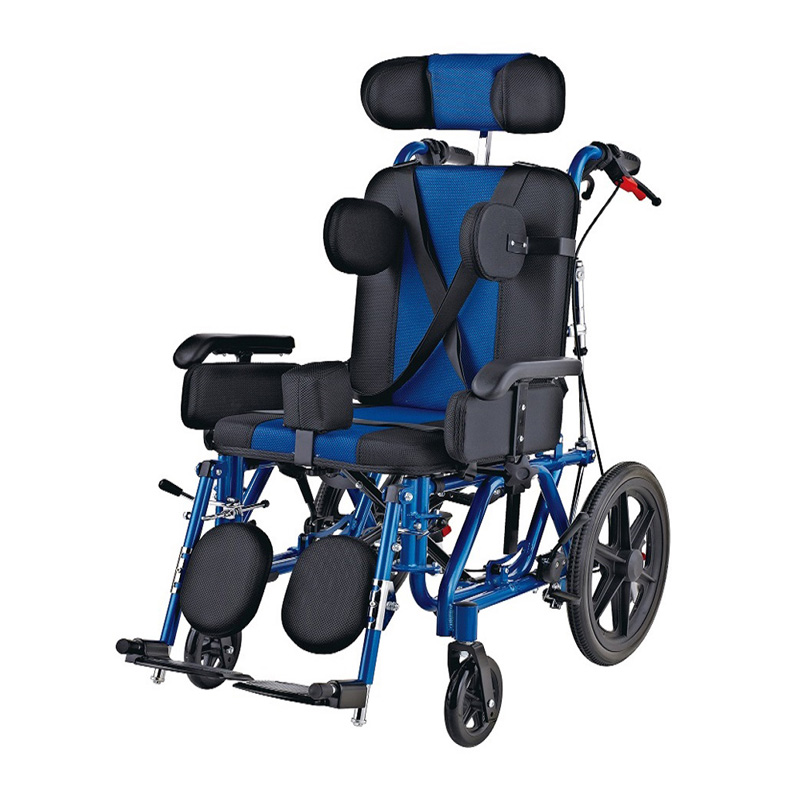
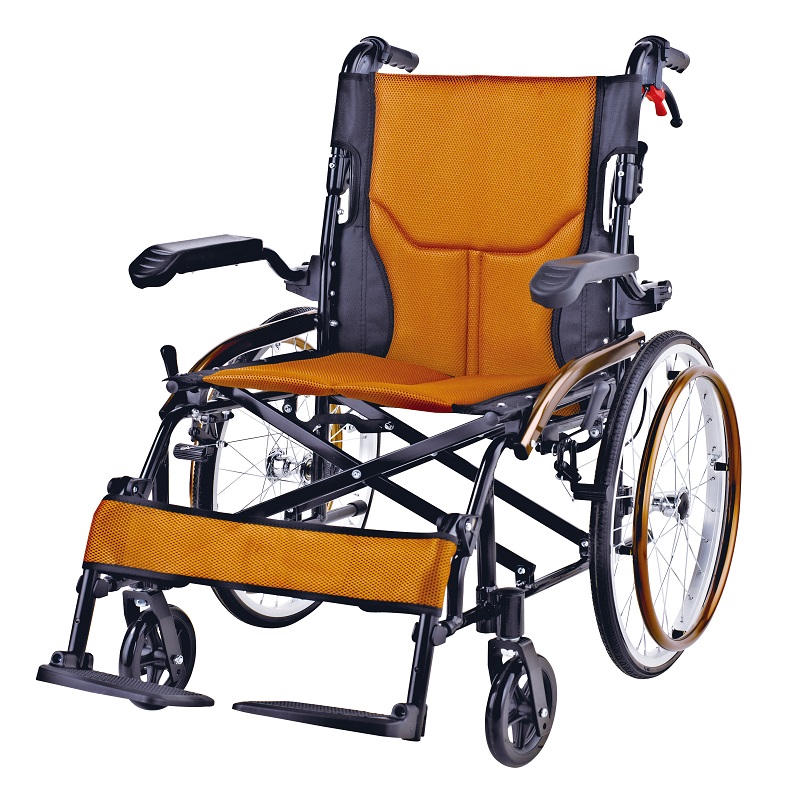
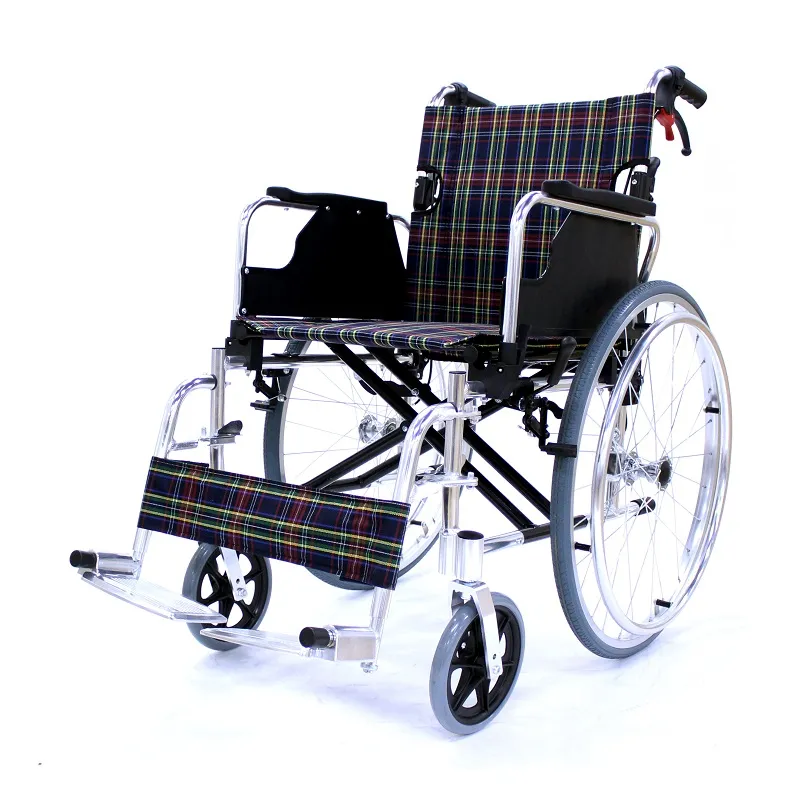
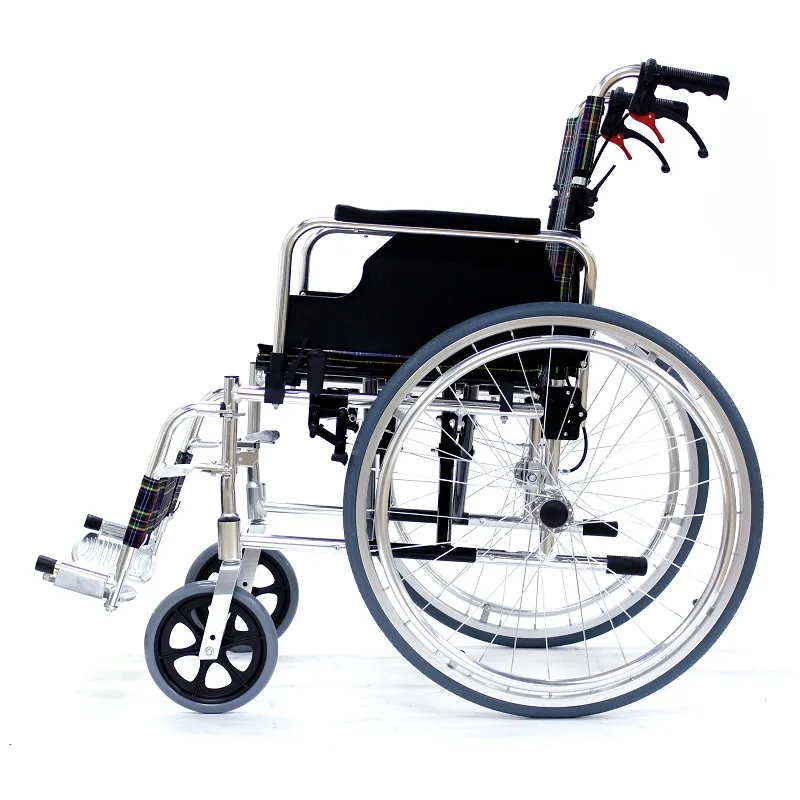
A manual wheelchair is an assistive device that allows movement by using the user's own hands to push the wheels or by being pushed by someone else.
It is suitable for people with weak lower limb strength, those unable to walk for extended periods, or those unable to stand independently.
Key features of a manual wheelchair include:
• Stable structure and strong load-bearing capacity;
• Movement by hand or by being pushed by someone else;
• Seating posture design providing back and leg support;
• Suitable for long-term sitting and medium- to long-distance travel;
• Foldable design for easy storage and transportation.
Compared to a rollator walker, a manual wheelchair emphasizes "mobility assistance," while a rollator emphasizes "walking aid."
Therefore, the core difference is:
A rollator walker is suitable for "people who can still walk," while a manual wheelchair is suitable for "people who cannot walk."
Which is safer, a rollator or a manual wheelchair, when going out?
Safety is the primary consideration when choosing any mobility aid.
In outdoor environments, the ground is often uneven and has many slopes, making the stability and controllability of the device particularly important.
1. Safety Features of a Rollator
• Braking System: Rollators are equipped with manual brakes or locking devices, allowing for speed control at any time.
• Anti-slip Tires: Suitable for various surfaces (such as parks, shopping malls, and community roads).
• Support Handrails: Help users maintain balance and reduce the risk of falls.
• Resting Seat: Allows users to sit down immediately when fatigued, preventing accidents.
However, the safety of a rollator walker depends on the user's balance and reaction ability. If the user lacks strength or has slow reaction time, there may be a risk of slipping on slopes or uneven surfaces.
2. Safety Features of Manual Wheelchairs
• Stable center of gravity: The four-wheel structure is stable and not easily tipped over;
• Brake locking: It can be completely locked when parked to prevent slipping;
• Controllable operation: The user or caregiver can control the direction;
• Suitable for prolonged sitting: No need to bear the weight of the lower limbs, making it safer.
From a safety perspective:
• If the user can maintain balance → a rollator walker is more flexible;
• If the user has difficulty walking → a manual wheelchair is safer and more secure.
Which device is more suitable for long-distance outings?
Rollator performance:
The advantage of a rollator walker is that it allows for stopping and starting, and resting at any time, making it ideal for short or medium-distance outings, such as shopping, walking, or visiting neighbors.
However, for longer journeys, continuous walking may lead to fatigue and even lower limb pain.
Manual wheelchair performance:
Manual wheelchairs are suitable for long-distance or extended outings, especially when the user cannot walk continuously.
The seated operation reduces the burden on the body and allows for a wider range of motion, making it particularly suitable for parks, shopping malls, hospitals, or outdoor activities.
Conclusion:
For short trips or exercise, a rollator is more suitable; for longer trips or longer distances, a manual wheelchair is more stable and requires less effort.
Which is more portable and easier to operate?
1. Rollator Portability
Rollators typically use a lightweight aluminum alloy structure, weighing only about half that of a manual wheelchair, and can be quickly folded and stored in a car trunk.
They are easy to operate and can be pushed without assistance, making them ideal for people with strong self-care abilities.
2. Manual Wheelchair Portability
While manual wheelchairs are also foldable, they are larger and heavier.
If the user cannot push them independently, assistance from a caregiver is usually required.
However, manual wheelchairs offer better comfort and stability than rollator walkers, making them suitable for people who require assistance.
Therefore, from a portability perspective:
Rollators are lighter, manual wheelchairs are more stable.
Both have trade-offs, and the choice depends on the frequency of outings and individual operational abilities.
Which is more suitable for different ground conditions, a rollator or a manual wheelchair?
1. Flat Surfaces (e.g., shopping malls, hospitals)
Rollators are lightweight and flexible, moving smoothly; manual wheelchairs glide smoothly and comfortably.
Both perform well on these surfaces.
2. Uneven Surfaces (e.g., parks, cobblestone paths)
Rollators have smaller wheels, making them prone to vibration when encountering potholes; manual wheelchairs have wider tires, providing better shock absorption and stability.
3. Ramps and Steps
Rollatorrs require the user to maintain balance when going uphill, posing a certain risk; manual wheelchairs can be controlled by caregivers and are safer with brakes and rear wheel support.
Therefore:
On flat surfaces, both perform well;
On complex terrain, manual wheelchairs offer greater stability and safety.
Which is more conducive to maintaining physical mobility?
One of the greatest values of a rollator is its ability to help users maintain physical activity.
When using a rollator walker, the body naturally engages in movement, which helps to:
• Maintain lower limb muscle strength;
• Promote blood circulation;
• Improve balance and coordination.
In contrast, a manual wheelchair puts the user in a passive state of movement. While less strenuous, it involves less physical activity.
Therefore, for those with rehabilitation needs or who wish to maintain a certain level of mobility, a rollator is more beneficial for maintaining bodily functions.
From a comfort perspective, which is better, a rollator or a manual wheelchair?
Rollator comfort:
• Suitable for short walks or rest stops;
• However, arm and wrist fatigue may occur during prolonged use;
• Lacks back support, resulting in lower comfort during extended periods.
Manual wheelchair comfort:
• Features a backrest, seat cushion, and footrests;
• Allows for extended periods without fatigue;
• Provides good support and a natural sitting posture.
Therefore, if "comfort during extended periods" is the standard, a manual wheelchair is superior.
Economic comparison: Which is more cost-effective?
In the medical assistive device market, there is a significant price difference between rollators and manual wheelchairs.
Project | Rollator | Manual Wheelchair |
| Average Price | Approximately 1000~3000 RMB | Approximately 1500~5000 RMB |
| Maintenance Cost | Lower price (mainly for brakes and tires) | Slightly higher price (requires regular maintenance of bearings and seat cushion) |
| Lifespan | 3~5 years | 5~8 years |
While rollator walkers require less initial investment, their applicability is limited. Manual wheelchairs, on the other hand, offer long-term use, more comprehensive functions, and better value.
How should different groups choose between rollators and manual wheelchairs?
User Types | Recommended Equipment | Reasons |
Those with good physical strength and able to walk independently | Rollator | Maintains athletic ability, lightweight and portable |
| Those with poor balance but able to walk short distances | Rollator | Allows for rest anytime, provides safe support |
| Those with severe lower limb weakness | Manual wheelchair | Provides full support, stable and safe |
| Those who need to travel frequently or go on long trips | Manual wheelchair | Higher comfort and stability |
| Users in the rehabilitation training period | Rollator | Can assist in training and restore gait balance |
In other words, rollators emphasize "walking assistance," while manual wheelchairs emphasize "safe transportation."
The selection criterion depends on whether the user is "able to walk" or "needs to be pushed."
Which is better for outings: a rollator or a manual wheelchair?
There is no absolutely "better" device, only a more suitable choice.
Key points can be summarized as follows:
• To maintain mobility, for short trips, and easy operation → Choose a rollator walker.
• For mobility difficulties, insufficient physical strength, and long-distance travel → Choose a manual wheelchair.
The advantages of rollator walkers are their lightweight, flexibility, and ability to promote movement; the advantages of manual wheelchairs are their stability, safety, and comfort.
When purchasing, one should comprehensively consider their physical condition, usage scenario, road conditions, and travel distance to find the solution that best balances safety and convenience.
Does Dayang Medical offer packaging customization?
Yes, we provide customized packaging and labeling for distributors and brands. Buyers can add their logos, design their own box artwork, and choose packaging materials. We offer factory quotes for customized packaging and maintain low price wholesale supply without reducing product quality. This service is especially popular among e-commerce sellers and global brands who want unique identity in their markets.
Dayang Medical’s factory in China handles the packaging process with care, combining high quality production with cheap purchasing options.
