
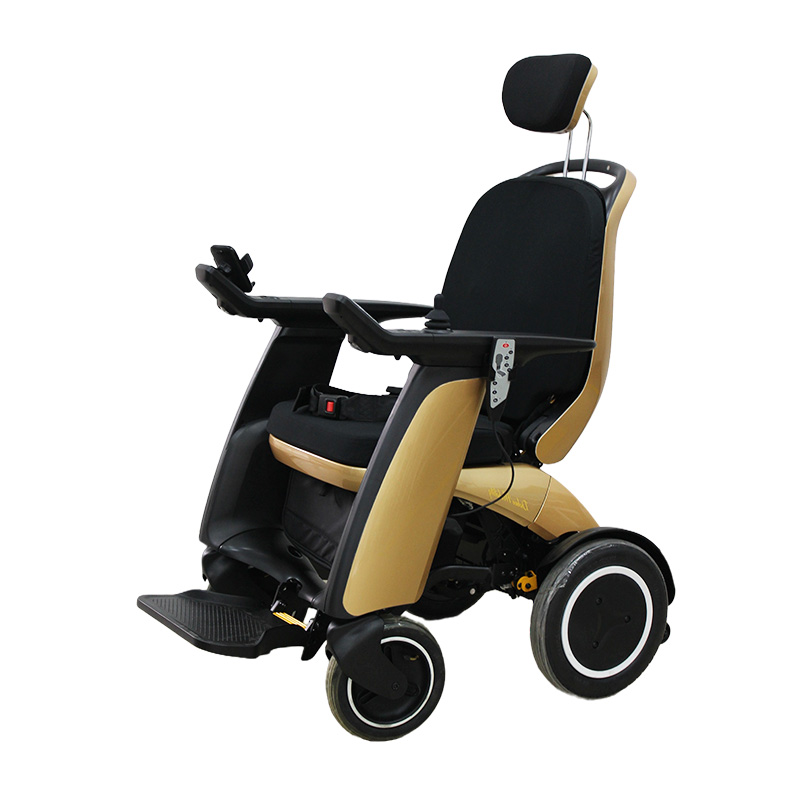
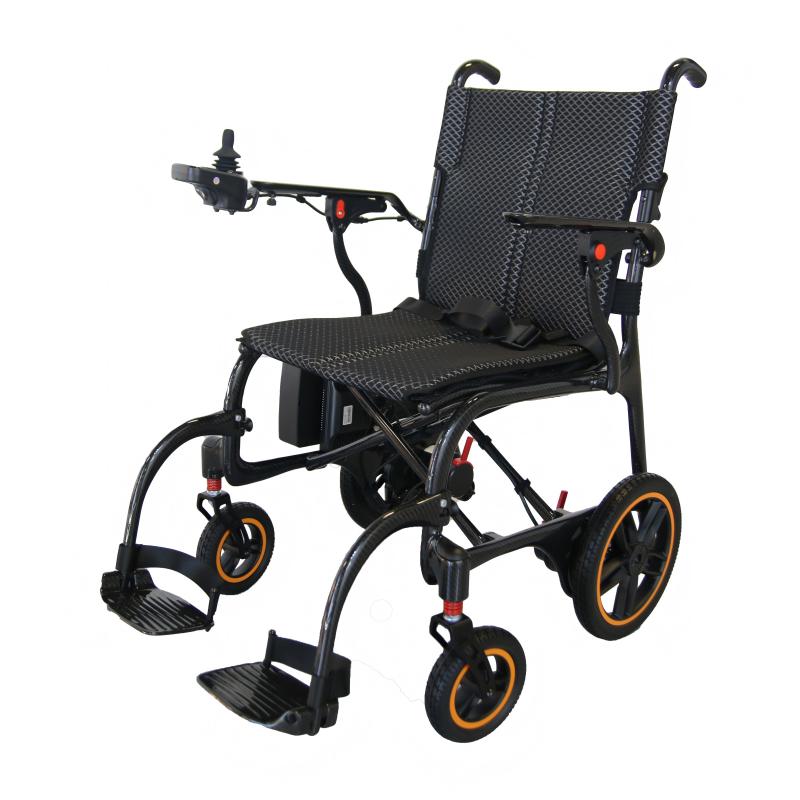
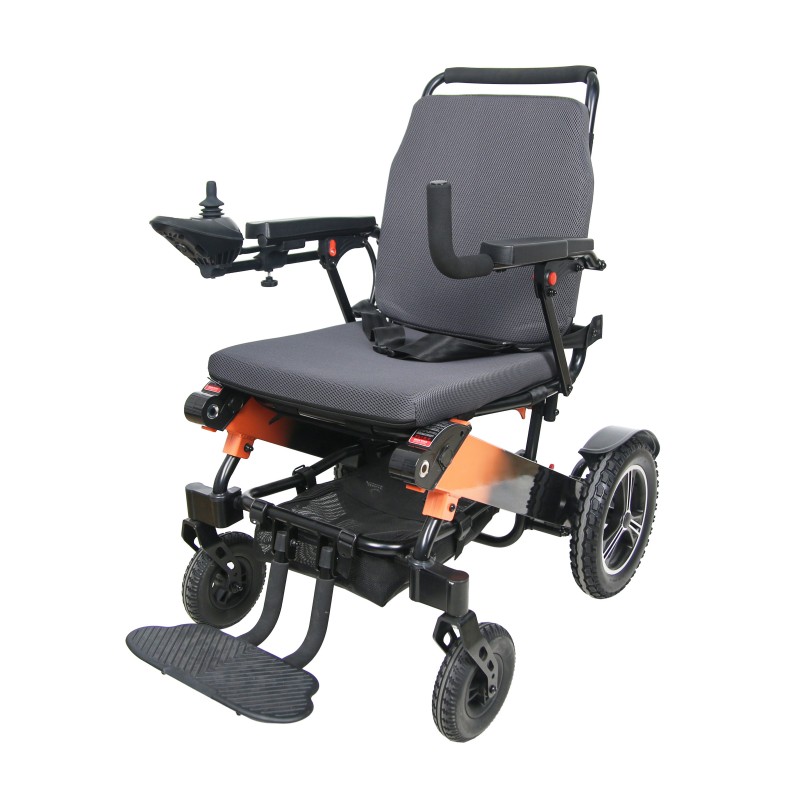
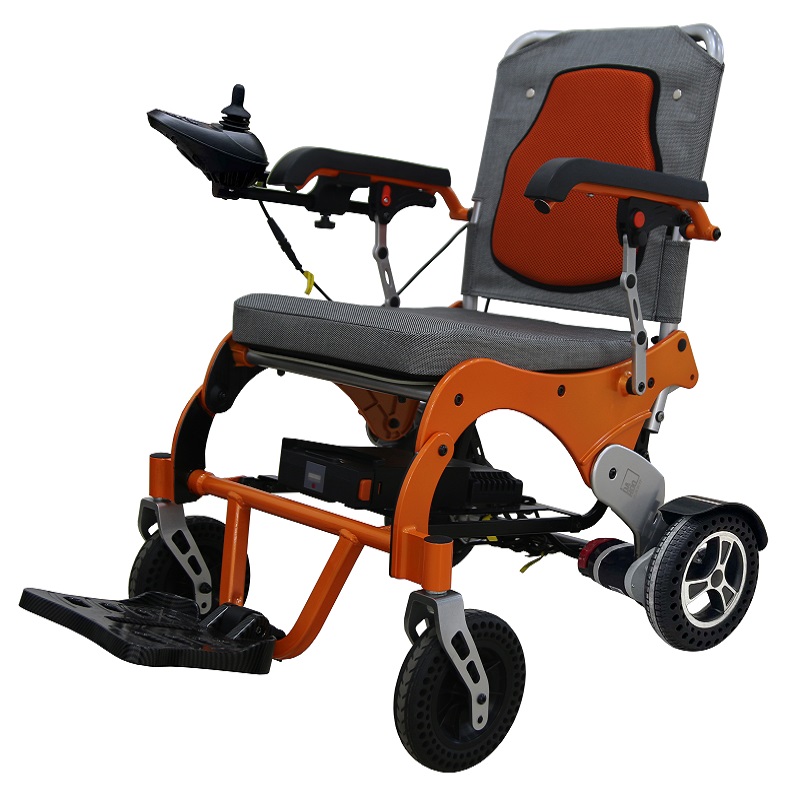
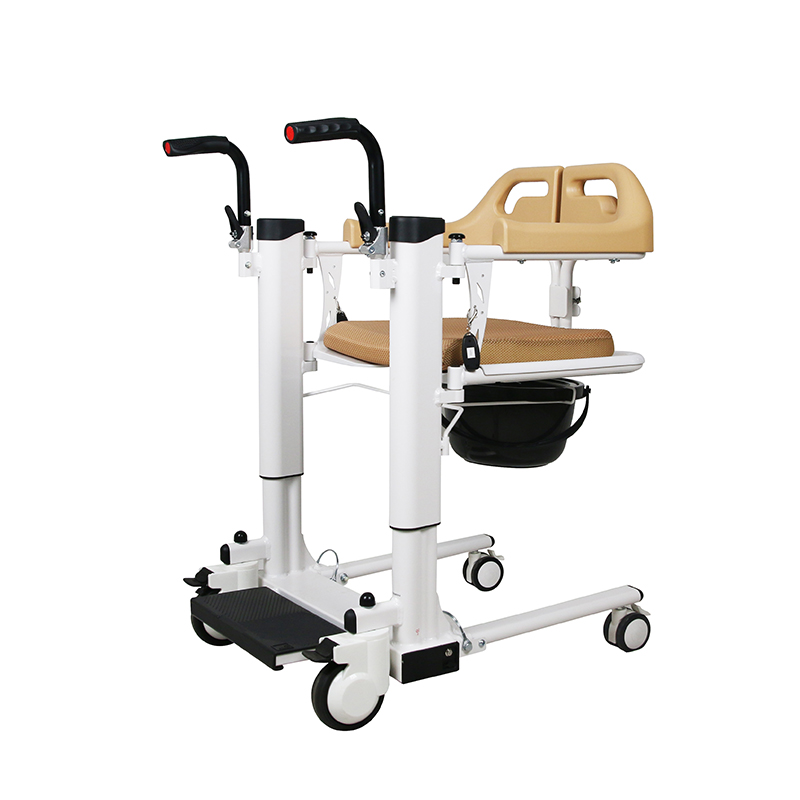
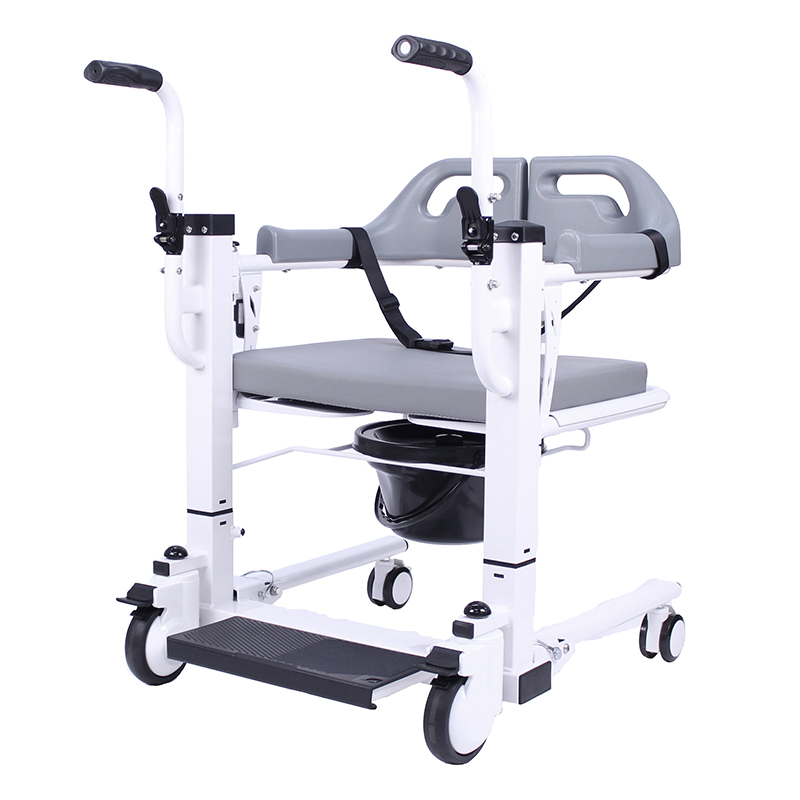
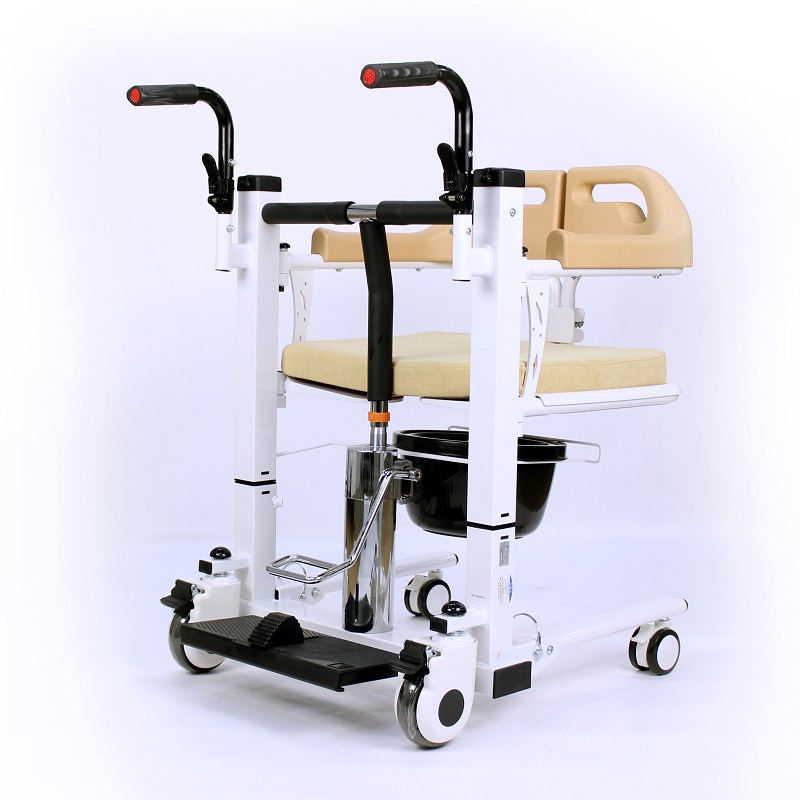
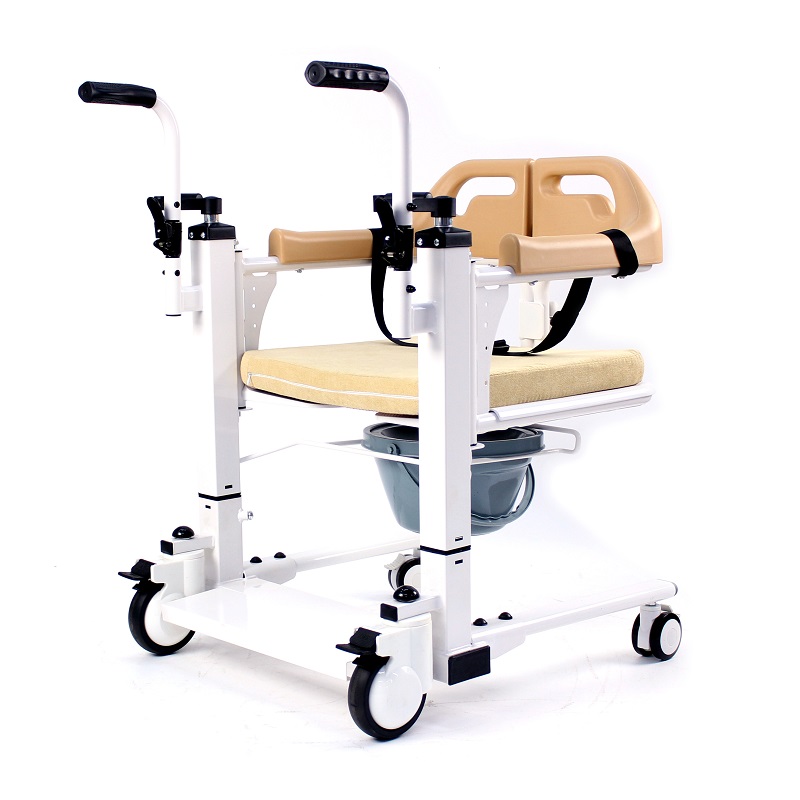
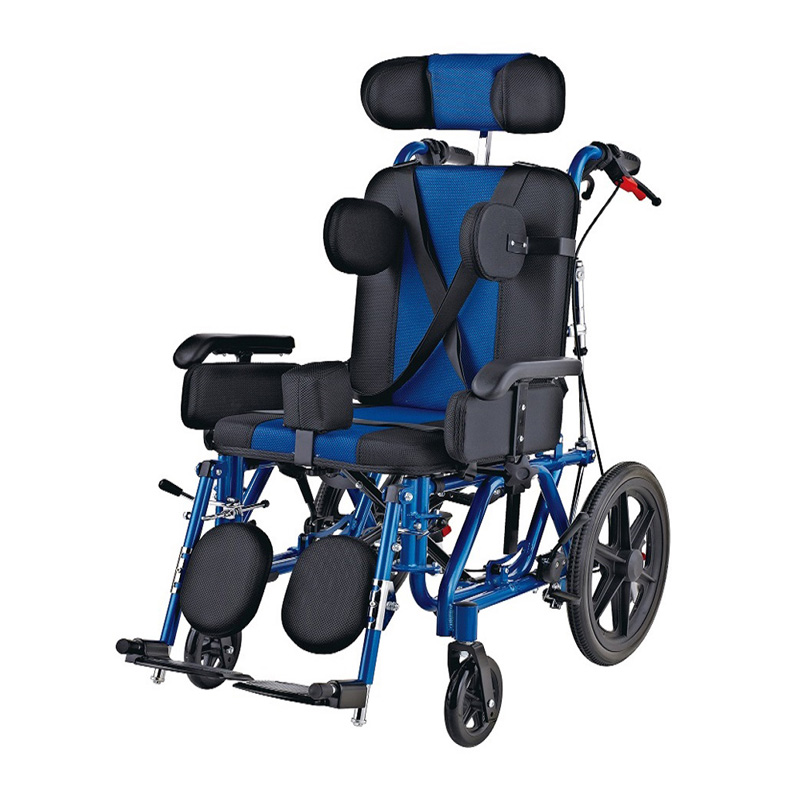
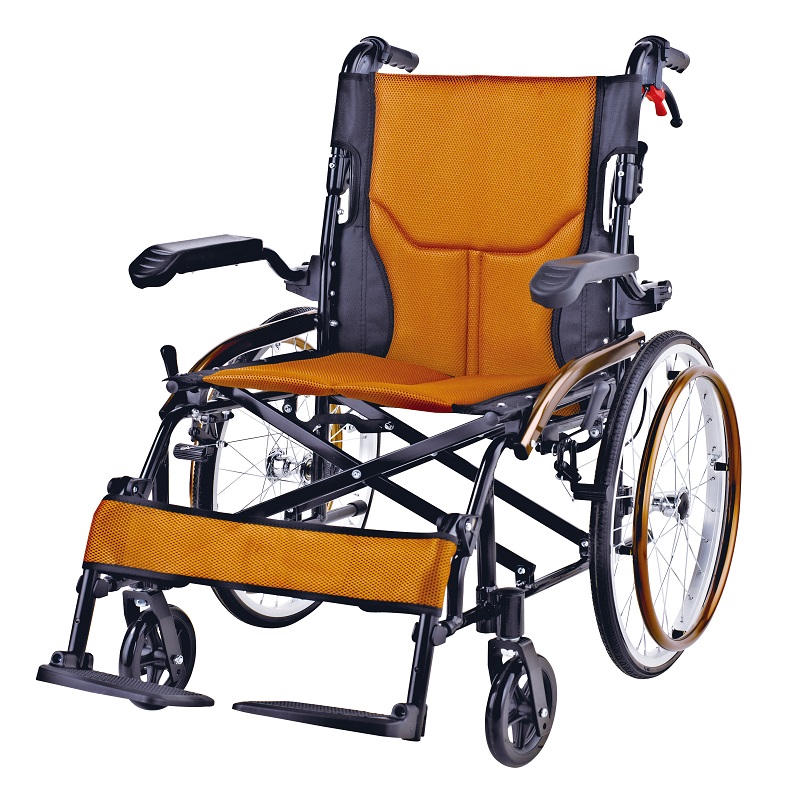
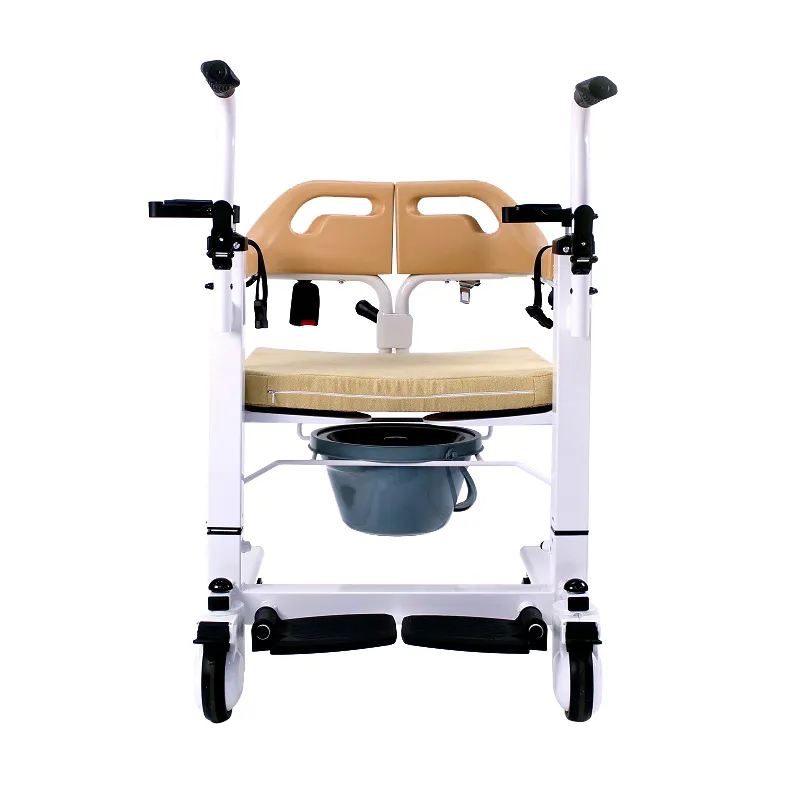
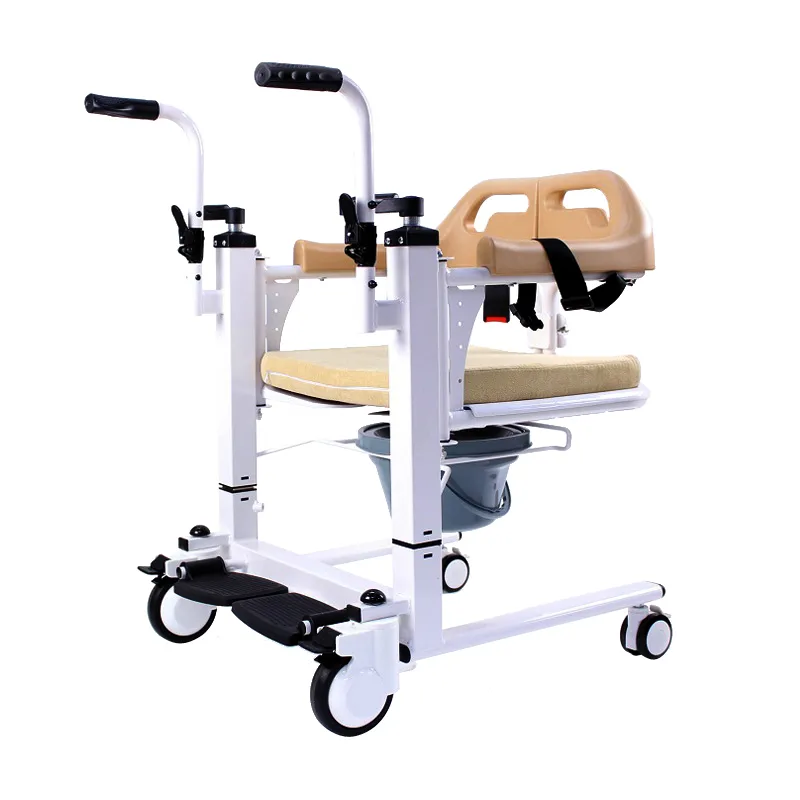
In modern nursing and medical assistive devices, the lift transfer chair is a widely used patient mobility tool. It achieves lifting and transfer through mechanical or electric means, helping caregivers easily perform operations such as patient ambulation, movement, and transfer.
A lift transfer chair typically has the following main functions:
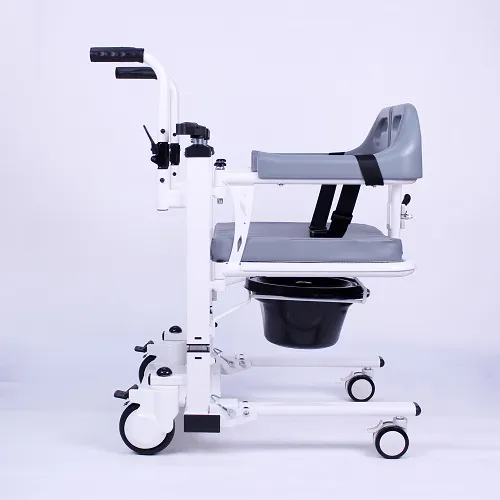
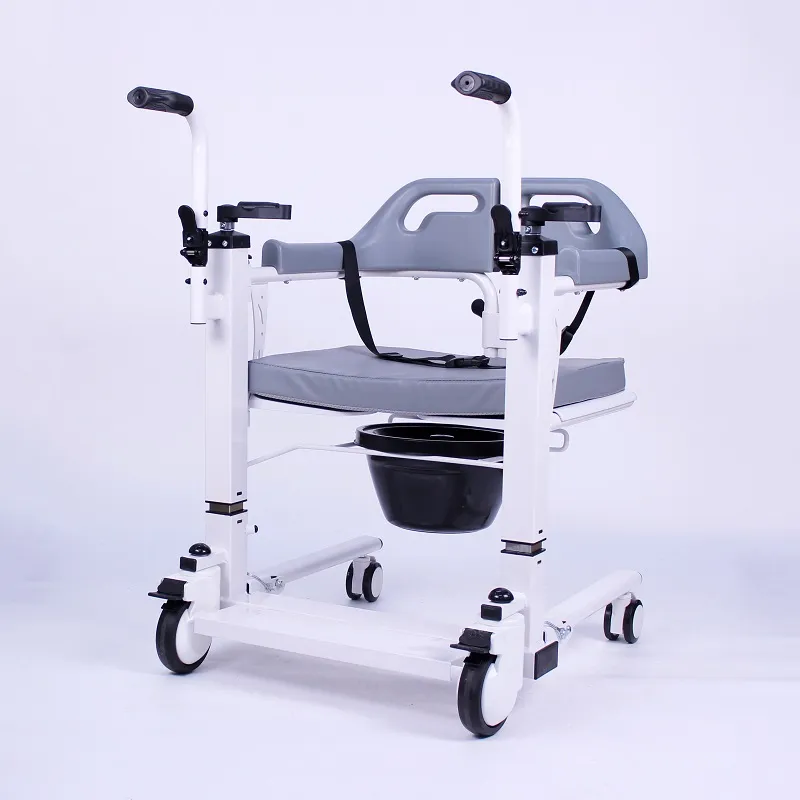
• Lifting function: Adjustable height via a hydraulic or motor system, facilitating patient transitions from bed to chair, and from chair to toilet.
• Mobility function: Equipped with casters, allowing for smooth movement and easy transfer between different rooms.
• Safety support structure: Includes armrests, safety belts, backrest, and footrests to prevent patient slippage.
• Ergonomic design: Provides a comfortable sitting experience through adjustable angles and support points.
In a general nursing environment, the lift transfer chair is an efficient and safe transfer tool. However, when we limit its use to the movement of post-operative patients, the issue becomes more complex—is it truly suitable? Are there any potential risks?
What are the special characteristics of a post-operative patient's physical condition?
To determine if a lift transfer chair is suitable for postoperative patients, it's essential to understand their physiological characteristics. Postoperative patients are typically in the recovery phase and share the following common characteristics:
1. Unhealed wounds requiring avoidance of pressure or vibration
Postoperative wounds are usually not fully healed. Any improper movement, vibration, or change in posture can potentially cause wound tearing, bleeding, or infection. The slight swaying or displacement of the lift transfer chair during raising and lowering may irritate the surgical area.
2. High pain sensitivity postoperatively
Many patients experience pain, weakness, or local numbness after surgery. Even with smooth lift transfer chair operation, changes in angle may exacerbate pain or cause postural discomfort.
3. Unstable vital signs
Some postoperative patients require continuous monitoring of blood pressure, heart rate, or oxygen saturation. Using a lift transfer chair can easily lead to orthostatic hypotension, dizziness, nausea, and other symptoms.
4. Medical Orders Require Bed Rest or Restricted Activity
Postoperative recovery often requires patients to rest in bed or restrict their range of motion, especially after chest, abdominal, spinal, or lower limb surgeries. Using a lift transfer chair for movement without medical supervision may violate these orders.
Therefore, the physical condition of postoperative patients determines that not all are suitable for using a lift transfer chair. In some cases, this device may even pose potential dangers.
Is a lift transfer chair truly suitable for postoperative patient movement?
The answer is: In most postoperative situations, a lift transfer chair is not recommended for initial patient movement due to certain risks and safety concerns.
1. Structural Design Does Not Perfectly Match Postoperative Needs
The lift transfer chair was originally designed to provide sitting transport support for those with limited mobility or those who are bedridden for extended periods. However, most postoperative patients require supine or semi-recumbent positions for support to avoid bending their bodies.
Furthermore, the lift transfer chair typically requires the patient to be in a sitting position during operation, a posture that is extremely detrimental to postoperative wound healing.
2. Uneven Pressure Distribution During Lifting and Lowering
With limited support points on the seat and back, the patient's body pressure is concentrated in specific areas when the device is raised, lowered, or moved. Postoperative patients with incisions or drainage tubes in these areas are at risk of pain, bleeding, or even tearing.
3. Risks of Vibration and Tilting During Transfer
Even high-quality lift transfer chairs are affected by uneven ground or changes in direction during transport. For postoperative patients, these slight vibrations can cause postural discomfort or stress reactions in the surgical area.
4. Lack of Medical Monitoring Support
Lift transfer chairs are generally used in routine care settings and are not equipped with monitoring equipment interfaces or oxygen supply supports. Postoperative patients may require continuous oxygen, intravenous fluids, or ECG monitoring during transport, which ordinary lift transfer chairs cannot meet.
Why is it said that "lift transfer chairs are relatively dangerous for postoperative patients"?
From a safety perspective, the reasons for the "relatively high risk" are mainly reflected in the following aspects:
1. Postural changes leading to circulatory fluctuations
The change in posture from a lying to a sitting position after surgery can cause blood redistribution, leading to symptoms such as low blood pressure, dizziness, and fainting. Lift transfer chairs require patients to remain seated, which is extremely detrimental to early postoperative recovery.
2. Potential traction on postoperative incisions
Although the lifting and lowering process is smooth, it inevitably causes slight body displacement, especially for patients who have undergone abdominal, lumbar, or thoracic surgery. They are more prone to wound traction due to changes in gravity, causing pain or bleeding.
3. High risk of improper operation by caregivers
Although lift transfer chairs are ergonomically designed, they still require correct use. If caregivers are not skilled in operation or fail to simultaneously support the patient's body, it may cause slippage, tilting, or joint sprains.
4. Inadequate support and immobilization
Postoperative patients are weak and often require additional support and restraint. The safety belts or armrests of ordinary lift transfer chairs cannot completely prevent body slippage, posing a risk of secondary injury.
5. Difficulty in Managing Postoperative Tubing and Catheters
For patients with IV lines, urinary catheters, or drainage tubes, the structure of the lift transfer chair can easily become entangled or pulled by these lines, greatly increasing the risk of medical accidents.
In summary, the use of a lift transfer chair in the early postoperative period does indeed pose a high risk and requires careful evaluation.
Which postoperative conditions absolutely discourage the use of a lift transfer chair?
To ensure safety, the following types of postoperative patients should avoid using a lift transfer chair for movement:
• After spinal, pelvic, or lower limb surgery: The body needs to be kept stable; any sitting or bending posture may lead to failed repositioning or pain.
• After abdominal, thoracic, or cardiac surgery: Sitting may increase incision tension, causing pain or difficulty breathing.
• After craniocerebral surgery: The head needs to be stably immobilized; raising, lowering, or shaking may affect intracranial pressure.
• Patients in intensive care or those still under anesthesia: Movement should be made on a specialized stretcher or gurney to ensure vital signs can be monitored.
• Patients with multiple catheters or drainage devices: Lift transfer chairs cannot securely hold these lines, posing a risk of traction.
Are there any exceptions for short-term use of a lift transfer chair?
In certain mid-to-late stages of postoperative recovery, if the patient has regained some ability to sit independently and the doctor has explicitly permitted short periods of standing, a lift transfer chair can be used under strict conditions, but the following principles must be followed:
• Obtain doctor's permission: An assessment by the attending physician or rehabilitation physician is required before any movement.
• Limited to short-term seated movement: For example, moving from the bedside to a wheelchair or the bathroom, within a few minutes.
• Monitor vital signs before and after use: including blood pressure, heart rate, and oxygen saturation.
• Full-time caregiver support: At least two caregivers must assist with the operation to prevent tipping.
• Choose a medically certified lift transfer chair: The device should be labeled for "recovery patients" and have a reliable braking and safety belt system.
If postoperative movement is necessary, what are some safer alternatives?
For postoperative patients requiring movement or transfer, the following alternative equipment can be considered:
1. Medical transfer bed
This allows for horizontal transfer of the patient to another bed or surgical trolley on the same level, avoiding changes in position.
2. Electric medical bed
This allows patients to gradually transition to a sitting position by adjusting the angle, without leaving the bed.
3. Medical stretcher or gurney
Equipped with a flexible mattress and safety belt, this maintains a supine position during transfer and is suitable for most postoperative patients.
4. Dedicated rehabilitation lift chair
Some advanced models feature multi-angle adjustable backrests and a supine design, which can be used under the guidance of a doctor for mid-to-late postoperative rehabilitation training, rather than initial transfer.
Therefore, a lift transfer chair is not the first choice for postoperative movement and is more suitable for use during the stable condition, recovery period, or long-term care phase.
What factors should caregivers consider when assessing the suitability of a lift transfer chair?
When deciding whether to use a lift transfer chair, caregivers must assess the following five dimensions:
• Post-operative time and recovery stage: It is contraindicated in the early post-operative period; in the middle and later stages, it requires evaluation by a physician.
• Patient's level of consciousness and cooperation: It is contraindicated for patients who are comatose or unresponsive.
• Wound location and tubing: If drainage tubes are present, a horizontal transfer method should be chosen.
• Equipment condition and safety: Regularly check the brakes, bolts, and axles for tightness.
• Location conditions: The ground should be level, there should be sufficient space, and the operating path should be clearly defined.
Only when all the above conditions are fully met is the use of a lift transfer chair safe and controllable.
Can Dayang accept low-volume or trial production runs for startups or small distributors?
Yes. Dayang recognizes that many clients—startups, regional distributors, or test-market retailers—require low-volume orders or initial small production batches. Our factory supports flexible MOQs depending on the product and customization complexity.
If you need to buy a limited number of units at a competitive price for market testing, contact us for a quote that explains the pricing differential, lead time and possible promotional support for your brand launch.
