
When walking becomes difficult, choosing the right assistive device is crucial. Walking sticks and walking frames are two of the most common types of walking aids, both helping people maintain balance, reduce the risk of falls, and boost confidence. However, they differ significantly in design, support capacity, and intended use.
So, which is better, a walking stick or a walking frame?
The answer depends on your balance, muscle strength, stage of rehabilitation, and daily environment.
This article will provide an in-depth analysis of the differences between "walking sticks" and "walking frames," their suitable users, advantages and disadvantages, and selection criteria, helping you determine the most suitable assistive device for you.
Why Use Walking Aids?
With age, surgical recovery, or the effects of neurological disorders, many people experience instability, leg weakness, gait abnormalities, or fatigue while walking. At this point, appropriate walking aids can offer significant benefits:
• Improved balance and stability: Reduces the risk of falls;
• Reduced body load: Helps support part of the body weight;
• Enhanced independence: Allows users to perform more activities independently;
• Increased confidence and sense of security: Reduces dependence on others;
• Promotes rehabilitation: Helps maintain proper gait and prevents muscle atrophy.
However, different assistive devices have different support capacities.
Walking sticks can support up to 25% of body weight, while walking frames can support half or more.
This means they are suitable for different levels of mobility.
What are the basic definitions of walking sticks and walking frames?
1. What is a Walking Stick?
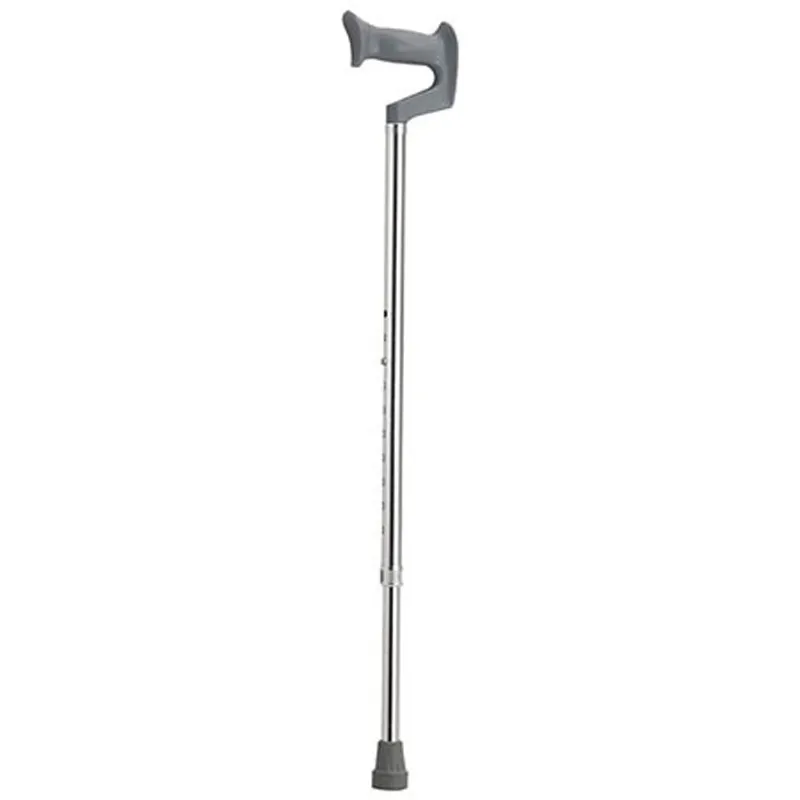
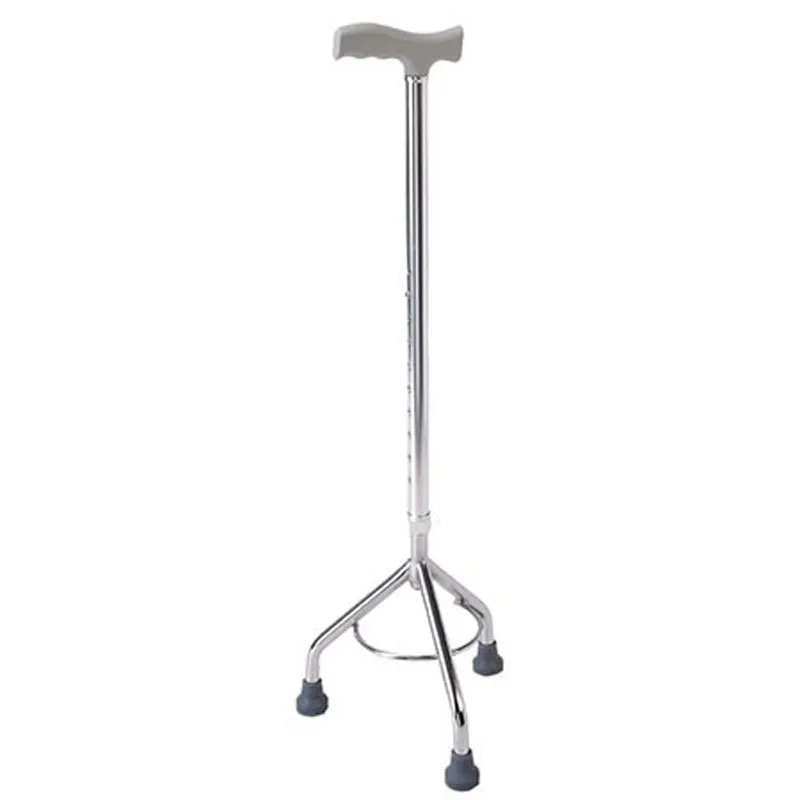
A walking stick is a lightweight walking aid, typically made of metal, wood, or carbon fiber, with a single or multi-point support structure. It helps users maintain balance and reduce lower limb stress by providing an additional "third point of support."
Common types of walking sticks include:
• Single-point walking stick: The most common and lightweight;
• Four-legged walking stick (quadruple): With four support points at the bottom, it is more stable;
• Folding walking stick: Easy to carry;
• Ergonomic walking stick: With a handle that conforms to the hand shape, improving comfort.
2. What is a walking frame?
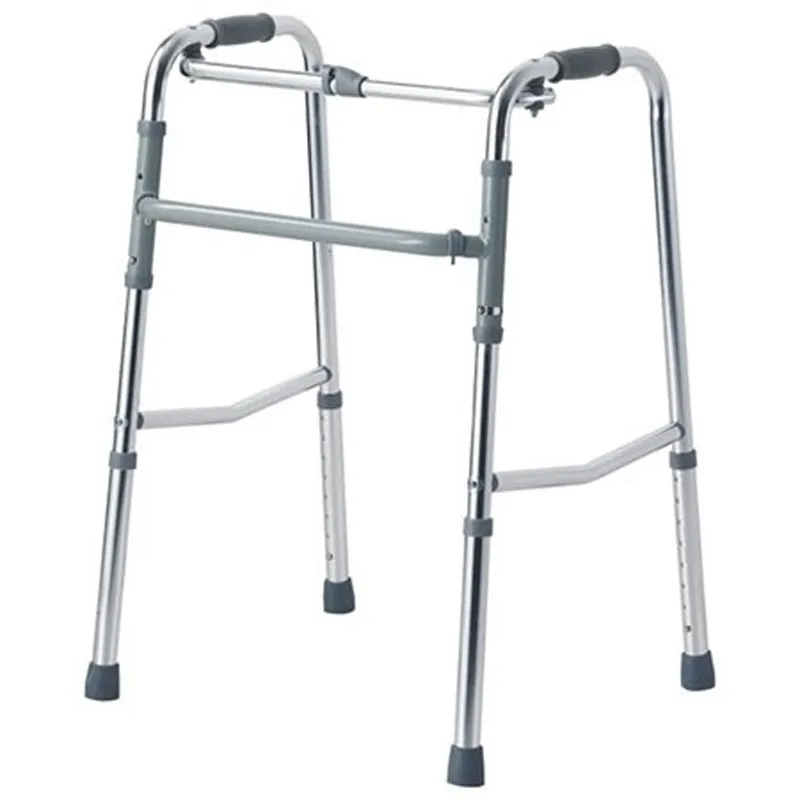
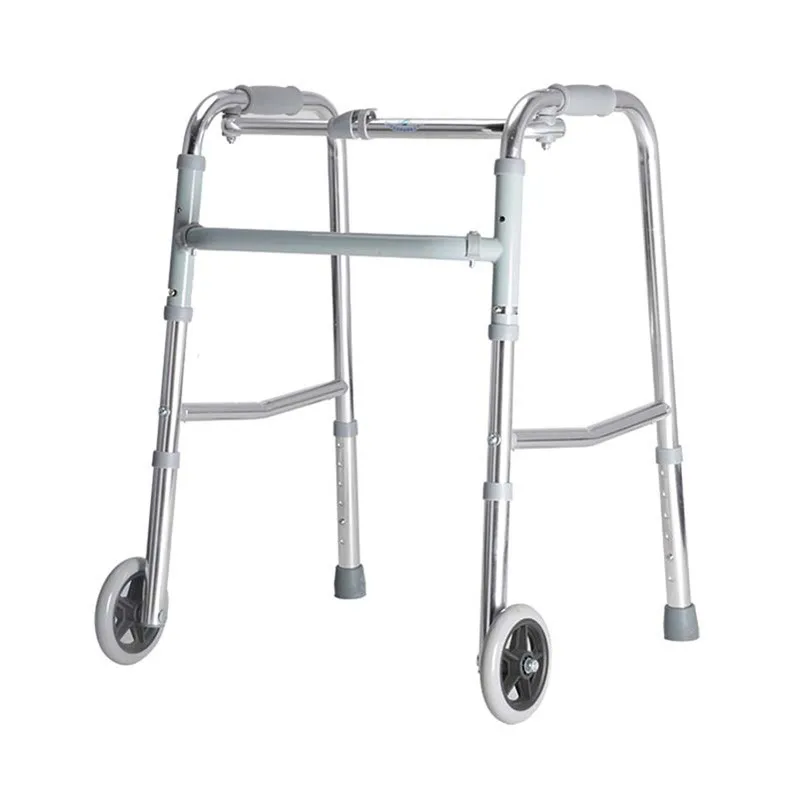
A walking frame is a frame structure consisting of four support legs or wheels, providing users with a wider range of balance support.
Depending on the design, walking frames can be divided into:
• Wheelless walking frames: Requires being lifted for use, offering the highest stability;
• Wheeled walking frames: Can slide forward, suitable for those with moderate mobility;
• Four-wheeled rollators: Equipped with brakes and a seat, allowing for both walking and sitting.
The main characteristics of a walking frame are:
It can support 50% or more of the user's body weight, making it ideal for people with poor balance, lower limb weakness, or those undergoing rehabilitation.
What is the core difference between a walking stick and a walking frame?
Comparison Items | Walking Stick | Walking frame |
| Support Capacity | Approximately 25% of body weight | Approximately 50% of body weight or more |
| Balance Stability | Low weight | Very high |
| Usage Method | Single or multi-point support, requires good balance | Four or more points of support, can be fully leaned against |
| Weight | Lightweight | Slightly heavy |
| Portability | Very convenient | Takes up a lot of space |
| Target Audience | Suitable for mild gait instability and minor pain | Suitable for those with poor balance or insufficient lower limb strength |
| Usage Scenarios | Short distances, familiar surroundings | Suitable for both indoor and outdoor use |
| Cost | Low weight | Slightly high |
| Rehabilitation Support | Provides light support | Provides stable support, suitable for rehabilitation training |
As shown in the table, Walking Sticks are more suitable for those with mild support needs, while walking frames are more suitable for those who require stable full-body support.
What are the advantages and disadvantages of Walking Sticks?
1. Advantages of Walking Sticks
• Lightweight and portable: Can be held with one hand, takes up little space;
• Simple to operate: Low learning curve;
• Suitable for mild assistance: Such as mild leg pain or balance instability;
• Adjustable height: Adaptable to different heights;
• Affordable price: Low financial burden.
2. Disadvantages of Walking Sticks
• Limited support range: Can only support about 25% of body weight;
• Requires strong arms: Requires relatively strong upper body strength;
• Insufficient stability: Can not independently support the entire body weight;
• Not suitable for those with severe balance disorders;
• Incorrect use can easily lead to shoulder or wrist pain.
Conclusion: Walking Sticks are more suitable for users with stable gait who only need mild support, rather than those who rely entirely on walking assistance.
What are the advantages and disadvantages of walking frames?
1. Advantages of Walking Frames
• Stronger support: Can support up to 50% or more of body weight;
• Excellent stability: Four-point support significantly reduces the risk of falls;
• Suitable for those with balance problems or insufficient muscle strength;
• Aids in rehabilitation training: Allows control of stride length, speed, and posture;
• High safety: Especially suitable for the elderly or post-operative rehabilitation patients.
2. Disadvantages of Walking Frames
• Inconvenient to carry: Larger size, not easy to use outdoors;
• Slower speed: Wheelless models require lifting to move forward;
• Requires space: Inconvenient to operate in narrow passages;
• Long-term use may affect the naturalness of gait;
• Price is slightly higher than Walking Sticks.
Conclusion: Walking frames are suitable for people who need high support and stability, and are an ideal choice for those with moderate to severe mobility impairments.
Who is more suitable to use Walking Sticks?
Before choosing a walking aid, it is crucial to understand your own physical condition.
Walking Sticks are suitable for:
• Individuals with mild gait instability or occasional imbalance;
• Individuals with mild leg or knee pain;
• Individuals who require only partial support and do not rely entirely on the device;
• Individuals with sufficient muscle strength and good upper limb coordination;
• Individuals who walk short distances or engage in indoor activities.
If you can stand independently and only need balance assistance in certain situations, a Walking Stick is often sufficient.
Who is a better candidate for a walking frame?
In contrast, walking frames are suitable for:
• Individuals with significantly reduced lower limb strength;
• Individuals with poor balance or prone to falls;
• Patients in post-operative rehabilitation (e.g., hip or knee surgery);
• Individuals with gait instability due to neurological disorders;
• Individuals who require significant weight support (≥50%);
• Individuals with average upper limb strength but who need stable support.
If you feel your body "wobbling" or unable to take stable steps while walking, a walking frame will provide safer and more effective support.
How to Use Walking Sticks and Walking Frames Correctly?
1. Walking Stick Usage Tips
• Adjust the height of the walking stick to the user's wrist joint;
• Ensure the handle is firm and comfortable to avoid hand fatigue;
• Place the walking stick on the healthy side (not the affected side) and move it in sync with the affected leg;
• Keep your body upright while walking, do not lean forward.
2. Walking Frame Usage Tips
• Adjust the height so that the handle is level with your wrist when your arm is hanging naturally;
• Walking steps: Walking frame → Affected leg → Healthy leg;
• Avoid over-reliance and maintain a natural stride;
• Slow down your movements when turning or starting to prevent loss of balance.
Is a walking stick easier to carry than a walking frame?
Yes. Walking sticks are small and lightweight, suitable for short distances or outdoor use; walking frames are more suitable for indoor or flat surfaces.
Is a walking frame safer than a walking stick?
Generally yes. Walking frames have four-point support, providing stable balance, especially suitable for those who are weak or in the rehabilitation stage.
Can I use a walking frame first and then switch to a walking stick later?
Yes. Many patients use a walking frame during the initial stages of rehabilitation and then switch to a walking stick once their balance improves.
Which one reduces joint stress more?
A walking frame can support about 50% of your body weight, providing more significant pressure relief for the knees and hips.
How do I choose the right device for me?
When choosing between a walking stick and a walking frame, consider the following factors:
Walking ability:
• Mild instability → Walking stick;
• Significant instability or needing more support → Walking frame.
Physical condition:
• Mild pain: Walking stick;
• Need to support more weight or post-operative rehabilitation: Walking frame.
Usage environment:
• Indoors or short distances → Walking stick is more convenient;
• Outdoors or long distances → Walking frame is safer.
Strength and Coordination:
• Strong upper limb strength → Walking Stick is suitable;
• Poor balance → Walking frame should be used.
Professional Assessment:
• Before choosing, it is best to have your walking ability and muscle strength assessed by a doctor or rehabilitation therapist to determine the most suitable type and height of equipment.
Which is better for walking—Walking Stick or Walking Frame?
The answer to "Is it better to walk with a walking stick or a walking frame?" is not absolute, but depends on your physical condition and support needs.
✅ If you can walk independently and only need light balance support, a walking stick is an ideal lightweight tool.
✅ If you have poor balance, weak physique, or need to support a lot of weight, a walking frame provides more stable and safer support.
In short:
Walking sticks provide lighter support, while walking frames offer greater stability. Safety and stability should be the primary criteria when choosing.
Are Dayang products suitable for retail and e-commerce channels?
Yes. Many Dayang products are designed with retail packaging, user-friendly manuals and branding options suitable for online stores, pharmacies, medical supply shops and direct-to-consumer channels. We support private-labeling, custom packaging and multi-language manuals to meet the needs of retail brands and e-commerce retailers.
If you plan to resell Dayang products under your brand, request our wholesale price list, printing and packaging options, and minimum order quantities for label customization.
