
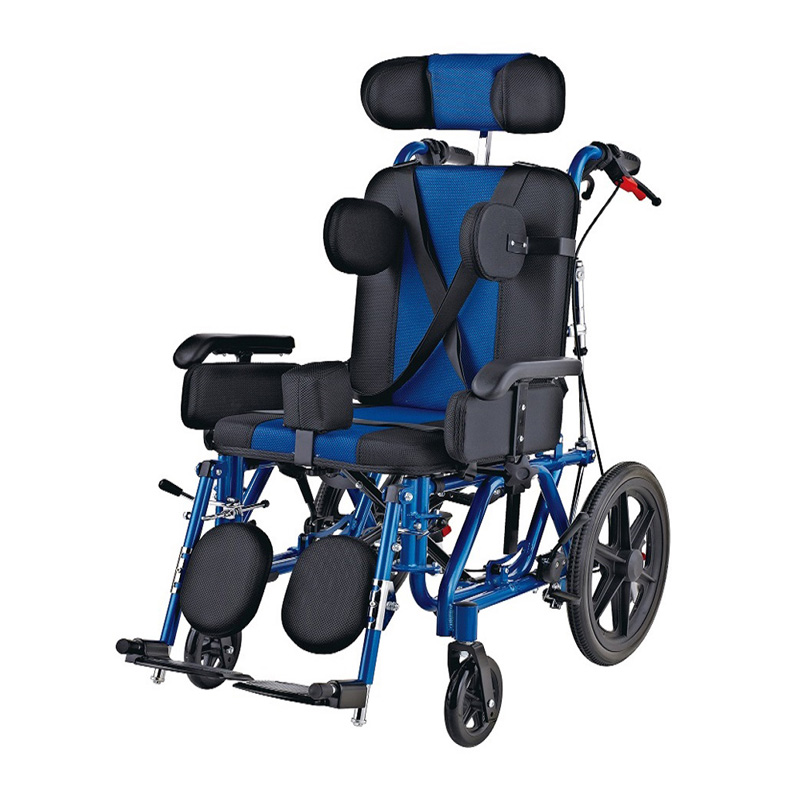
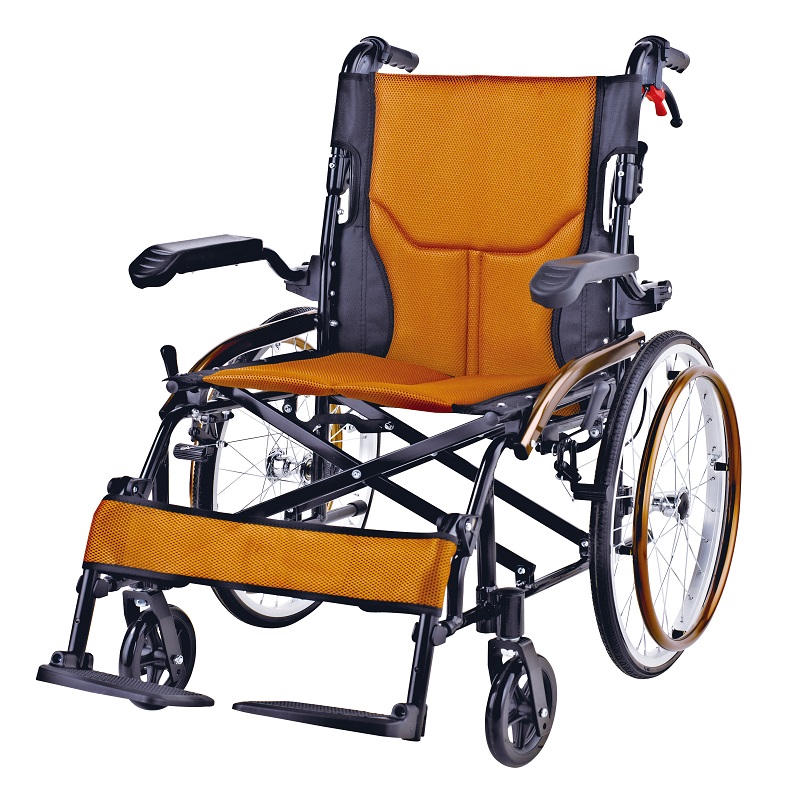
In nursing care, safely and efficiently moving patients from bed to wheelchairs, bathrooms, toilets, or other locations has always been a challenging issue. Traditional manual transfer methods are not only laborious but also carry the risk of patient falls or injury to caregivers.
With the development of nursing equipment, the Patient Lift Transfer Chair has become a core assistive tool in an increasing number of hospitals, nursing homes, and home care settings.
Many home caregivers ask: Can a Patient Lift Transfer Chair be used at home?
The answer is yes—not only can it be used, but it is also highly practical and safe in home care.
This article will systematically analyze the feasibility and advantages of the Patient Lift Transfer Chair in a home environment from multiple aspects, including structural features, space requirements, safety, and target population.
What is a Patient Lift Transfer Chair?
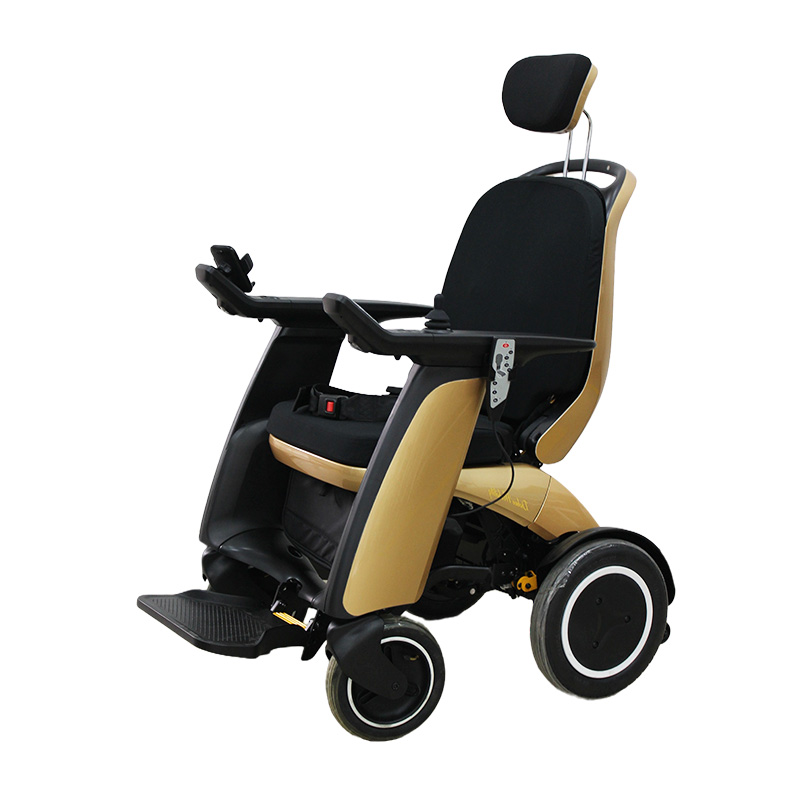
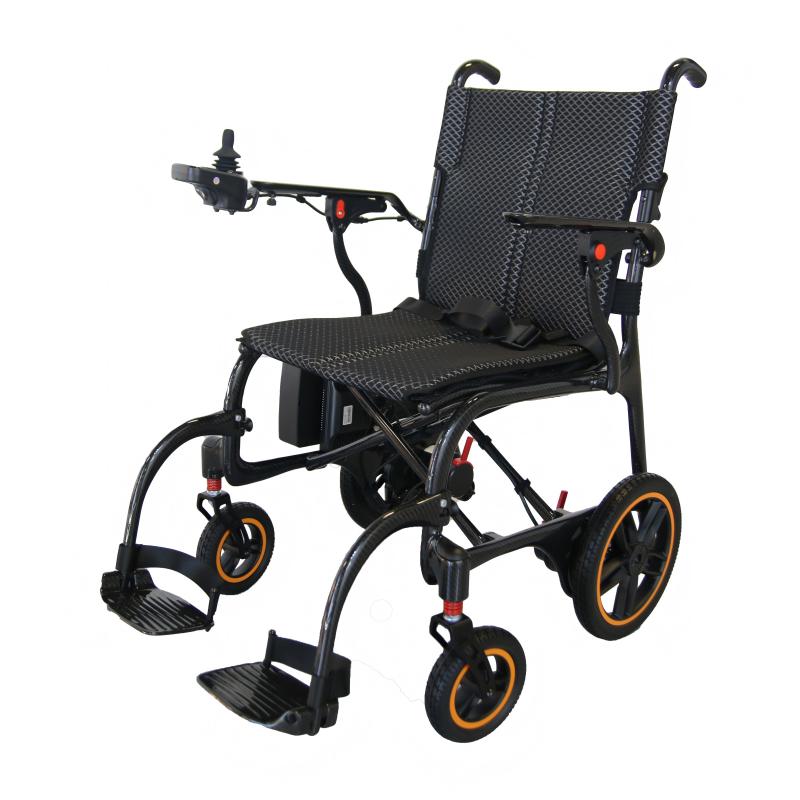
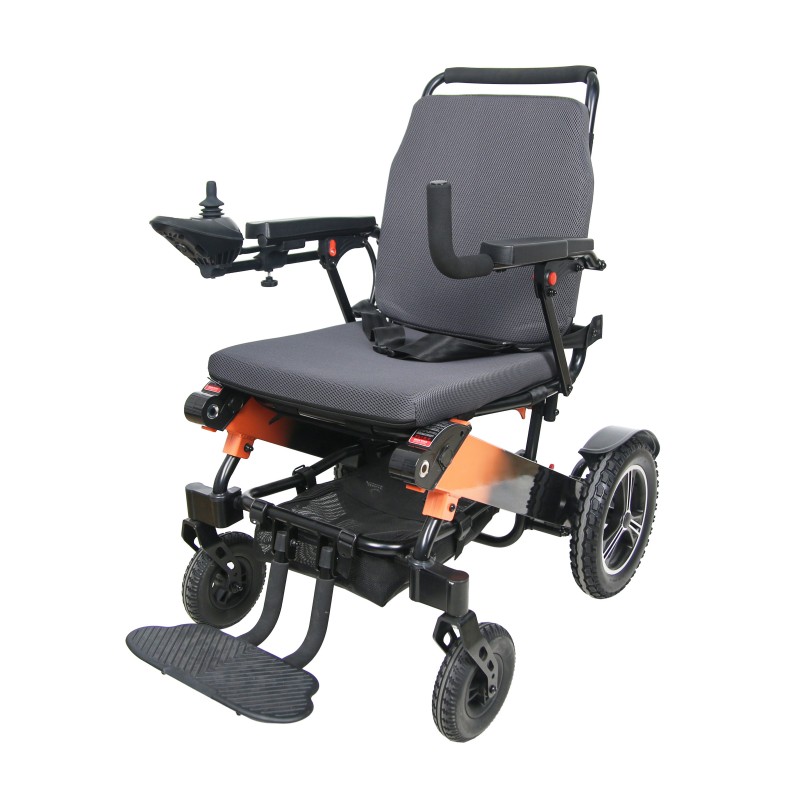
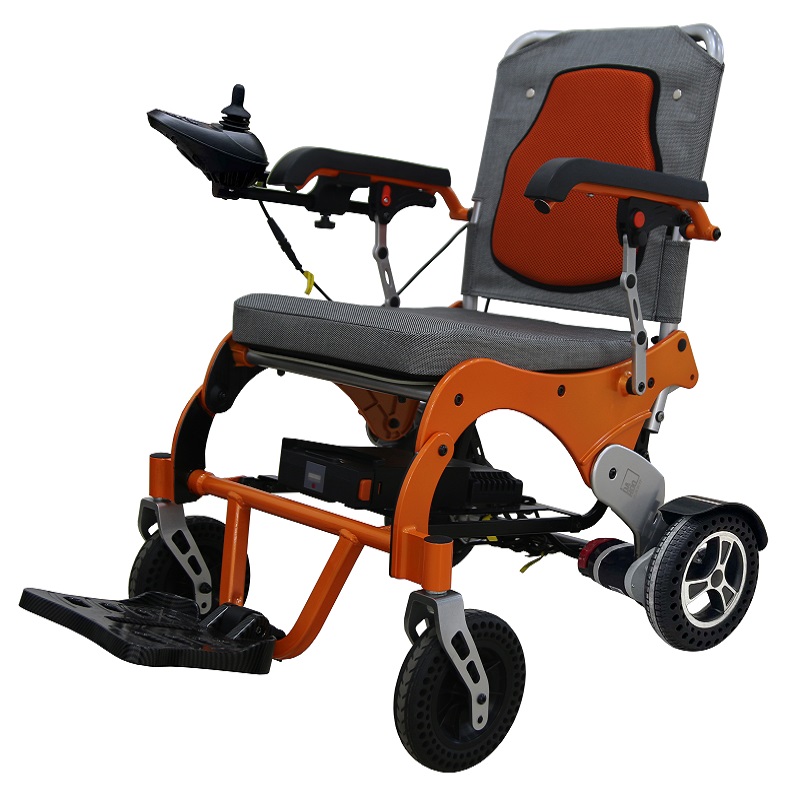
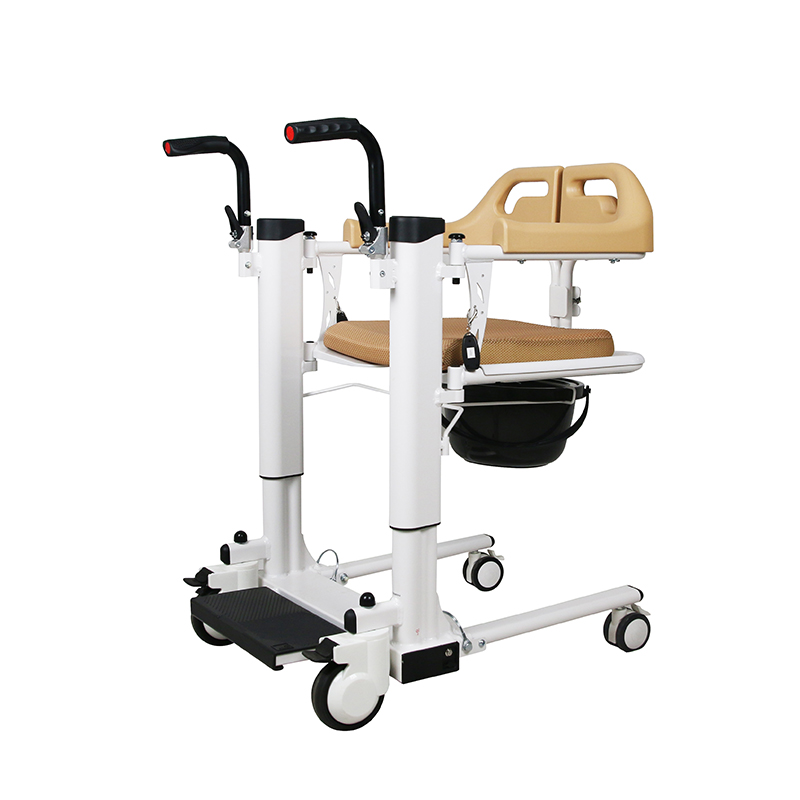
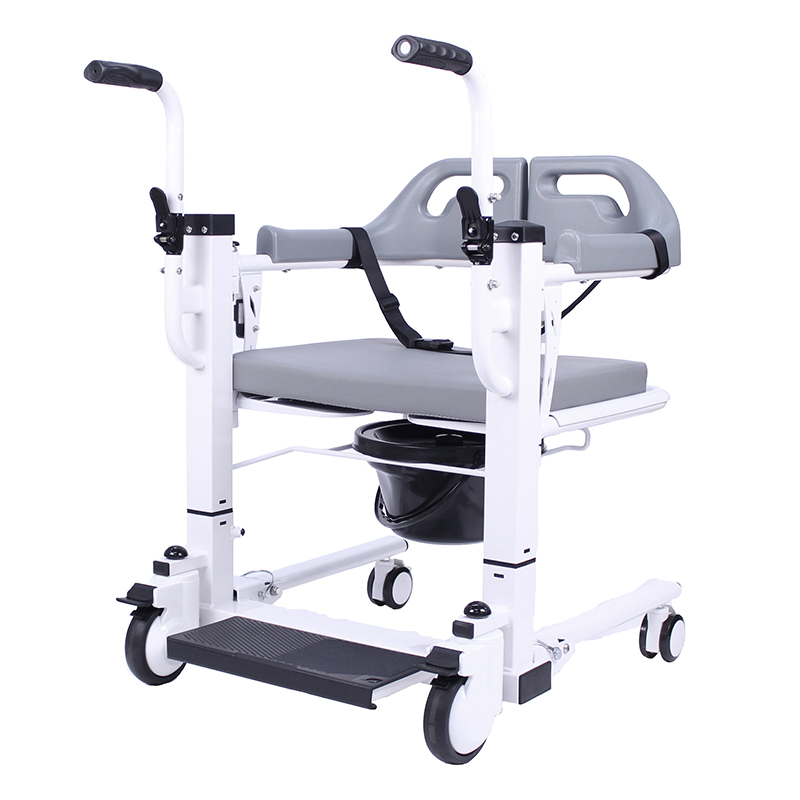
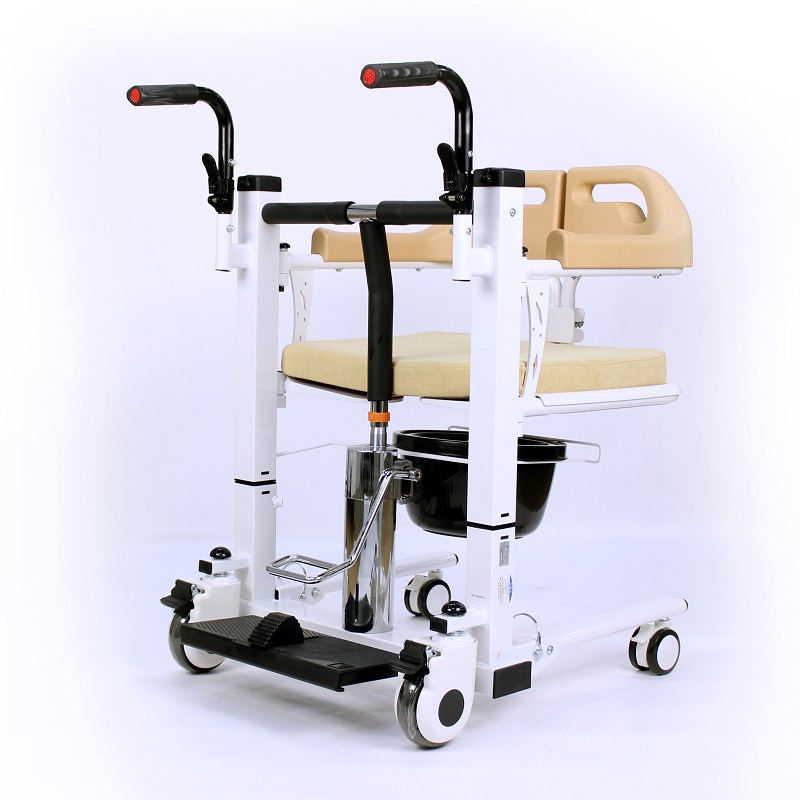
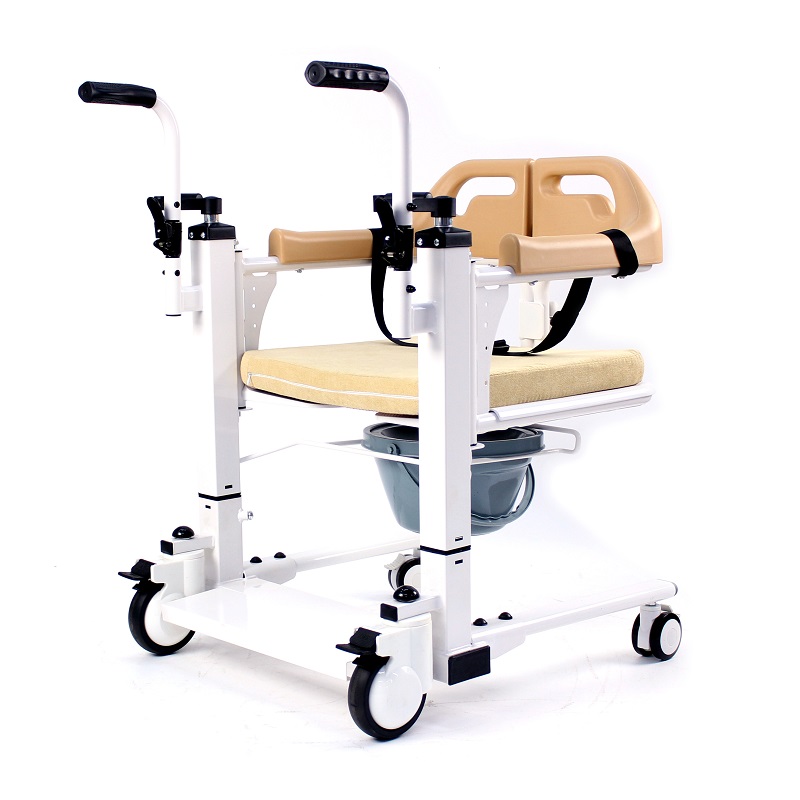
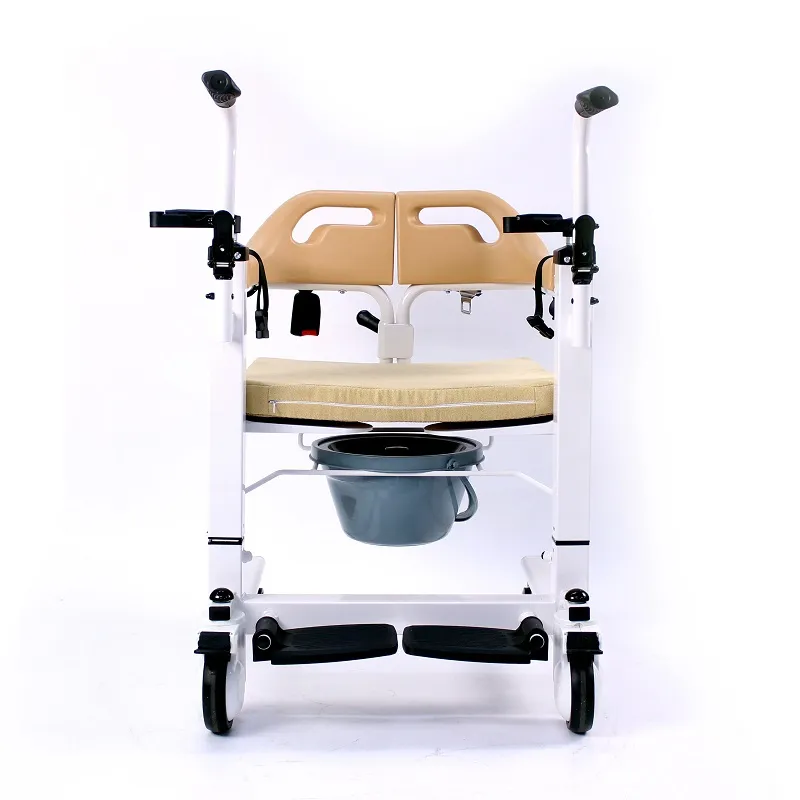
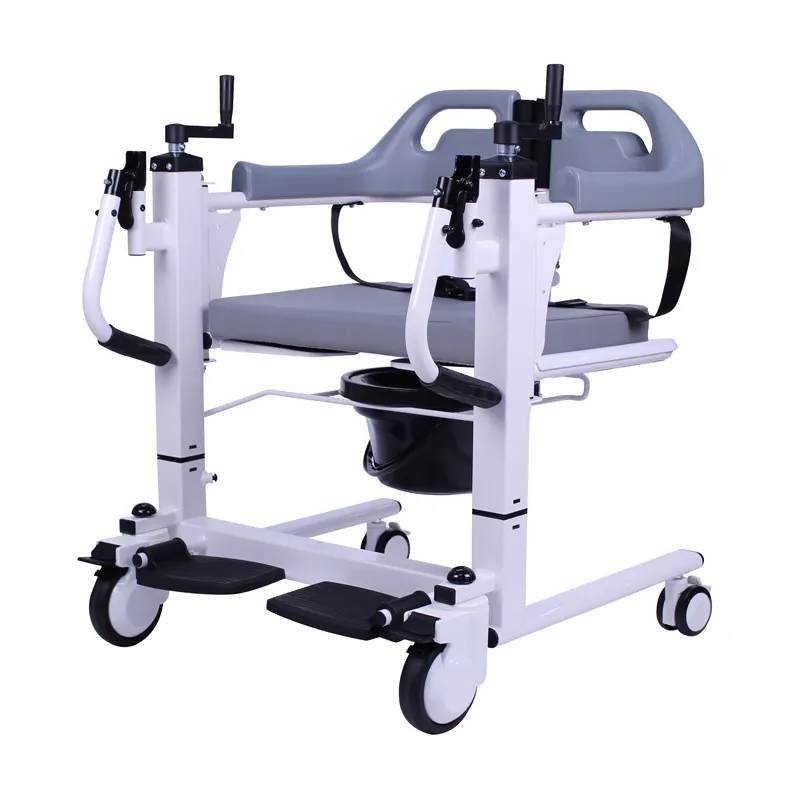
A Patient Lift Transfer Chair is an assistive transfer device specifically designed for people with mobility impairments. Unlike traditional sling-type transfer machines, this device features a seat-style design combined with a mechanical or electric lifting mechanism, allowing patients to be smoothly lifted, transferred, and lowered while seated.
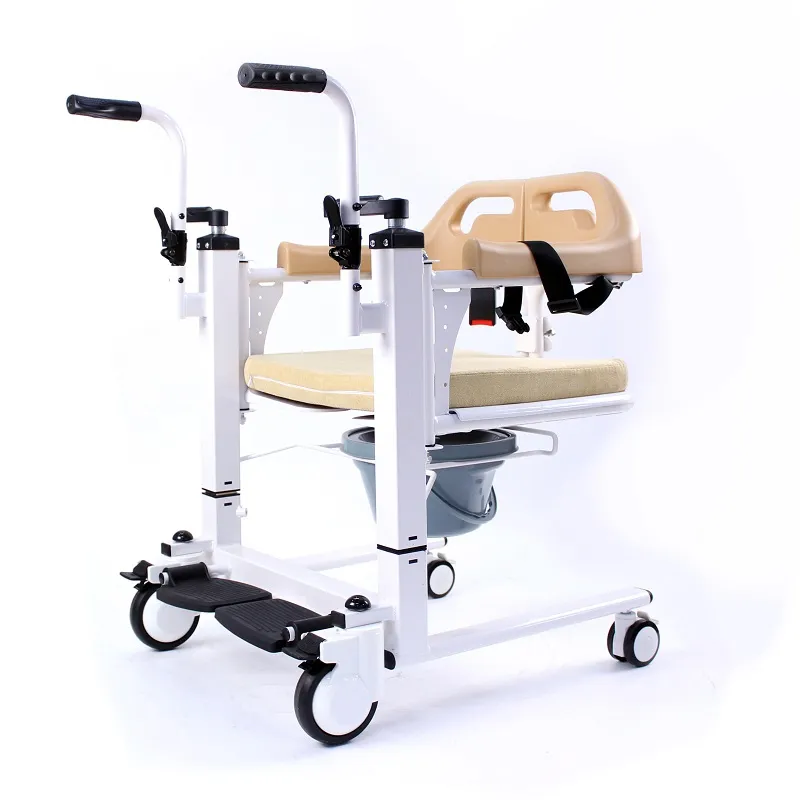
Its typical structure includes:
• Lifting system: Often uses a hydraulic or electric lifting device for smooth up-and-down movement of the seat;
• Adjustable backrest and armrests: Facilitates patient seating and disembarking;
• Foot pedals and wheel system: Equipped with brakes to ensure safety during transfer;
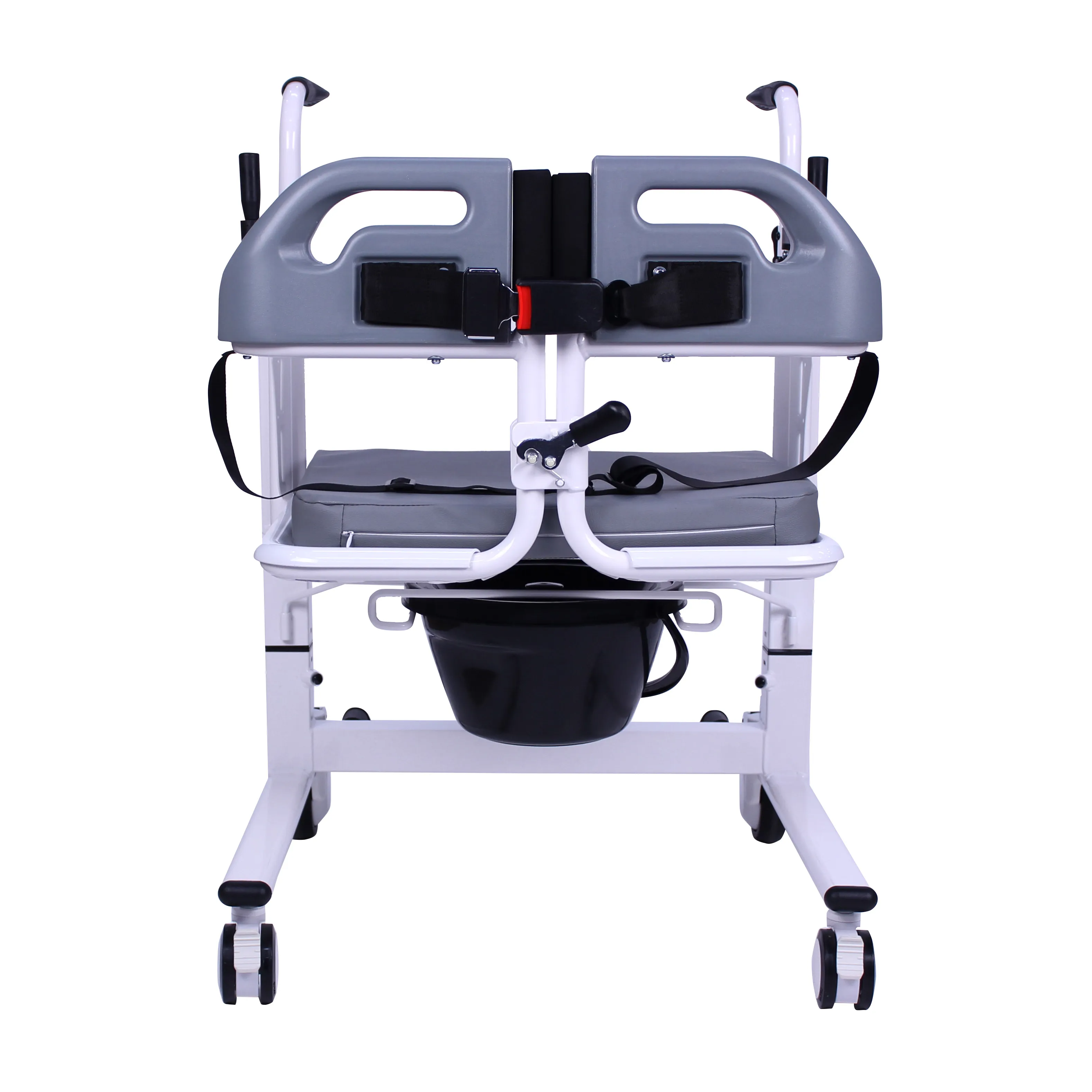
• Non-slip seat cushion and safety belt: Ensures comfort and stability during use.
Compared to the bulky sling-type transfer equipment used in hospitals, the Patient Lift Transfer Chair is lighter and more compact, allowing for easy operation in small home spaces, making it ideal for home care.
Why is the Patient Lift Transfer Chair suitable for home care environments?
The home environment differs from medical facilities, with limited space, narrow passageways, and insufficient nursing resources, which places specific demands on transfer equipment. The Patient Lift Transfer Chair is designed to meet these key requirements:
1. Lightweight and compact, suitable for small spaces
Many models of the Patient Lift Transfer Chair are only about 50 cm wide, allowing easy passage through bedroom, bathroom, or hallway doorways without requiring extensive furniture rearrangements. Its foldable or detachable structure makes it easy to store when not in use.
2. Simple to operate, no professional training required
Home caregivers often lack hospital-level nursing training, but the Patient Lift Transfer Chair's user-friendly design allows for easy height adjustment via buttons or handles, enabling a single person to complete the transfer.
3. Safe and stable, reducing the risk of falls
In home care, patient falls are one of the most common accidents. The Patient Lift Transfer Chair, with its braking system, armrest fixation, and safety belts, effectively prevents slips and instability.
4. Multi-functional, Adaptable to Various Scenarios
A high-quality Patient Lift Transfer Chair can not only be used for bed-to-chair transfers, but also as a toilet chair, shower chair, and wheelchair, greatly improving care efficiency and patients' self-care ability.
How much space does a Patient Lift Transfer Chair require for home use?
Space is a core issue that must be considered in home care.
Generally speaking, Patient Lift Transfer Chairs have relatively low space requirements, but basic operating distances must still be met:
• Bedside space: At least 60–80 cm of width should be left beside the bed for easy entry and rotation of the chair;
• Doorway width requirement: A standard Patient Lift Transfer Chair can pass through doorways with a width of 60 cm or more;
• Floor flatness: The floor should be flat and unobstructed to prevent the wheels from getting stuck;
• Bathroom environment: If used for bathing, ensure the floor is non-slip and choose a model with waterproof features.
Therefore, before using a Patient Lift Transfer Chair at home, it is recommended to measure the dimensions of the bed, bathroom, and passageway to ensure smooth and safe operation.
Which patients are best suited to use a home-use Patient Lift Transfer Chair?
1. Patients with limited mobility but clear consciousness
Such as stroke patients with hemiplegia, lower limb weakness, or those recovering from surgery. While these patients cannot walk independently, they can cooperate with caregivers for transfers, making them ideal candidates for a Patient Lift Transfer Chair.
2. Patients who are bedridden but can sit up
For some bedridden individuals, a height-adjustable transfer chair allows for activities such as sitting practice, toileting, and bathing, helping to prevent pressure sores and promote blood circulation.
3. Elderly patients or those with muscle weakness
Elderly individuals often have poor balance and stiff joints, making manual movement prone to injury. A Patient Lift Transfer Chair provides stable support, reducing the risk of injury during care.
4. Obese patients or those with mobility impairments
Some models of Patient Lift Transfer Chairs have high weight capacity (up to 150kg or more), suitable for larger users, ensuring safety and comfort.
Is a Patient Lift Transfer Chair safe to use at home?
Safety is the most important concern in home care.
In fact, the Patient Lift Transfer Chair was designed to ensure the safety of both patients and caregivers.
Safety features include:
• Anti-slip casters and brakes: Prevent accidental slippage during movement;
• Mechanical limit system: Prevents excessive lifting or tipping;
• Ergonomic support design: Ensures patient balance during lifting;
• Seat belt and buckle: Prevents slippage.
As long as it is used according to the instructions and parts are checked regularly, the Patient Lift Transfer Chair is a very safe and reliable nursing device in a home environment.
What are the daily maintenance considerations for the Patient Lift Transfer Chair?
To ensure long-term safe use, the Patient Lift Transfer Chair requires regular maintenance. Common maintenance points include:
• Checking for loose screws and connectors;
• Keeping the lifting mechanism lubricated to prevent jamming;
• Regularly cleaning the seat and armrests to prevent bacterial growth;
• Checking the brake sensitivity and ensuring the wheels are securely fixed;
• For electric models, pay attention to battery maintenance and charging safety.
These routine maintenance operations are simple, require no professional tools, and can be performed by an average household.
Can the Patient Lift Transfer Chair be used in the toilet or bathroom?
Many users wish to use the Patient Lift Transfer Chair to assist patients with toileting or bathing.
The answer is: Yes, but the appropriate model must be selected.
Some Patient Lift Transfer Chairs feature the following design elements:
• Waterproof and rust-resistant materials: suitable for humid environments;
• Removable seat design: with a central opening for toilet access;
• Structural dimensions for easy entry into the toilet or shower: ensures smooth entry into the bathroom.
When using it at home, ensure the floor is dry, non-slip, and free of obstructions in the bathroom for safety.
Does the Patient Lift Transfer Chair require multiple operators?
Unlike traditional transfer machines, the Patient Lift Transfer Chair is designed for single-person operation.
With its lifting system and braking mechanism, caregivers can transfer patients with minimal effort, without assistance from others. This significantly reduces the workload of home caregivers, especially suitable for families with only one caregiver.
What are the differences between a Patient Lift Transfer Chair and a regular wheelchair?
Although a Patient Lift Transfer Chair may look similar to a wheelchair, there are significant functional differences:
Project | Patient Lift Transfer Chair | Standard Wheelchair |
| Main Uses | Patient transfer and lifting | Mobile mobility |
| Lifting Function | Equipped with (mechanical or electric) | None |
| Safety Fixing Device | Equipped with safety belts and anti-slip system | Rarely |
| Target Audience | For patients unable to stand or sit up independently | For those who can sit but have limited mobility |
| Usage Scenarios | Suitable for various scenarios including beds, chairs, toilets, and bathrooms | Short-distance indoor and outdoor mobility |
It's clear that the Patient Lift Transfer Chair is more geared towards caregiving and assistance than as a means of transportation. For home caregivers, it significantly improves transfer efficiency and safety.
What are the practical advantages of using a Patient Lift Transfer Chair at home?
• Reduced care intensity: Reduces the need for bending over, lifting, and other strenuous movements;
• Increased patient safety: Patients don't need to worry about slipping or falling;
• Improved quality of life: Allows independent toileting, bathing, or participation in family activities;
• Reduced care costs: Eliminates the need for frequent visits to professional caregivers;
• Multi-purpose device: One device can fulfill multiple functions such as transfer, toileting, and bathing.
This makes the Patient Lift Transfer Chair one of the most cost-effective assistive devices for home care.
What factors should be considered when choosing a Patient Lift Transfer Chair for home use?
Choosing the right equipment is essential for safety and comfort. We recommend considering the following aspects:
• Weight-bearing capacity: Confirm compatibility with the patient's weight;
• Lifting method: Electric is easier, manual is more economical;
• Base width: Must match the width of your doorway and the space beside your bed;
• Waterproofing and materials: If used in the bathroom, choose rust-resistant materials;
• Comfort: Consider the ergonomics of the seat cushion material and backrest support;
• Brand and after-sales service: Prioritize products with CE, FDA, and other certifications to ensure quality.
Can buyers get factory samples before purchasing in bulk?
Yes, Dayang Medical allows international customers to buy samples before placing wholesale orders. This ensures buyers can check quality, safety, and design before committing to large-scale purchasing.
Our factory provides discounted sample prices, and once wholesale orders are confirmed, we offer bulk promotions and cheap purchasing deals.
