
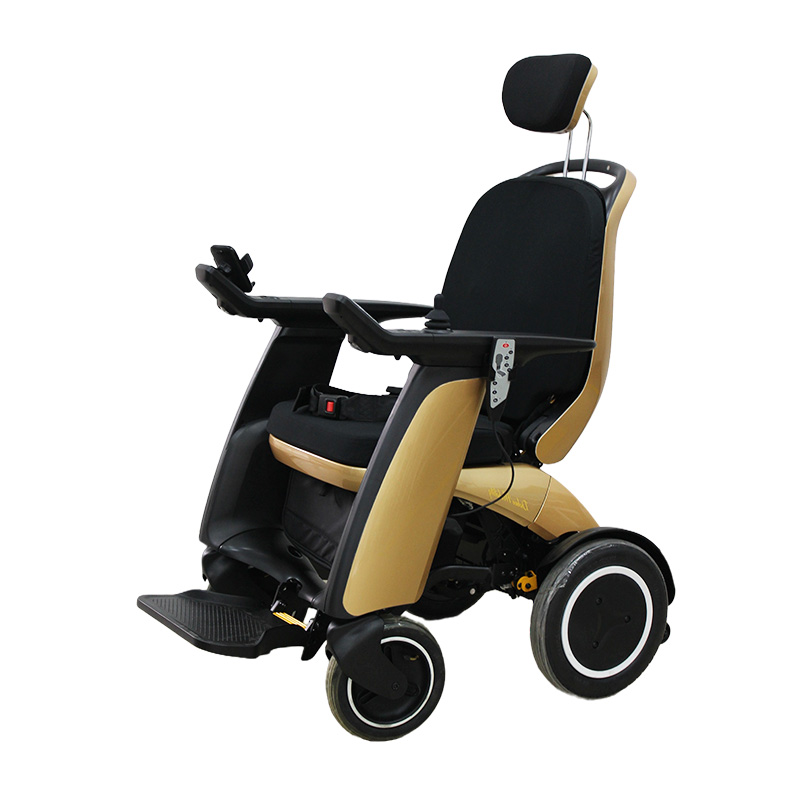
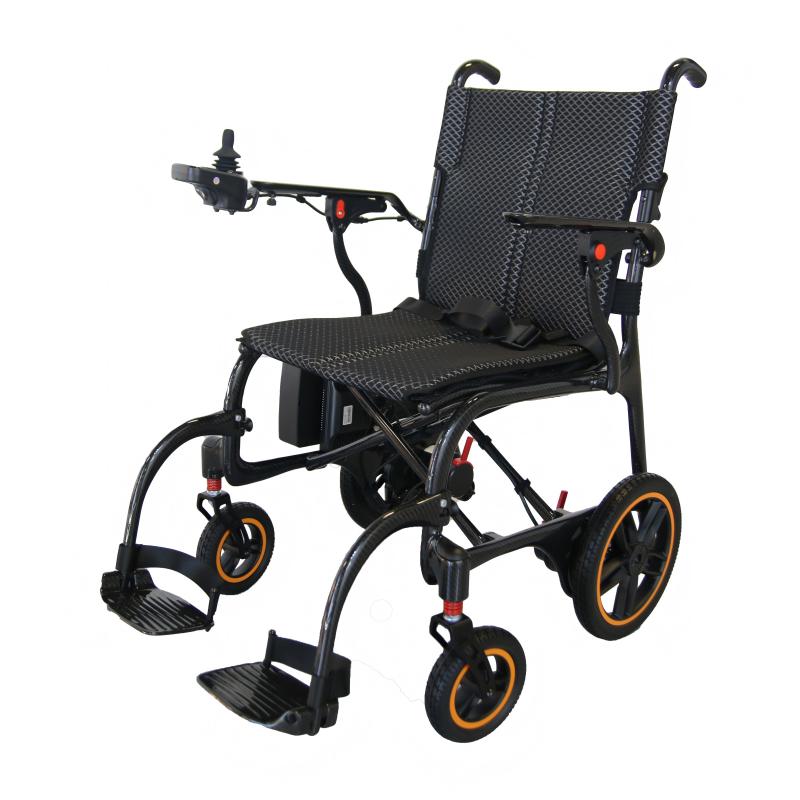
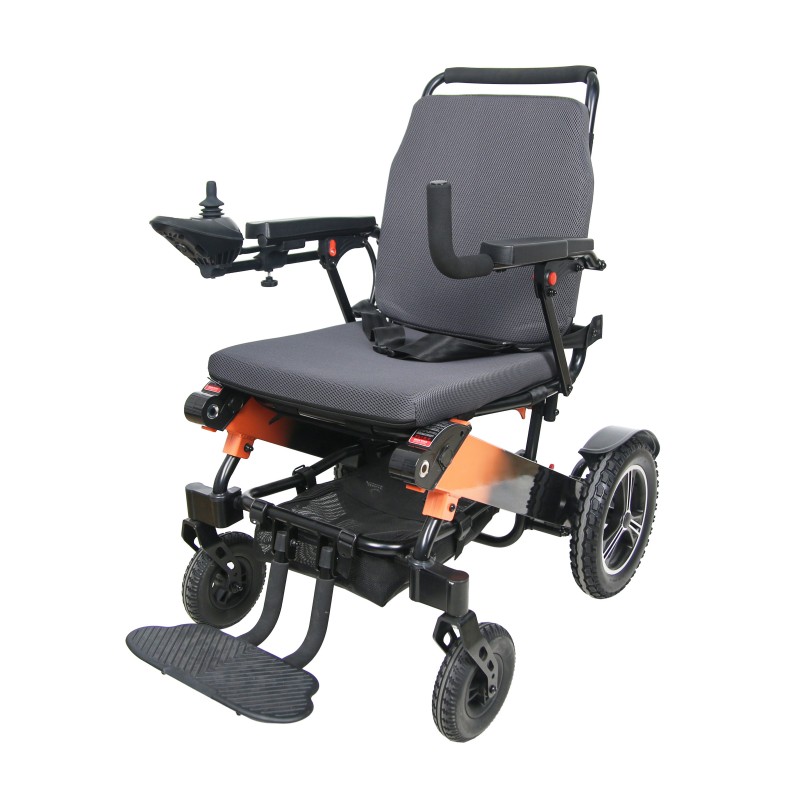
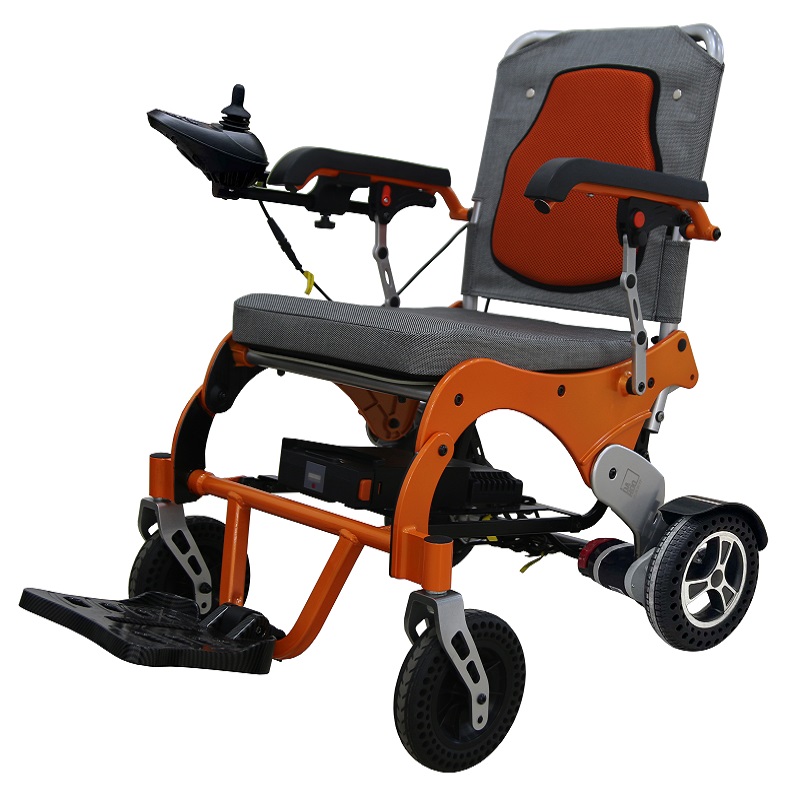
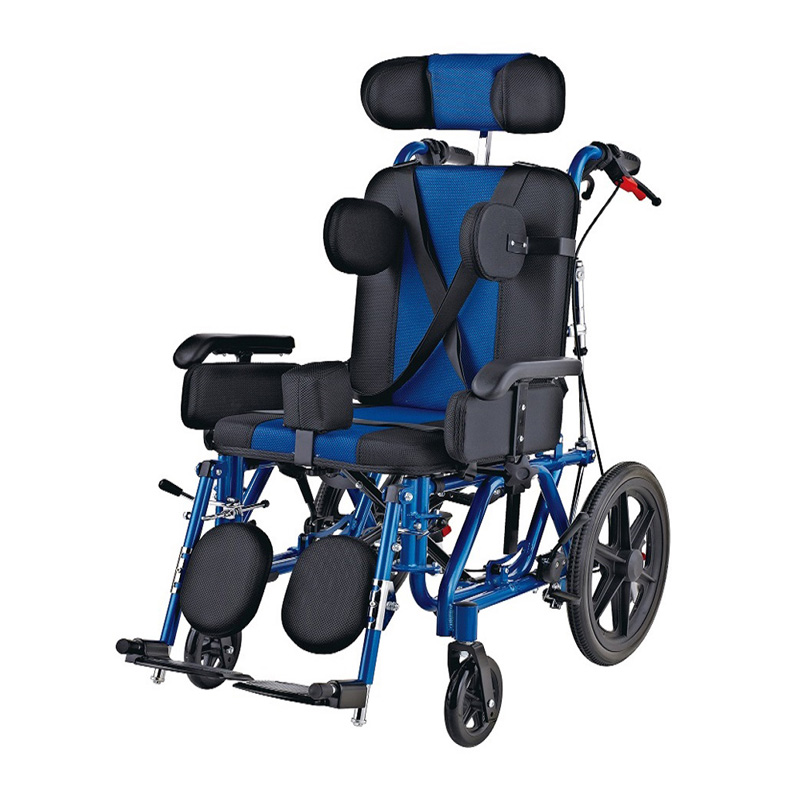
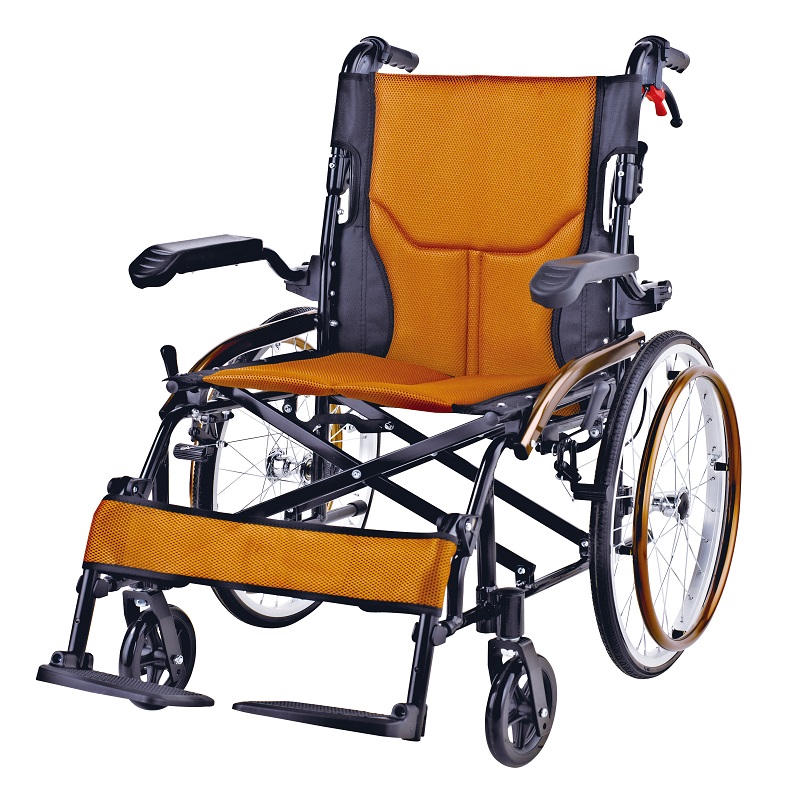
A power wheelchair is an important assistive device that provides independent mobility for people with mobility impairments. With continuous improvements in motor control systems, battery technology, and frame structure, power wheelchairs have seen significant improvements in comfort, stability, and speed.
Among the many performance indicators that users care about, "What is the maximum speed of a electric wheelchair?" is a very practical question. Speed not only affects riding efficiency but also relates to safety and the user experience.
This article will systematically answer this question from multiple perspectives, helping you to fully understand the speed range, influencing factors, and key points for safe use of electric wheelchairs.
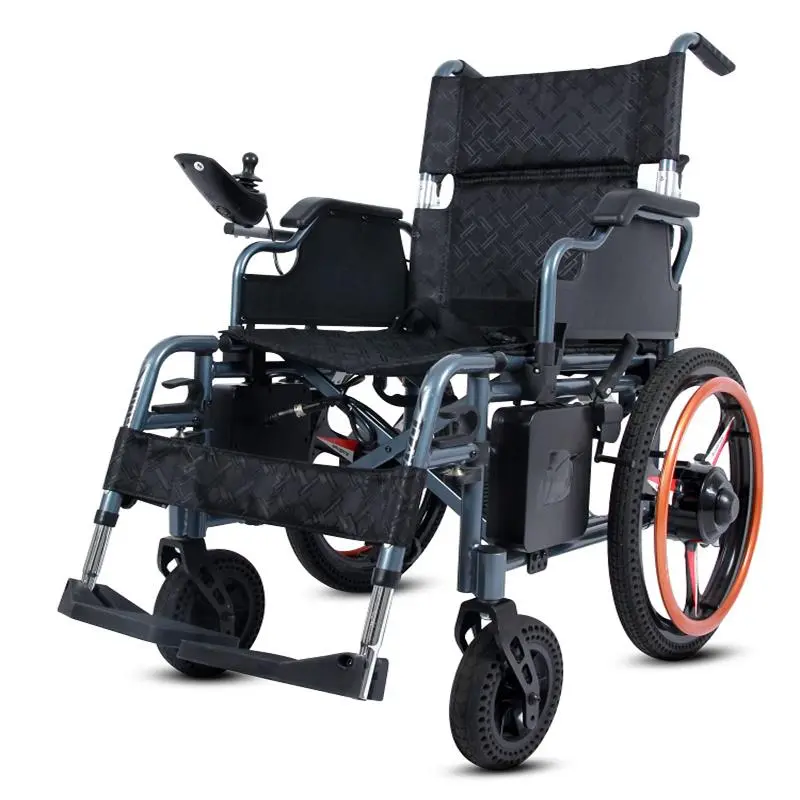
What is the typical maximum speed of a power wheelchair?
Generally speaking, the maximum speed of most power wheelchairs is between 4.5 and 8 mph (approximately 7.2 to 12.8 km/h).
This range covers the vast majority of standard and high-performance power wheelchairs on the market. Different brands and models of power wheelchairs have slightly different speed settings, depending on the following key parameters:
1. Motor Power
A higher-powered motor can provide more driving force in the same amount of time, thus resulting in faster speeds. Standard power wheelchairs typically have motors with power between 200W and 350W, while high-end or off-road power wheelchairs may be equipped with motors exceeding 500W.
2. Battery Voltage and Capacity
Power wheelchairs rely on batteries for power. Higher battery voltage and larger capacity result in more abundant energy output and more stable speed performance. For example, a common 24V system is suitable for power wheelchairs with normal speeds, while 36V or 48V systems can support higher top speeds.
3. Controller Setting
For safety reasons, manufacturers usually preset a speed limit in the control module to prevent loss of control due to excessive speed. This limit can be adjusted by professionals on some intelligent electric wheelchairs, but it is not recommended for users to modify it themselves.
4. Usage Environment (Surface Condition)
On smooth roads, the electric wheelchair can approach its theoretical maximum speed; however, on high-friction surfaces such as slopes, grass, or carpet, the speed will decrease significantly.
Why do different models of power wheelchairs have different speeds?
When purchasing, many users will find that some power wheelchairs have a maximum speed of only 6 km/h, while others can reach 12 km/h. This difference is not solely determined by the motor, but rather by a combination of factors including device design, functional positioning, and the target user group.
1. Standard Power Wheelchair: Balancing Speed and Safety
These power wheelchairs are mostly designed for the elderly or daily commuters, emphasizing comfort and stability.
• Average Speed: 4.5–6 km/h
• Features: Lightweight body, low center of gravity, small turning radius, suitable for short-distance indoor and outdoor movement.
2. Rehabilitation Power Wheelchair: Slightly Higher Speed
Power wheelchairs designed to provide rehabilitation support for patients who are bedridden or have limited mobility are typically slightly faster than standard models.
• Average Speed: 6–8 km/h
• Features: More powerful, with adjustable backrests, footrests, and other ergonomic features.
3. Off-Road Power Wheelchair: Focused on Power and Terrain Adaptability
These power wheelchairs are primarily used for rugged outdoor terrain and feature large tires and dual-motor systems.
• Average Speed: 8–12 km/h
• Features: Excellent suspension system, strong climbing ability, suitable for long-distance travel.
Therefore, the speed differences between different types of power wheelchairs reflect different design goals: safety, comfort, or performance.
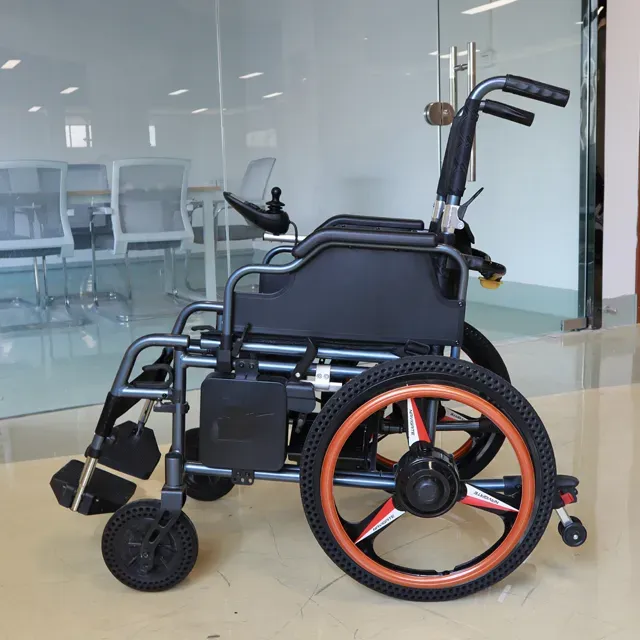
What factors affect electric wheelchair speed?
1. User's Weight
Each electric wheelchair has a maximum load capacity, typically between 100 and 150 kg.
If the user's weight is close to the maximum allowable limit, the motor's load increases, naturally reducing speed.
Therefore, in actual use, the wheelchair's actual speed is often lower than its nominal maximum speed.
2. Ground Conditions
• Flat Surfaces: Optimal speed performance.
• Slopes or Grass: Increased friction and gravitational resistance, resulting in decreased speed.
• Carpets or Tile Grout: Increased energy consumption, leading to sluggish operation.
3. Battery Charge Level
When the battery charge is below 50%, the electric wheelchair's motor output efficiency decreases, slowing the speed.
Therefore, maintaining a fully charged battery is crucial for maintaining a stable speed.
4. Ambient Temperature
Low temperatures affect the battery's chemical reaction efficiency, reducing motor output power.
In environments below 5°C, some electric wheelchairs can experience a 15%–20% speed reduction.
5. Tire Condition
Insufficient tire pressure or severe tire wear increases rolling resistance.
Regularly checking tire condition not only helps extend tire life but also maintains optimal driving speed.
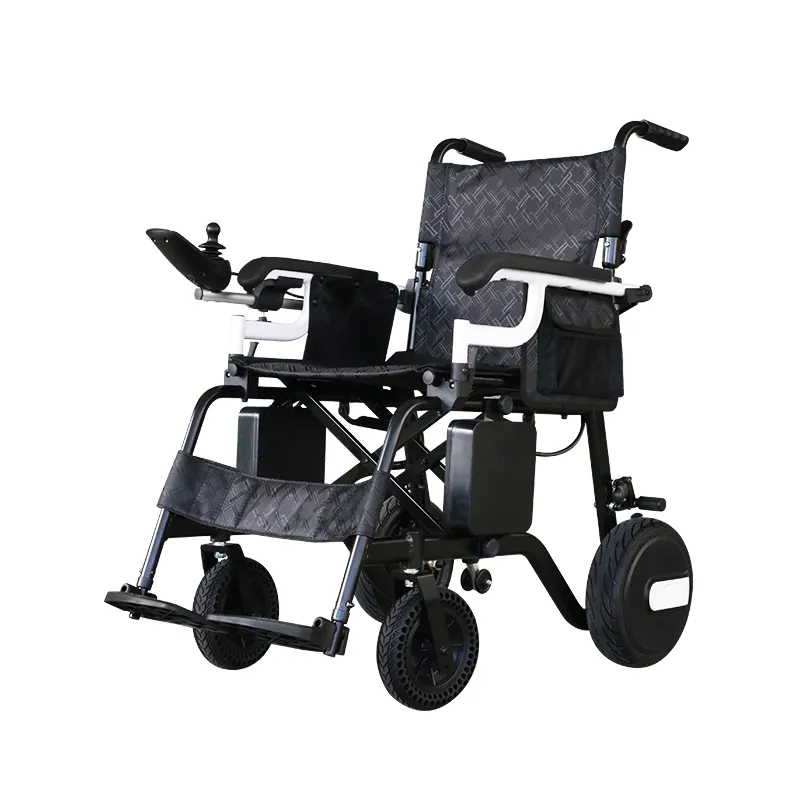
Is the speed of a power wheelchair adjustable?
Most modern power wheelchairs are equipped with a multi-speed adjustment system, typically offering low, medium, and high speed modes.
Users can switch freely depending on the scenario:
• Low speed mode (2–4 km/h): Suitable for confined indoor environments, ensuring operational safety;
• Medium speed mode (4–6 km/h): Suitable for shopping malls, hospitals, or areas with high pedestrian traffic;
• High speed mode (6–10 km/h): Suitable for long-distance outdoor travel.
Some high-end power wheelchairs also allow for customized speed limits via a smart controller or mobile app.
However, manufacturers generally recommend that users operate within safe limits and not arbitrarily remove speed restrictions.
What is the relationship between power wheelchair speed and safety?
Speed and safety are always at odds. While higher speeds can improve travel efficiency, stability and control are more critical for those with limited mobility.
1. High Speed May Lead to Rollover Risk
Power wheelchairs have a high center of gravity, making them prone to tilting when encountering obstacles or sharp turns at high speeds.
2. Increased Braking Distance
The faster the speed, the longer the braking distance. High-speed driving poses a potential risk in confined spaces or crowded areas.
3. Reduced Ride Comfort
Excessive speed intensifies vibrations, affecting posture stability and spinal support, which is particularly detrimental to health for post-operative or recovery users.
Therefore, an appropriate speed is the balance between safety and efficiency. For most users, maintaining a speed of 5–7 km/h is the most comfortable and safest choice.
What are the recommended speeds for power wheelchairs in different situations?
• Indoors (home, hospital): Recommended speed 2–4 km/h, avoid collisions with furniture and walls.
• Shopping malls or public spaces: Recommended speed 4–6 km/h, maintain a smooth ride.
• Outdoor roads: Recommended speed 6–8 km/h, suitable for medium to long distance travel.
• Uphill or grassy areas: Recommended speed 3–5 km/h, ensure traction and safety.
Appropriate speed control in different scenarios is key to ensuring the safe use of the electric wheelchair.
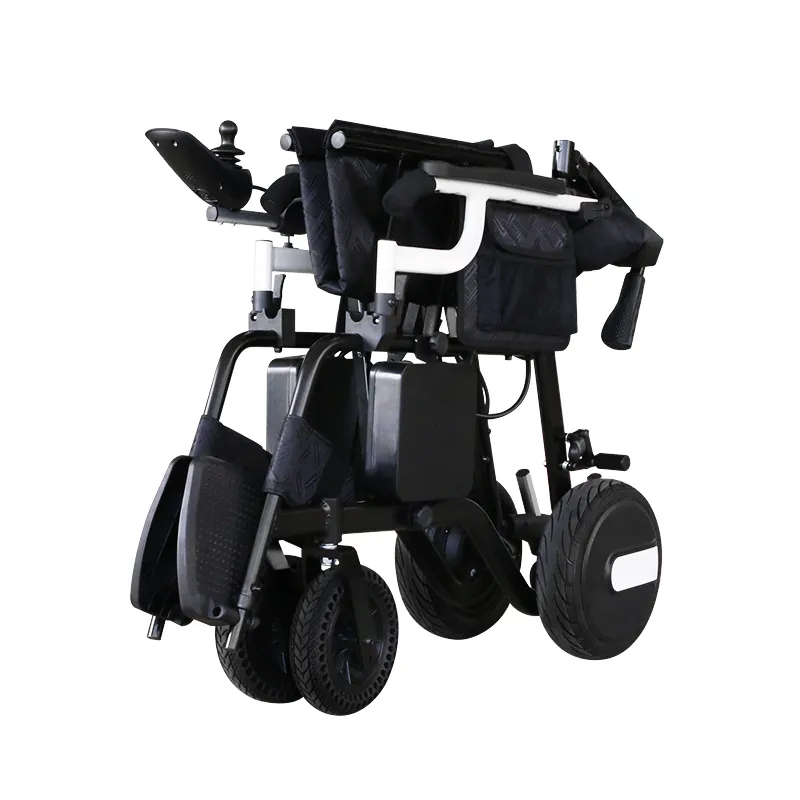
How to ensure the electric wheelchair remains safe at high speeds?
1. Regularly maintain the motor and braking system
Ensure good power output and braking performance.
2. Check the tires and suspension system
Prevent loss of control due to vibration or imbalance.
3. Distribute your weight properly
Keep your body weight centered in the seat as much as possible to avoid tilting.
4. Do not drive at high speeds on wet or slippery surfaces
Power wheelchairs have limited anti-slip capabilities; excessive speed can easily cause slippage.
5. Obey traffic and pedestrian rules
Even when driving on the road, keep speeds low and avoid pedestrians.
How does Dayang Medical customized support hospital equipment?
Hospitals and clinics often require customized equipment, and Dayang Medical provides flexible solutions. Our factory design teams can adjust bed dimensions, wheelchair specifications, and product functions to meet specific medical needs. Clients who request quotes for customized supply receive competitive low price offers with guaranteed high quality output.
As a supplier from China, we offer both cheap wholesale options and promotional discounts, ensuring hospitals can buy directly from our company while maintaining international safety standards.
