
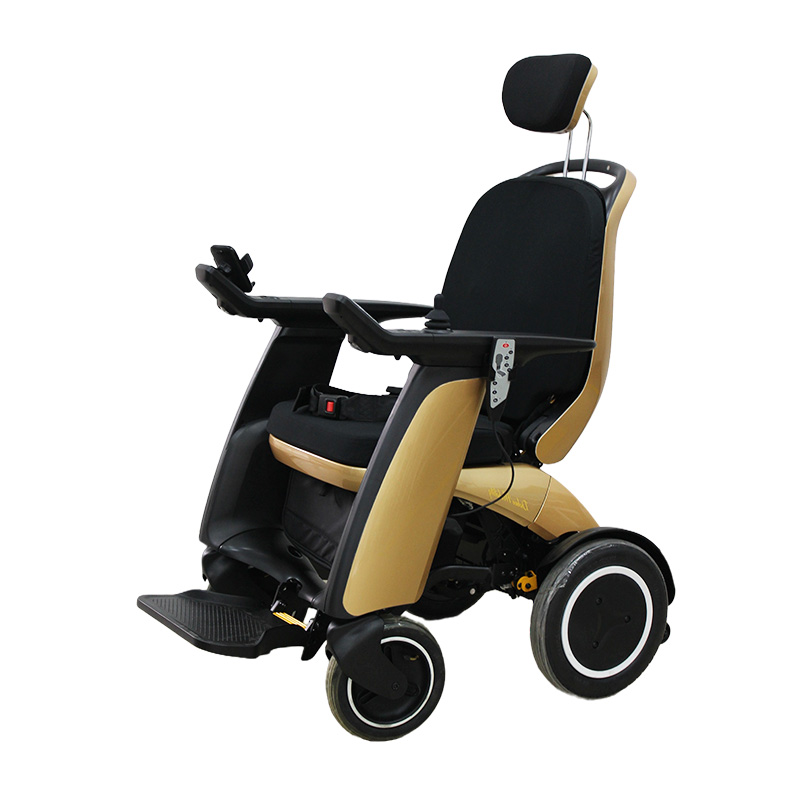
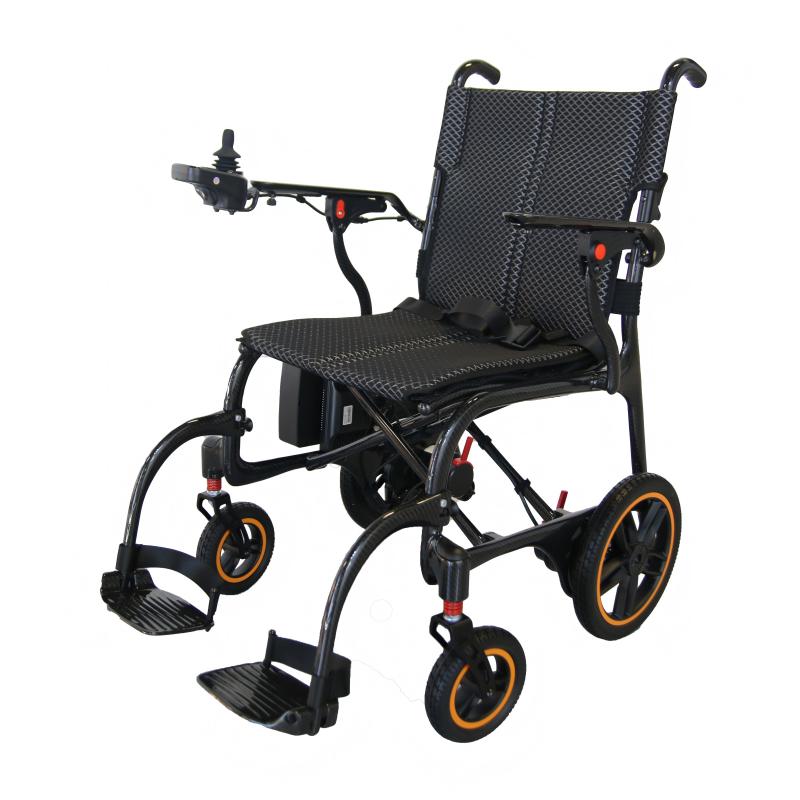
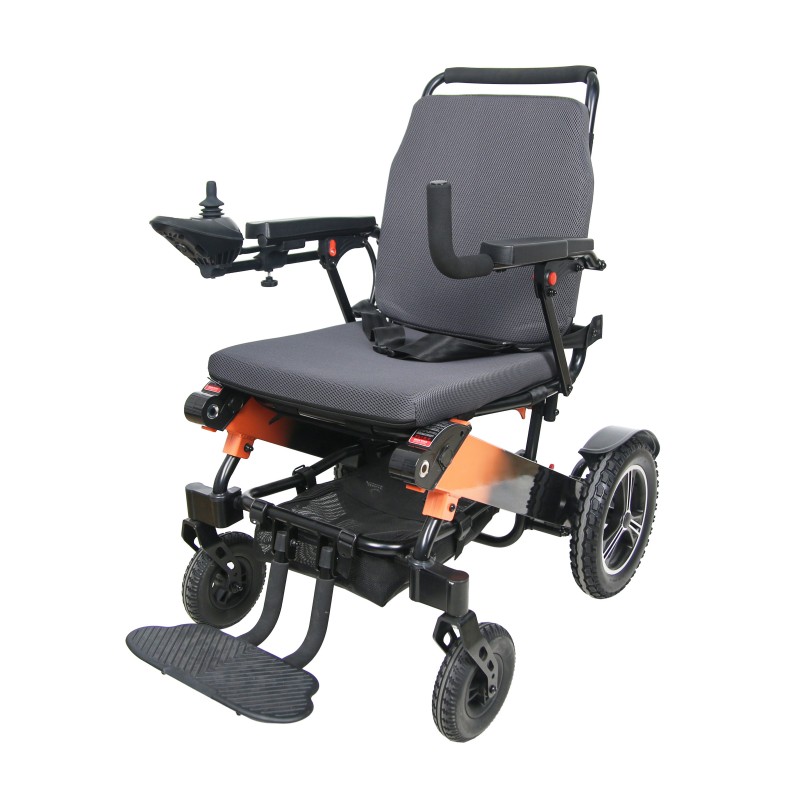
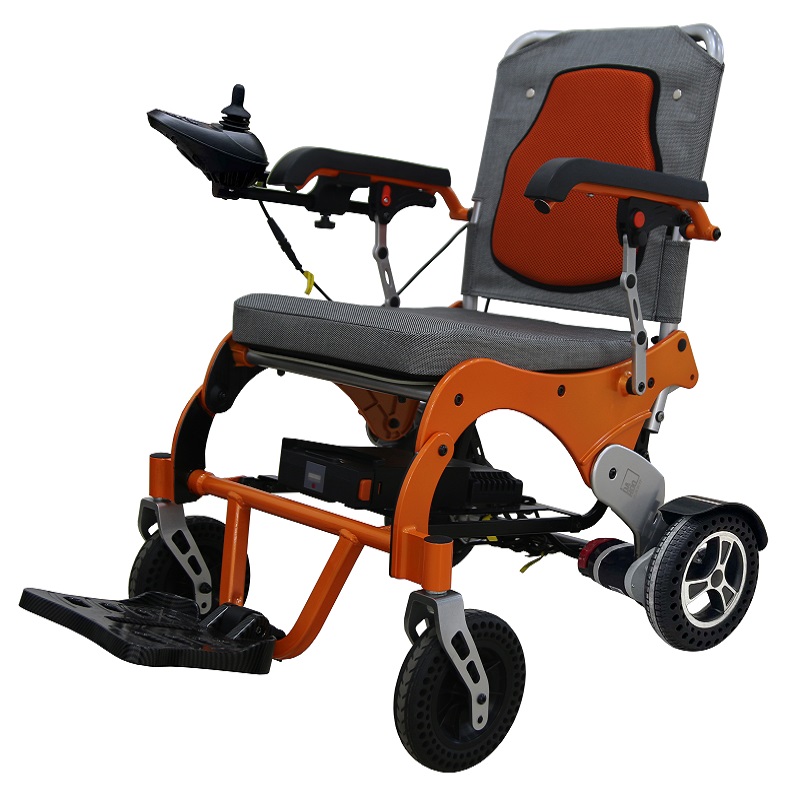
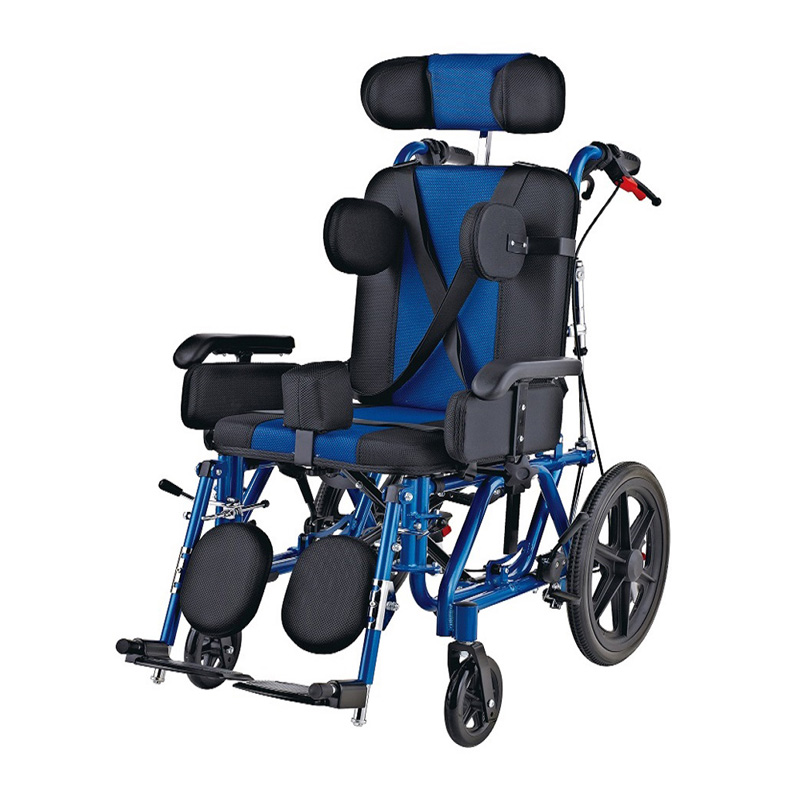
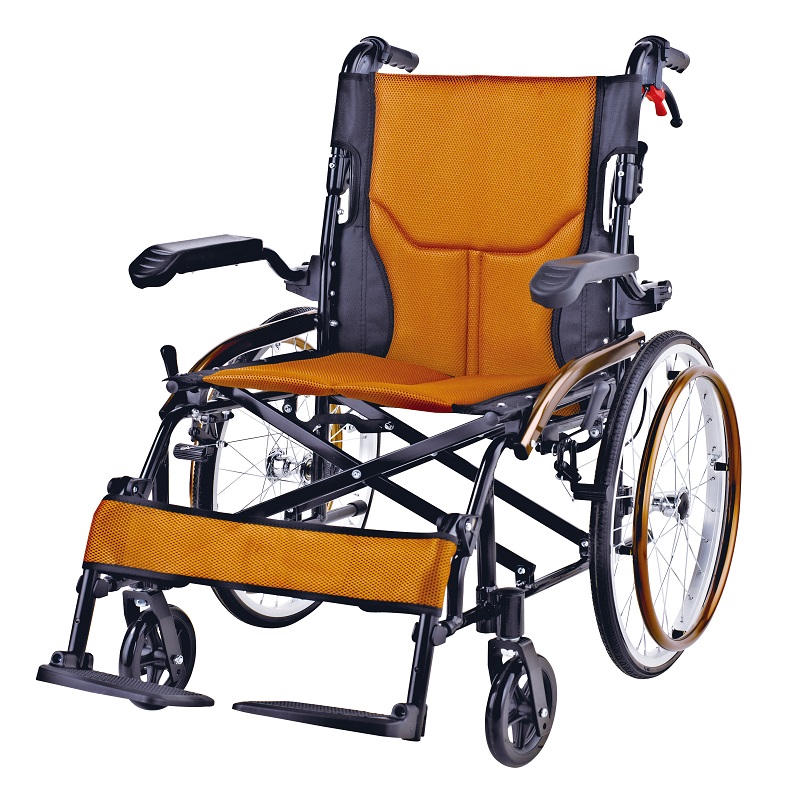
With the continuous advancement of assistive medical technology, electric wheel chairs have evolved from simple mobility tools into high-tech products integrating intelligent control, human-computer interaction, and multifunctionality. The core of an electric wheelchair lies in its "control system," and the most crucial component is the expandable controller.
Many users focus on power, battery, and seat comfort when choosing a power wheelchair, often overlooking the differences in control systems. In fact, the control system determines the sensitivity, safety, and operability of the power wheelchair. Especially for users with varying degrees of mobility impairment, the controller's expandability directly impacts the user experience and adaptability.
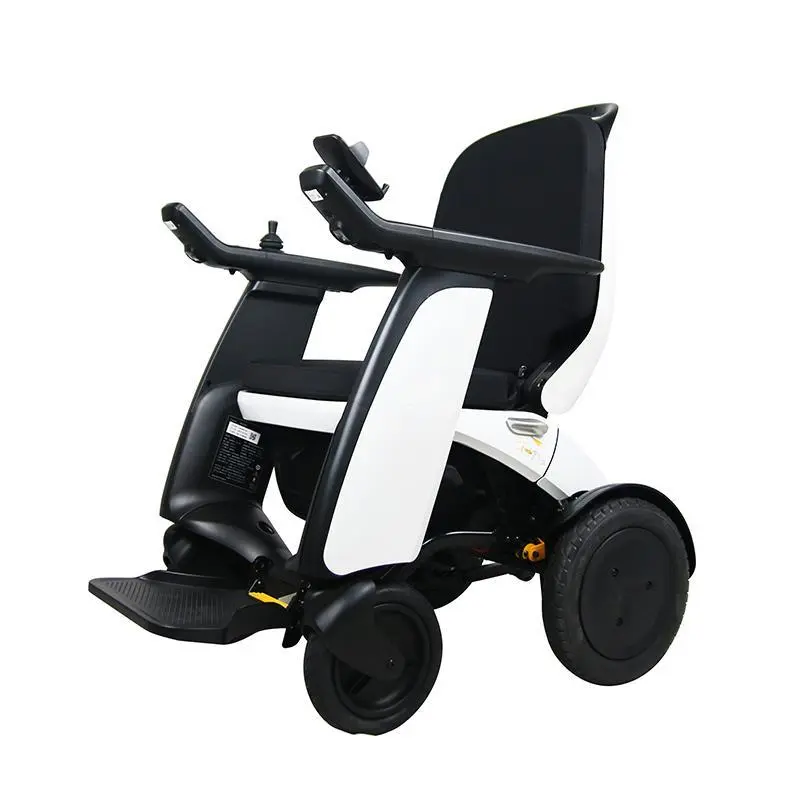
What is an Expandable Controller for Electric Wheelchairs?
1. Core Functions of an Electric Wheelchair Control System
The control system of an electric wheelchair is its "nerve center," responsible for receiving user commands, controlling motor movement, adjusting speed and direction, and ensuring safety. Its core functions include:
• Input Signal Acquisition: The user issues movement commands (such as forward, backward, and turning) through the control device.
• Signal Processing and Judgment: The controller analyzes and judges the input signals.
• Output Control: The control system drives the motors based on the processed results, enabling the wheelchair to move and steer.
Simply put, the control system is like the brain of the power wheelchair, and the controller is the "operation center" of that brain.
2. What is an Expandable Controller?
An expandable controller is an intelligent control system with multiple interfaces and module connectivity capabilities. It not only performs basic driving control but can also connect to various input devices, expanding control methods according to the user's physical condition.
In layman's terms, a regular controller can only be controlled with a joystick, while an expandable controller can connect to more types of control devices, such as:
• Head Control
• Sip and Puff Control
• Touch Pad Control
• Switch Control
• Chin/Foot Control
This means that even if the user cannot operate the joystick with their hands, they can still control the power wheelchair through other input methods, significantly improving the flexibility and inclusivity for the target population.
3. Structural Components of a Scalable Controller
A complete scalable controller for an electric wheelchair typically includes the following components:
Components | Function Description |
| Main Controller | Responsible for signal processing, motor drive, and battery status monitoring |
| Input Interface | Used for connecting various types of control devices |
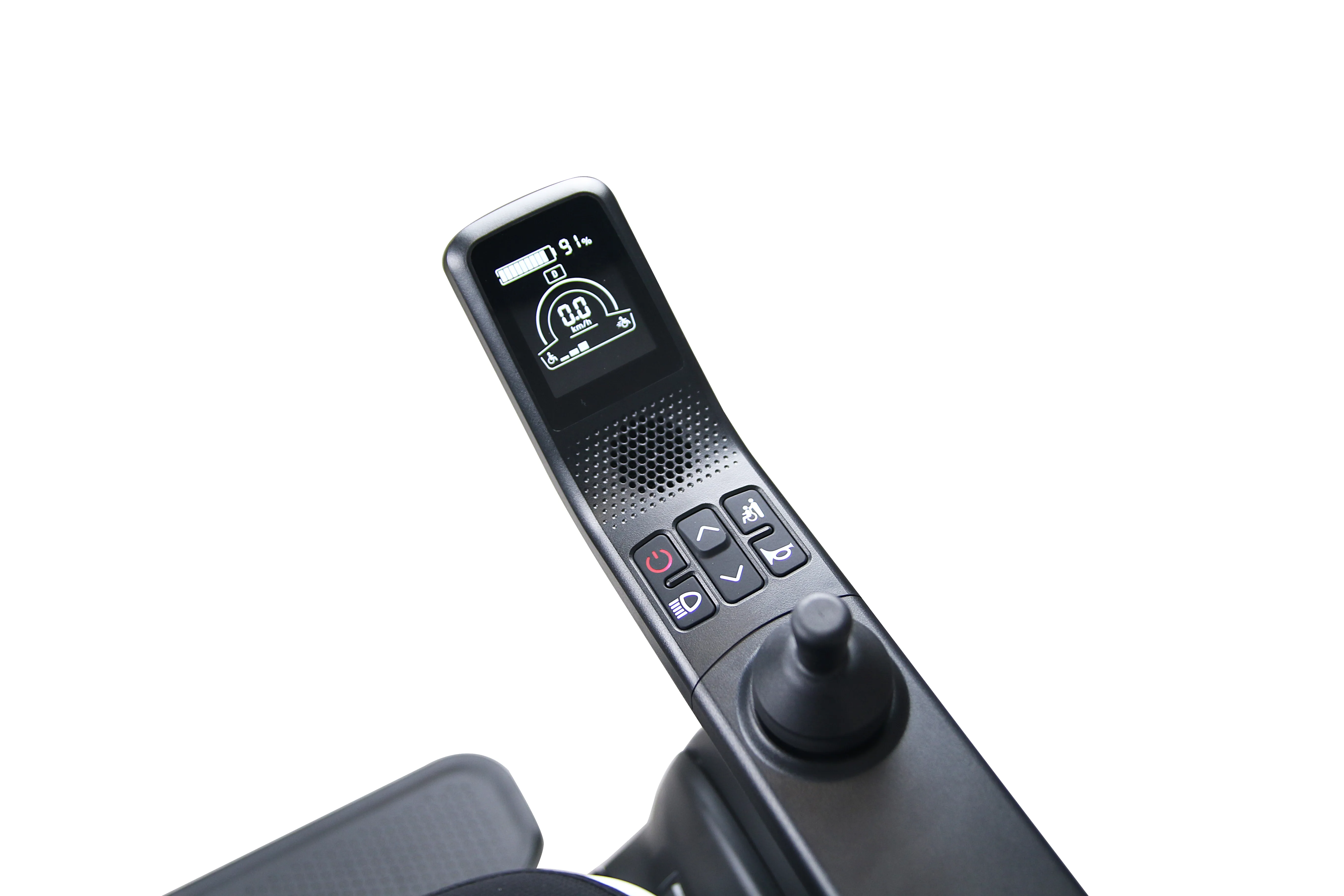
| Display/Feedback System | Displays information such as speed, battery level, and mode |
| Expansion Port | Provides peripheral access, such as lighting control and seat adjustment |
| Safety Circuit | Monitors current, voltage, and temperature to prevent malfunctions |
This modular design allows the electric wheelchair to not only meet basic driving functions but also achieve multi-functional control and personalized configuration.
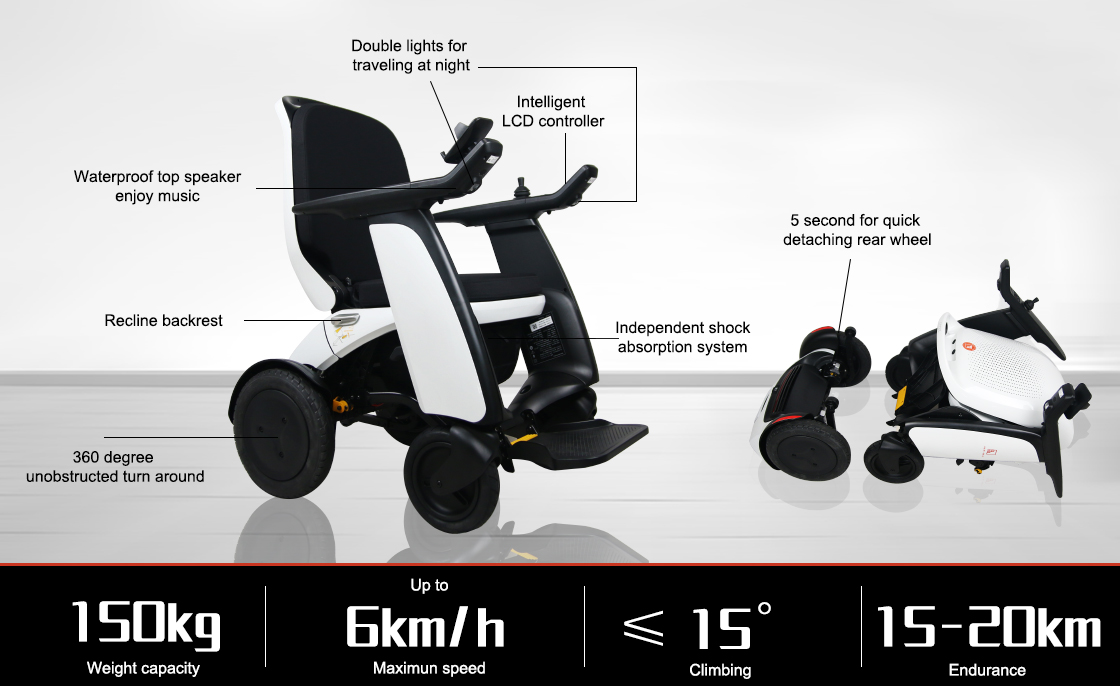
Why do electric wheel chairs need scalable controllers?
1. Different Disability Types Require Different Control Methods
The user group of electric wheel chairs is very diverse, including patients with spinal cord injuries, cerebral palsy, ALS, muscular dystrophy, and stroke sequelae. Different pathological conditions mean significant differences in operational abilities:
• Some people can skillfully use hand joysticks;
• Some people can only use chin and head movements;
• Others can only control through breathing and eye movements.
Therefore, if an electric wheelchair only provides a single control method, its usage will inevitably be limited. A scalable controller can meet the operational needs of different physical conditions through modular access, achieving personalized and inclusive design.
2. Improved Safety and Redundant Control
Some electric wheel chairs can be configured with a dual control system—a master controller and a slave controller. For example, caregivers can remotely control the wheelchair's movement through a second control panel to prevent misoperation or intervene promptly when assisting the patient in operational errors. This safety redundancy structure is a key advantage of scalable controllers.
3. Support for Multifunctional Assistive Devices
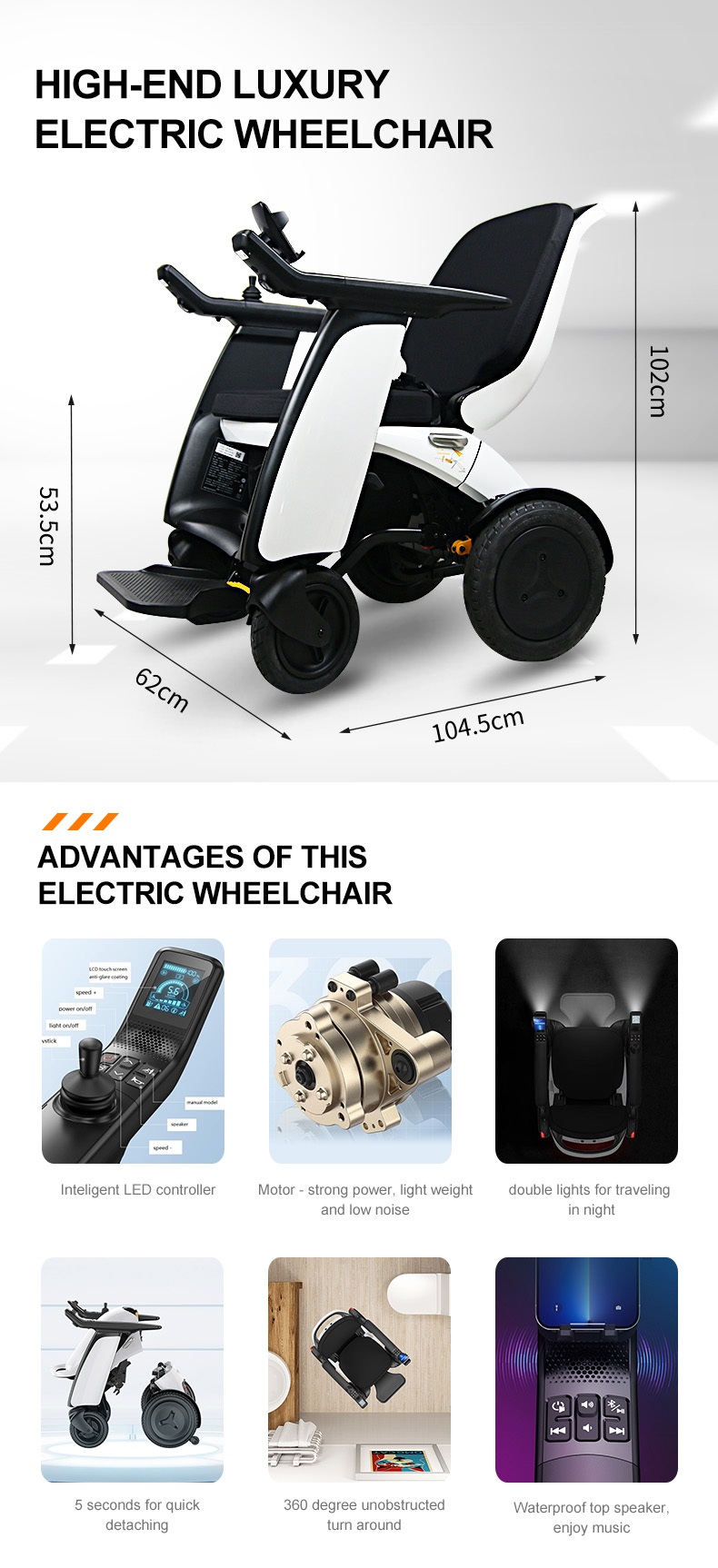
Modern electric wheel chairs are not only for mobility but may also be equipped with lights, posture adjustment, electric backrests, armrests, and height adjustment functions. Scalable controllers can integrate all subsystems to achieve unified control and improve convenience.
What are the different types of control devices for electric wheelchairs?
The control device is the "input terminal" of the scalable controller for electric wheel chairs. Based on different user physical functions, common control methods can be divided into the following categories:
1. Joystick Control
(1) Principle and Structure
Joystick control is the most common control method for electric wheel chairs. Users control the wheelchair to move forward, backward, or turn by pushing the joystick in different directions.
The controller of the power wheelchair adjusts the motor speed and torque in real time according to the angle and direction of the joystick.
(2) Applicable Population
• Individuals with normal or mildly limited upper limb strength;
• Patients who can stably control their hand movements.
(3) Advantages
• Intuitive operation and sensitive response;
• Low cost and high reliability;
• Easy to learn and master.
(4) Limitations
For patients with upper limb paralysis, hand weakness, or severe finger tremors, the joystick cannot be stably controlled, easily leading to misoperation.
2. Head Control
(1) Working Principle
Through sensors installed in the headrest or head support device, the tilt angle of the user's head is sensed to achieve directional control. For example:
• Head tilt forward = forward
• Head tilt backward = backward
• Side-to-side swing = turning
(2) Applicable Population
• Quadriplegia
• Complete loss of upper limb function
(3) Advantages
• Hands-free operation;
• Can be used in conjunction with a voice system or respiratory system.
(4) Disadvantages
• Prolonged use can cause fatigue;
• High requirements for sensor accuracy and sensitivity.
3. Sip and Puff Control
(1) Control Principle
This control method uses a pressure sensor to detect the blowing and inhaling movements in the user's mouth, converting them into electrical signals to control the movement of the electric wheelchair.
For example:
• Inhale: Forward
• Blow: Backward
• Long exhale: Left turn
• Long inhale: Right turn
(2) Applicable Population
• Complete paralysis of the upper and lower limbs
• Limited neck movement but normal breathing control
(3) Advantages
• No hand or head involvement required;
• Precise and reliable, suitable for severely disabled users.
(4) Disadvantages
• Steep learning curve;
• Extremely high sensitivity requirement for the pressure sensor;
• Oral devices require regular cleaning and disinfection.
4. Touch Pad/Touch Screen Control
(1) Working Method
Direction and speed control is achieved through a touchpad or touchscreen, similar to a smartphone interface. Some high-end electric wheel chairs are equipped with a capacitive touchscreen control system, allowing users to set speed, driving mode, and seat posture.
(2) Target Audience
• Individuals with dexterous hands but unable to hold the joystick for extended periods;
• Teenagers and young adults familiar with electronic devices.
(3) Advantages
• Intuitive and visual;
• Supports personalized configuration and interface adjustments;
• Can integrate Bluetooth and voice control modules.
(4) Disadvantages
• High dependence on vision;
• Not suitable for patients with hand tremors or visual impairments.
5. Chin Control
(1) Control Principle
A small joystick is mounted on the chest, allowing the user to control the direction of the power wheelchair by slightly moving their chin.
(2) Target Audience
Individuals with complete upper limb paralysis but normal neck movement;
Individuals with spinal cord injuries below the cervical spine.
(3) Advantages
Fast response and precise control;
Naturally conforms to the range of motion of the human body.
(4) Disadvantages
Prolonged operation may cause neck fatigue;
Customized support positions are required to accommodate different heights and postures.
6. Foot Control
(1) Working Method
Foot control systems generally include pedals or toe sensors, using toe or foot movements to complete commands such as forward movement, stopping, and turning.
(2) Applicable Population
Those with limited upper limb function but partial retention of lower limb movement;
Those who have undergone lower limb amputation and require prostheses (some may be suitable).
(3) Advantages
Natural operation, does not take up hand space;
Can be combined with other control systems.
(4) Disadvantages
Inaccuracy is not as good as a joystick;
Not suitable for patients with high muscle tone or spasticity.
7. Voice Control
(1) Principle
Specific commands, such as "forward," "stop," and "turn left," are recognized by a voice recognition module and converted into control commands.
(2) Applicable Population
Those who have completely lost the ability to move their upper and lower limbs;
Those with clear speech and normal cognitive abilities.
(3) Advantages
No physical movement required; Suitable for highly intelligent electric wheelchair systems.
(4) Disadvantages
Voice recognition is susceptible to noise interference; Requires high speech clarity.
Combination and Customization of Electric Wheelchair Controllers
The biggest advantage of expandable controllers is their support for multiple control methods. For example:
• The primary user uses head control, while the caregiver uses a secondary control;
• The ventilation system and voice system operate in parallel for switching between different scenarios;
• Joysticks and touchscreens are used together for precise control and function settings.
This combined control not only improves safety but also allows the power wheelchair to maintain operational flexibility in different environments.
In addition, some high-end electric wheelchair control systems can connect to:
• Bluetooth module (connects to a mobile phone or computer);
• Seat posture control module (adjusts backrest and footrest angles);
• Lighting and horn system (enhances driving safety);
• Obstacle sensing module (achieves safe speed limits and obstacle avoidance).
These expansion interfaces make expandable controllers truly intelligent central systems.
How to Choose a Suitable Electric Wheelchair Control System?
When selecting a power wheelchair control system, the following dimensions should be considered comprehensively:
• User physical function assessment: Understand the user's motor abilities in areas such as hands, head, neck, and breathing to determine the operable mode.
• Controller compatibility: Confirm whether the controller supports expansion interfaces for different input devices.
• Safety redundancy design: Prioritize control systems with auxiliary control or emergency stop functions.
• Operational sensitivity and response speed: Observe whether the system exhibits any delays or oversensitivity.
• Maintainability and after-sales support: Control systems are precision electronic devices; choose products from reputable brands with comprehensive after-sales support.
