
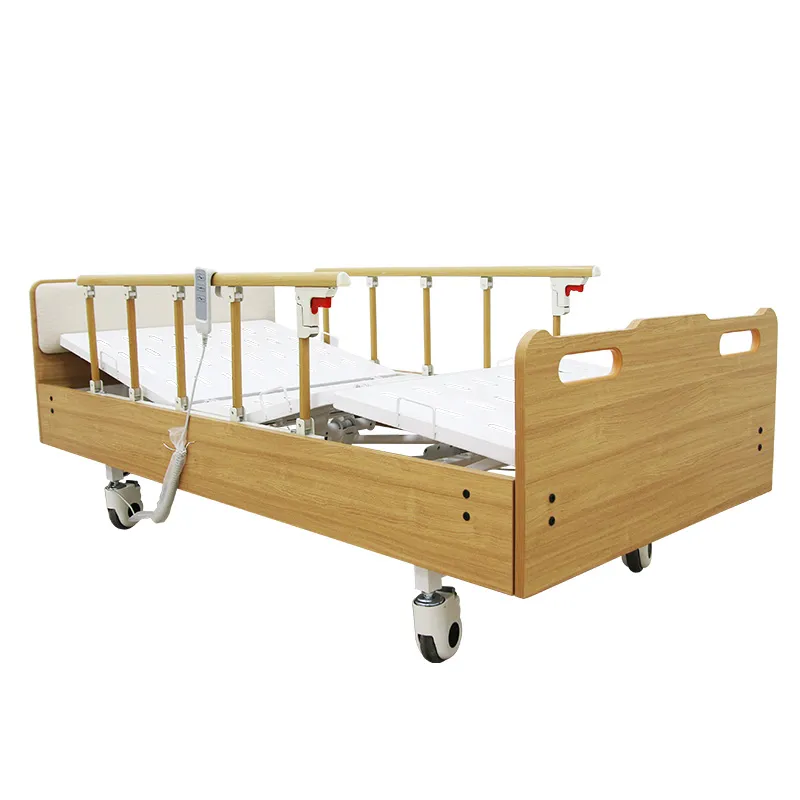
Adjustable nursing beds (also known as electric nursing beds or hospital bed-type nursing beds) are widely used in hospitals, nursing homes, and homes. Through adjustments to bed height, head/foot angle, and patient position, they facilitate nursing actions such as turning over, sitting up, suctioning, and feeding, effectively reducing the workload of caregivers, improving the comfort of bedridden patients, and contributing to pressure ulcer prevention.
However, not everyone is suitable for adjustable nursing beds—certain medical conditions, postoperative timing, and individual characteristics can make bed adjustments risky or ineffective, or even lead to serious complications.
This article will analyze in depth who is unsuitable for adjustable nursing beds, why they are unsuitable, and provide professional advice on alternatives or safe management, for the reference of medical personnel, caregivers, and families when making decisions.
—In clinical or home care settings, certain patient groups (such as patients with spinal instability or recent spinal surgery, patients with severe altered consciousness or agitation, patients with severe intracranial pressure elevation, extremely weak or underweight patients at risk of pinching, and patients in the early recovery period after recent abdominal/thoracic surgery) are generally unsuitable or should use with caution when using adjustable nursing beds.
For these patients, bed adjustments must be made under multidisciplinary evaluation and strict monitoring, or alternative care protocols should be adopted.
What is an "Adjustable Nursing Bed"?
An adjustable nursing bed is a type of nursing bed with electric or mechanical mechanisms that allow adjustment of bed height, head/footrest angle, and overall tilt (e.g., Trendelenburg/reverse Trendelenburg). Its design aims to support turning over, position adjustment, facilitate suctioning/tracheal care, reduce the burden on caregivers during transport, and support pressure ulcer prevention and rehabilitation training. Adjustable nursing beds are often used in conjunction with pressure ulcer mattresses, side rails, and various nursing accessories, becoming an important piece of equipment in hospital and home care.
Who is unsuitable for using an adjustable nursing bed?
Eight groups of people who are unsuitable for using an adjustable nursing bed:
1. Patients with spinal instability or recent spinal/cervical spine surgery
2. Patients with significantly increased intracranial pressure or recent neurosurgical surgery
3. Patients with severe cardiopulmonary insufficiency or respiratory failure
4. Patients in the early recovery period after recent abdominal/thoracic surgery
5. Patients with severe altered consciousness, delirium, agitation, or cognitive impairment
6. Extremely thin or with abnormal body shape
7. Patients with severe joint stiffness, severe contractures, or deformities
8. Prone to convulsions or uncontrolled movements
1). Patients with spinal instability or recent spinal/cervical spine surgery
Why an Adjustable Nursing Bed is unsuitable: In cases of spinal instability or early postoperative period, any unauthorized changes in position (such as elevating the head, lowering the trunk, twisting, or raising the legs) may worsen vertebral displacement, compress the spinal cord or nerve roots, leading to deterioration of sensory/motor function, paralysis, or increased acute pain. For patients requiring strict bed rest to maintain a neutral spinal position, the automatic adjustment function of an electric bed may cause irreversible damage.
Nursing Recommendations: These patients must follow the clear instructions of their attending physician and spinal surgeon/rehabilitation physician. Automatic position adjustment should generally be avoided until contraindications are lifted. If raising, lowering, or turning is necessary, it should be assisted by several trained individuals using spinal immobilization measures.
2). Patients with Significantly Increased Intracranial Pressure or Recent Neurosurgical Procedures
Why an Adjustable Nursing Bed is Unsuitable: Certain bed positions (such as the Trendelenburg position with the head down or excessive supine positioning) can increase intracranial pressure or affect cerebral perfusion. In patients with increased intracranial pressure, intracranial hemorrhage, or recent craniotomy/decompression surgery, improper positioning can lead to neurological deterioration.
Nursing Recommendations: Positioning of patients with neurological disorders or who have undergone surgery should be based on neurosurgical/ICU instructions. Reverse or excessively head-down positions should be avoided if necessary, and consciousness, pupils, vital signs, and neurological signs should be continuously monitored.
3). Patients with severe cardiopulmonary insufficiency or respiratory failure
Why an Adjustable Nursing Bed is unsuitable: Adjustable nursing beds are often used to change the upper body angle to improve breathing. However, conversely, certain positions (such as prolonged head-down position) can compress the diaphragm, reduce lung volume, worsen breathing difficulties, or lead to pulmonary edema. For patients with decompensated congestive heart failure, severe lung disease (such as severe COPD, ARDS), or respiratory failure, positional adjustments should be cautious, phased, and assessed by a physician to determine if the patient can tolerate the target position.
4). Patients in the early recovery period after recent abdominal/thoracic surgery
Why an Adjustable Nursing Bed is unsuitable: In the early postoperative period after abdominal or thoracic surgery, elevating or compressing the surgical area, or excessive changes in position, can increase incision tension, cause wound dehiscence, effusion, or traction on the pleura/diaphragm, interfering with healing. Some surgeries also require maintaining a specific angle to facilitate drainage or reduce the risk of bleeding.
Nursing Recommendations: Postoperative positioning should follow the surgical team's guidelines. If an adjustable nursing bed is used, its range and speed should be limited, and adjustments should be made slowly under the supervision of a nurse or family member to avoid triggering complications.
5). Patients with severe altered consciousness, delirium, agitation, or cognitive impairment
Why Adjustable Nursing Beds are not suitable: Cognitively impaired patients may not understand how to safely use bedside devices or misoperate adjustable controllers. Furthermore, bedside rails are not a simple safety measure for patients with delirium or self-harm tendencies; raising the rails may encourage patients to climb or fall from a greater height when attempting to get out of bed, posing a risk of entrapment and suffocation.
Regulatory agencies and safety guidelines clearly state that the use of bed rails and automatic adjustment functions for patients with cognitive impairment or agitation requires a risk-benefit assessment and cannot be used as a substitute for monitoring.
6). Extremely thin or abnormally large patients
Why an Adjustable Nursing Bed is unsuitable: Extremely thin patients may experience dangerous gaps between the mattress and side rails/headboard. If a body slips into these gaps, it can easily lead to trapping, suffocation, or joint/rib injuries. Multiple recalls and regulatory warnings have identified "extremely thin elderly or frail individuals" as a high-risk group.
Nursing recommendations: For extremely thin or bone-fragile patients, bed rails should be carefully selected, matched to the mattress, and gap filling, a low bed, or other fall-resistance strategies should be used. Relevant regulatory and safety reports repeatedly emphasize the need to assess bed system compatibility to prevent trapping.
7). Patients with severe joint stiffness, severe contractures, or deformities
Why an Adjustable Nursing Bed is unsuitable: Some patients with joint contractures or tendon adhesions are very sensitive to passive stretching or changes in position. Incorrect bed adjustments may lead to soft tissue tears, nerve strain, or exacerbated pain.
Nursing Recommendations: For these patients, a rehabilitation therapist should assess the optimal positioning. If necessary, specialized braces, immobilization devices, or a fixed bed surface combined with a passive stretching program should be used. The automatic adjustment function of adjustable nursing beds should be used with caution.
8). Patients Prone to Seizures or Uncontrolled Movements
Why Adjustable Nursing Beds Are Unsuitable: Paroxysmal movements can cause patients to move uncontrollably in bed. If there are gaps in the side rails or the equipment is unstable, it can easily lead to limb pinching, falls, or entrapment. For patients with frequent and unpredictable seizures, bed management should focus on environmental modifications and monitoring, rather than simply relying on automatic positioning.
The Real Risk of Bed Side Rails and Entanglement/Suffocation: The U.S. Food and Drug Administration (FDA) and other health regulatory agencies have pointed out that bed side rails are not safe for everyone; some populations (cognitive impairment, agitation, frail elderly) have experienced entrapment and suffocation incidents during bed rail use.
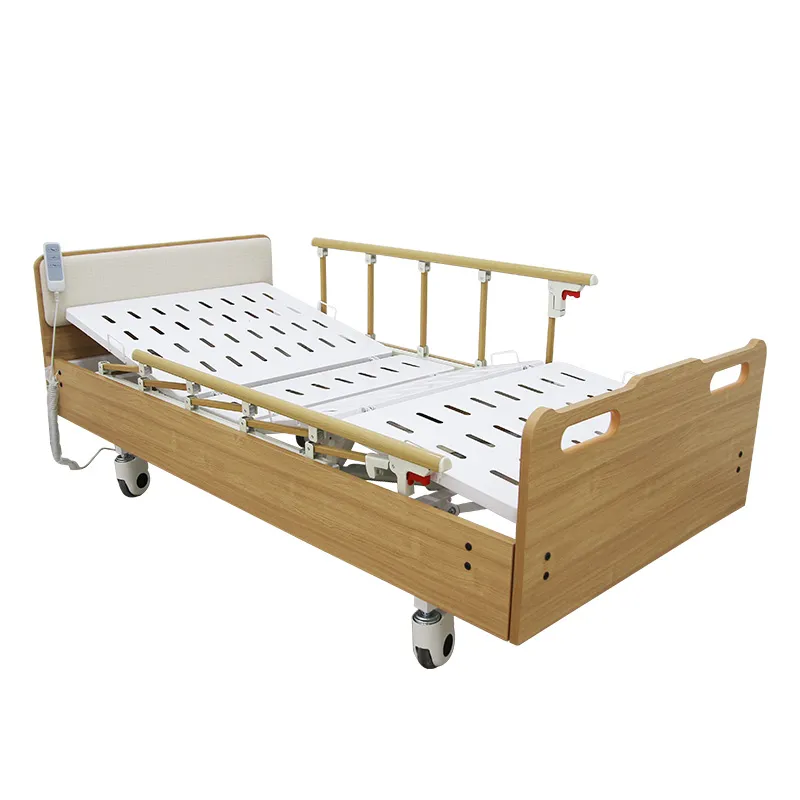
What are the Alternatives to Adjustable Nursing Beds?
If a patient is “unsuitable” for an adjustable nursing bed—what alternatives and remedies are available?
For patients assessed as unsuitable for or requiring caution when using adjustable nursing beds, the following alternative or remedial strategies can be adopted at the clinical and home levels:
1. Low Beds or Ground-Level Beds
Lowering the bed to near the ground reduces fall height and can reduce injury for those who are prone to climbing or who get up independently at night.
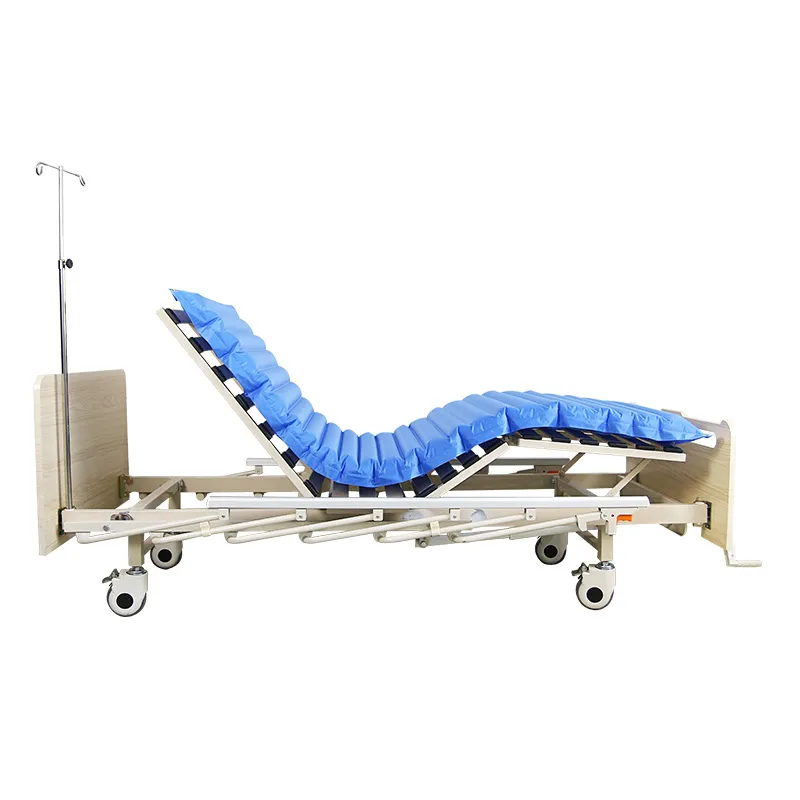
2. Dedicated Pressure Ulcer-Proof Mattresses or Air Pressure Mattresses
For those who cannot frequently change position or have limited positioning, use reversible or pressure-dispersing mattresses to prevent pressure sores.
3. Mechanical or Electric Transfer Equipment (Slings/Railways)
For those requiring passive transfer, those who are heavier, or those with insufficient upper limb strength, using slings for transfer can reduce the impact of bed repositioning.
4. Enhanced Monitoring and Alternative Fall Prevention Measures
For patients with cognitive impairment, prioritize video/pressure-sensitive monitoring, nighttime companionship, or physical fall prevention mats as alternatives to bed side rails as the primary safety measure.
5. Fixed Positioning with a Professional Turning Plan
For patients who absolutely cannot be repositioned, develop a manual turning and pressure ulcer prevention plan, using multiple caregivers to assist with passive turning.
These alternatives should be decided by the nursing team based on a specific risk-benefit assessment and in consultation with the family.
Can Dayang Medical provide customized designs for sports wheelchairs?
Yes, we specialize in sports wheelchair customization. Our factory design team in Foshan can adjust frames, wheels, materials, and branding based on customer requests. Many international brands purchase from our company in China to expand their sports product lines.
We provide OEM services, wholesale supply, and factory quotes, ensuring low-price options without lowering quality.
